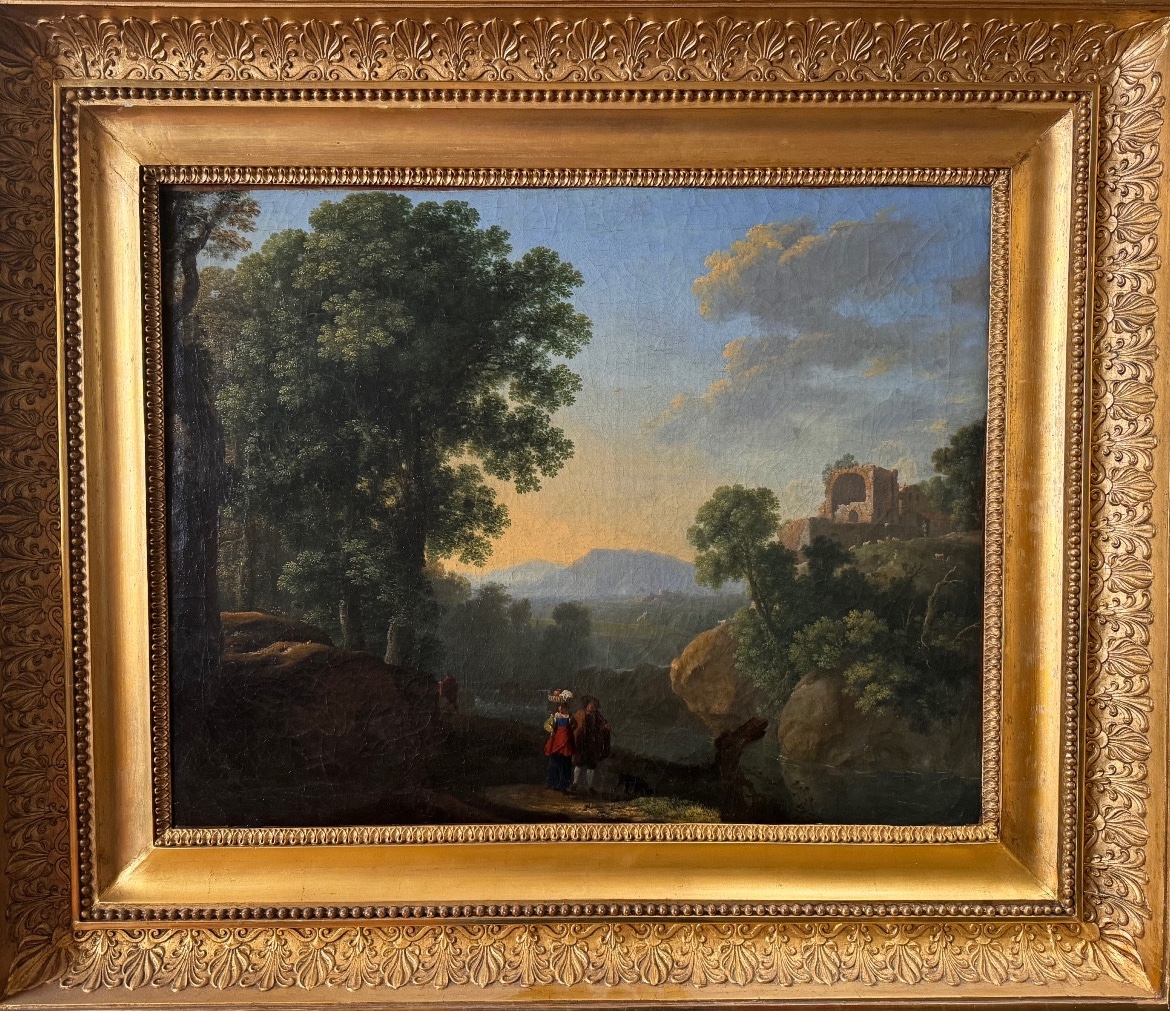
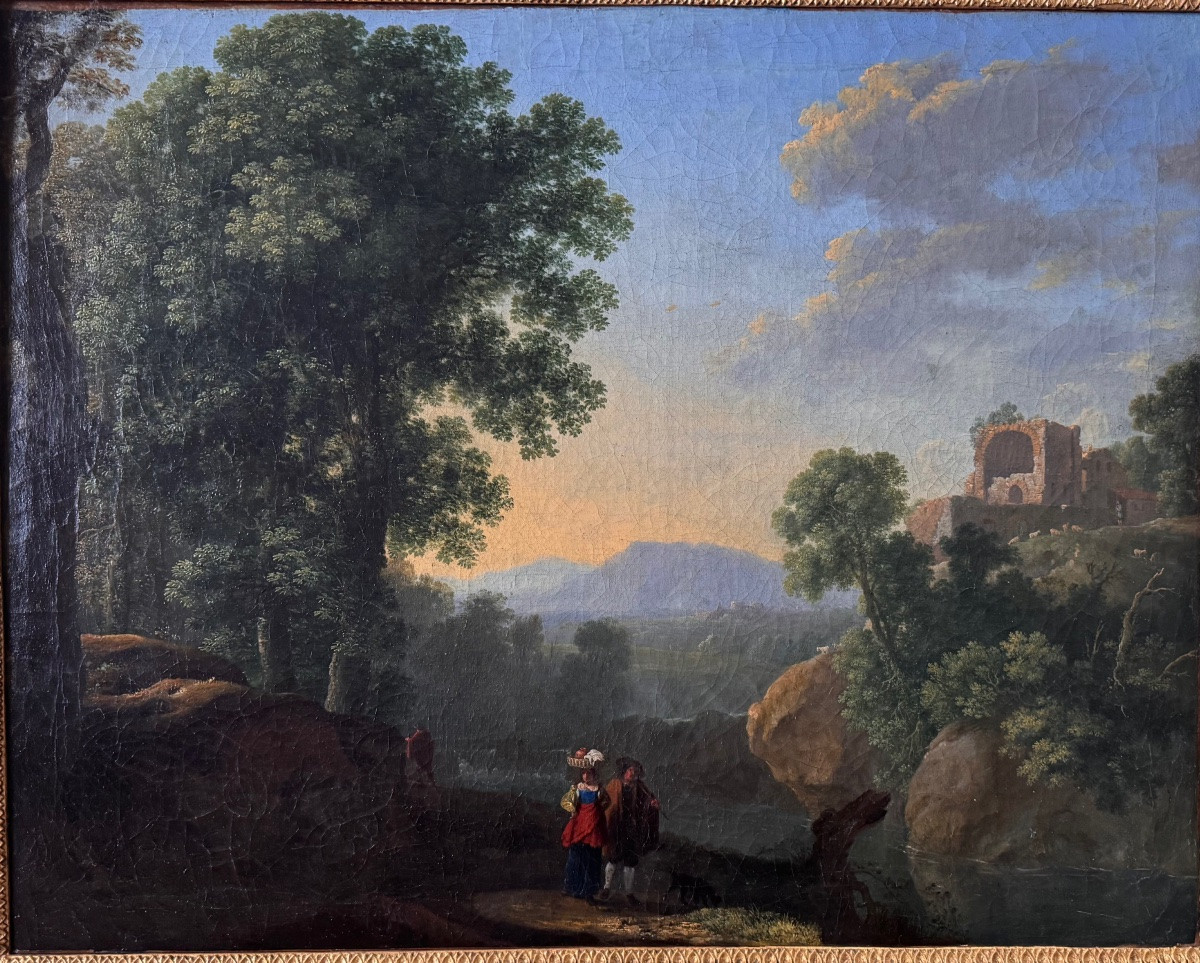

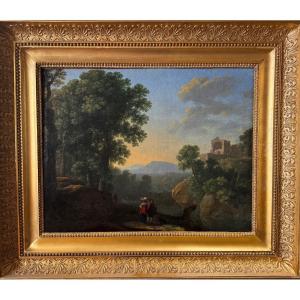


"Lively Landscape With Ruins. French Or Italian School Of The 17th Century."
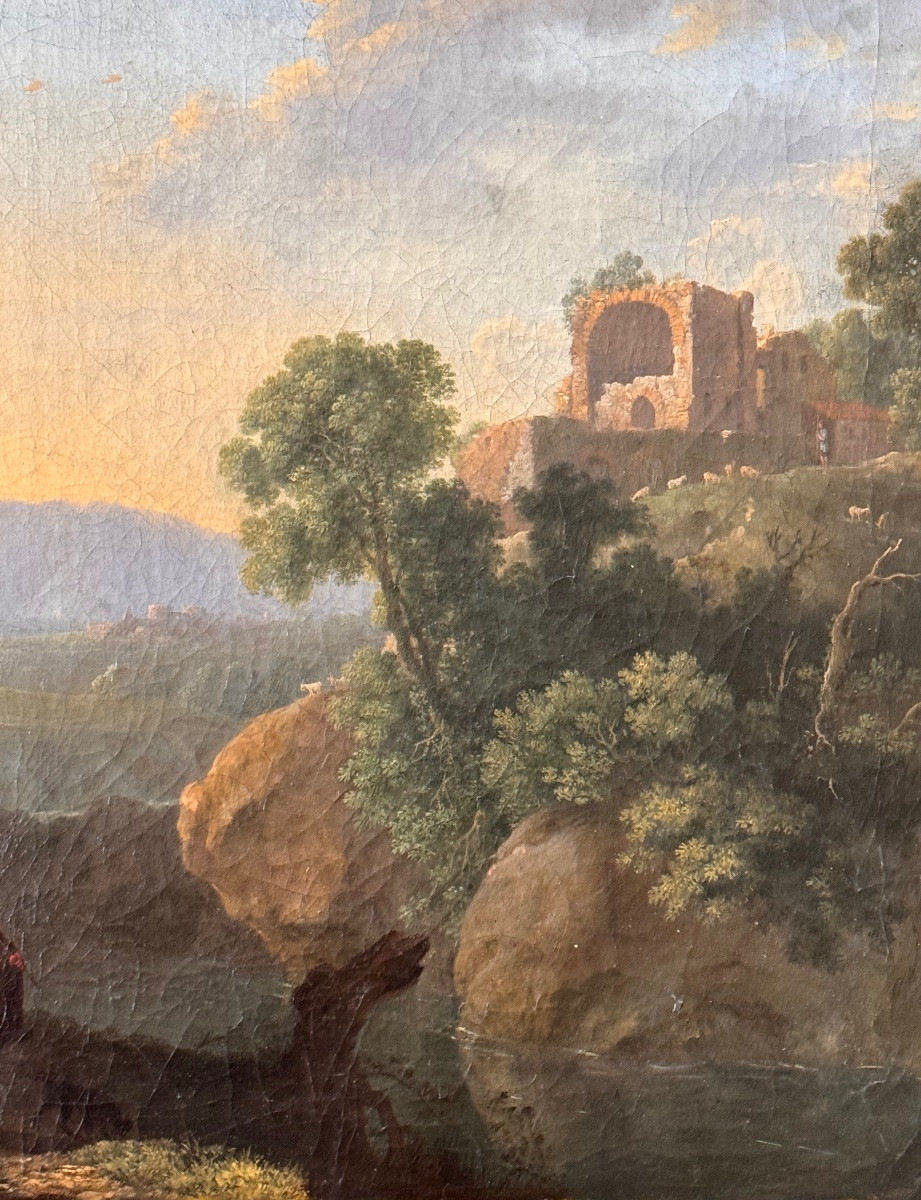
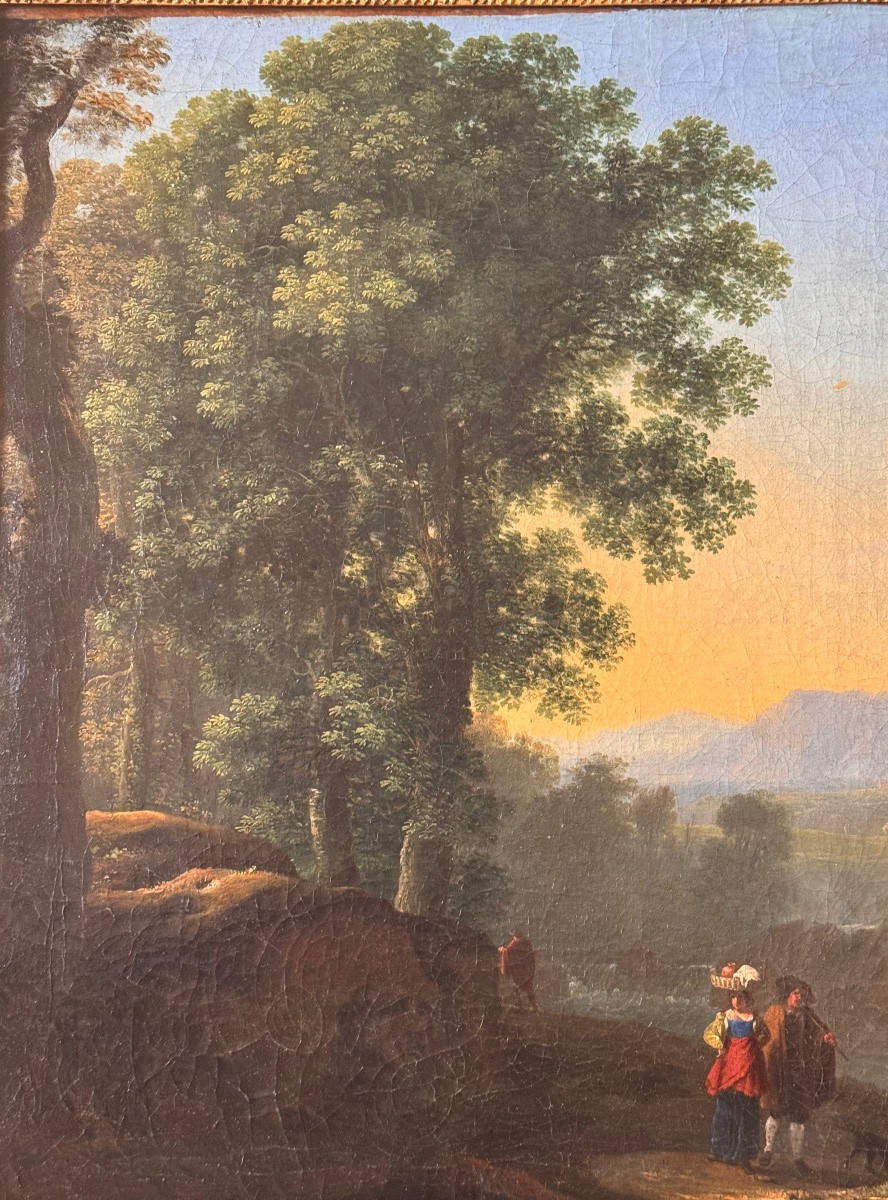
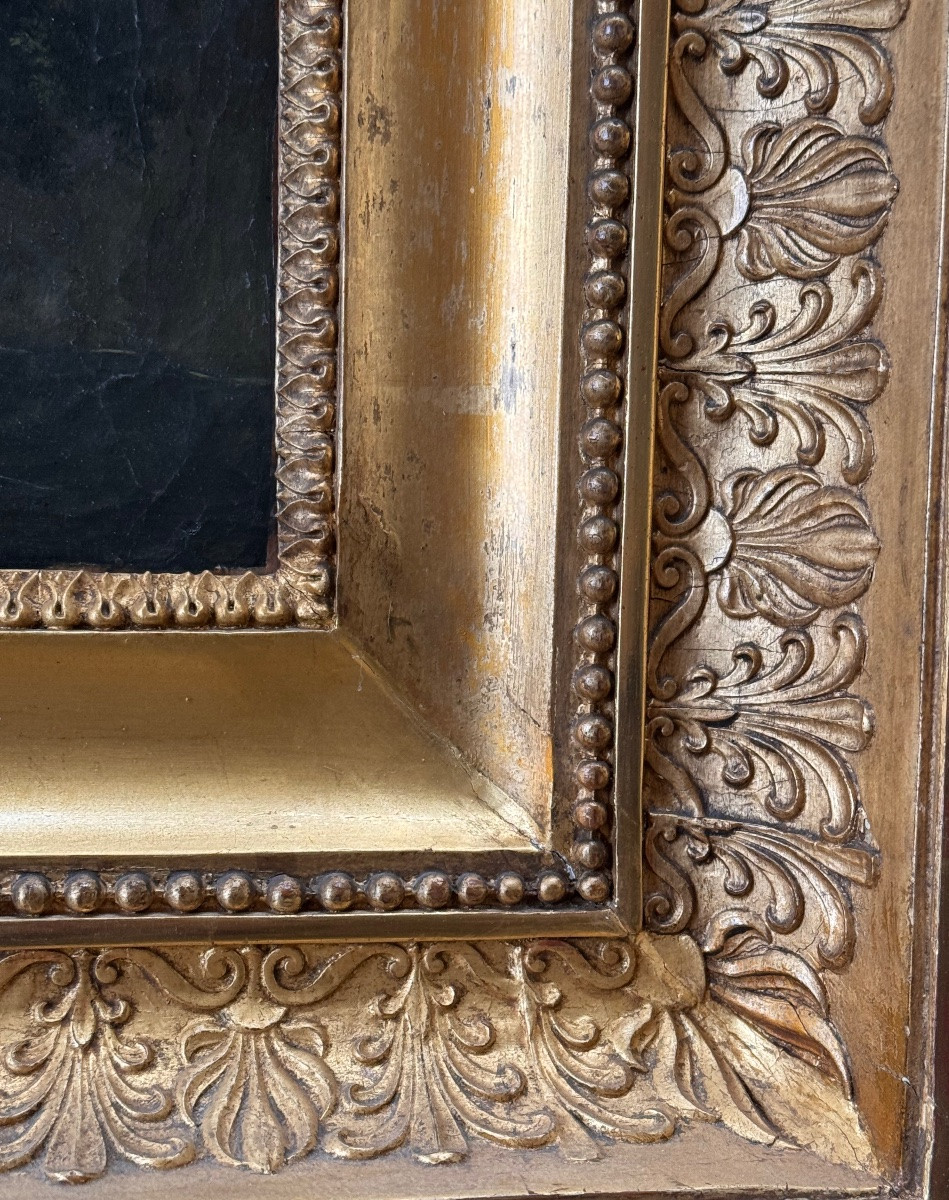
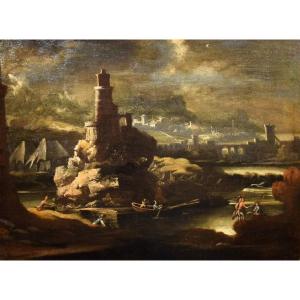
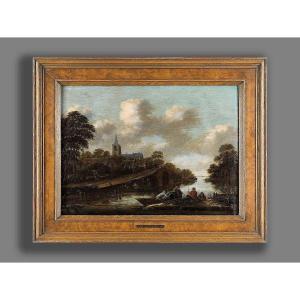
Lively Landscape with Ruins, French or Italian School, 17th century, Circle of Gaspard Dughet. Oil on canvas depicting a classical landscape enlivened by figures, structured around a large central tree, rocks, and ruined architecture, opening onto a distant, atmospheric, bluish scene. The composition, built in successive planes, offers a peaceful and balanced reading, characteristic of the great tradition of 17th-century classical landscape painting. The figures, deliberately small in scale, discreetly animate the scene without disturbing its harmony, while the ruin, integrated into the landscape, evokes a poetic meditation on time and nature. The palette, dominated by deep greens, warm browns, and softened blues, as well as the diffuse and timeless light, testifies to an intellectual conception of landscape inherited from classical Rome. Through its mental structure, its measured relationship between man and nature, and its absence of dramatic narrative, this work fits perfectly within the aesthetic sphere developed by Gaspard Dughet, a major figure in classical landscape painting, pupil and brother-in-law of Nicolas Poussin. It can be compared to his compositions through the use of a dark foreground, an inhabited middle ground, and a luminous background, as well as through the fundamental role given to masses of vegetation. A work of high quality, representative of 17th-century classical landscape painting, it is preserved in a later carved and gilded wooden frame. 














 Le Magazine de PROANTIC
 TRÉSORS Magazine
 Rivista Artiquariato