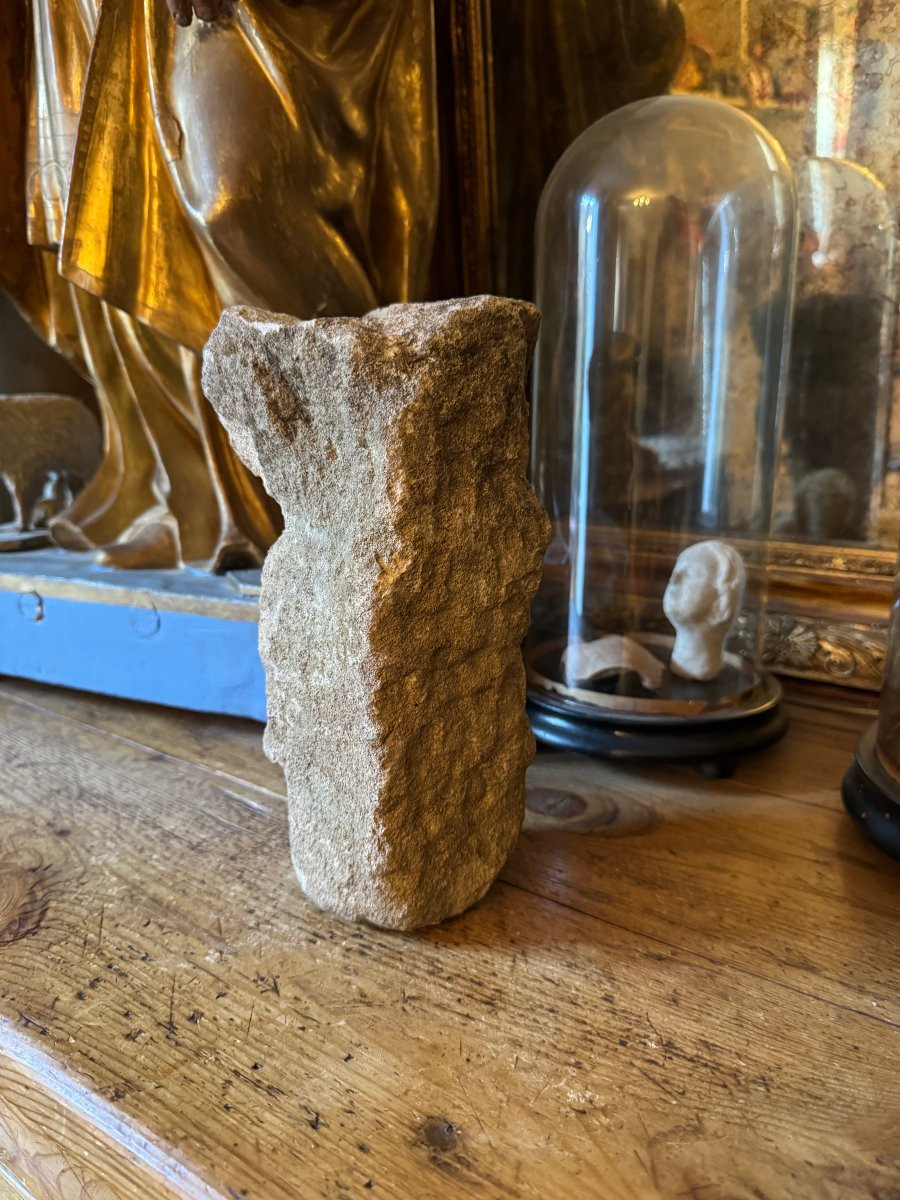
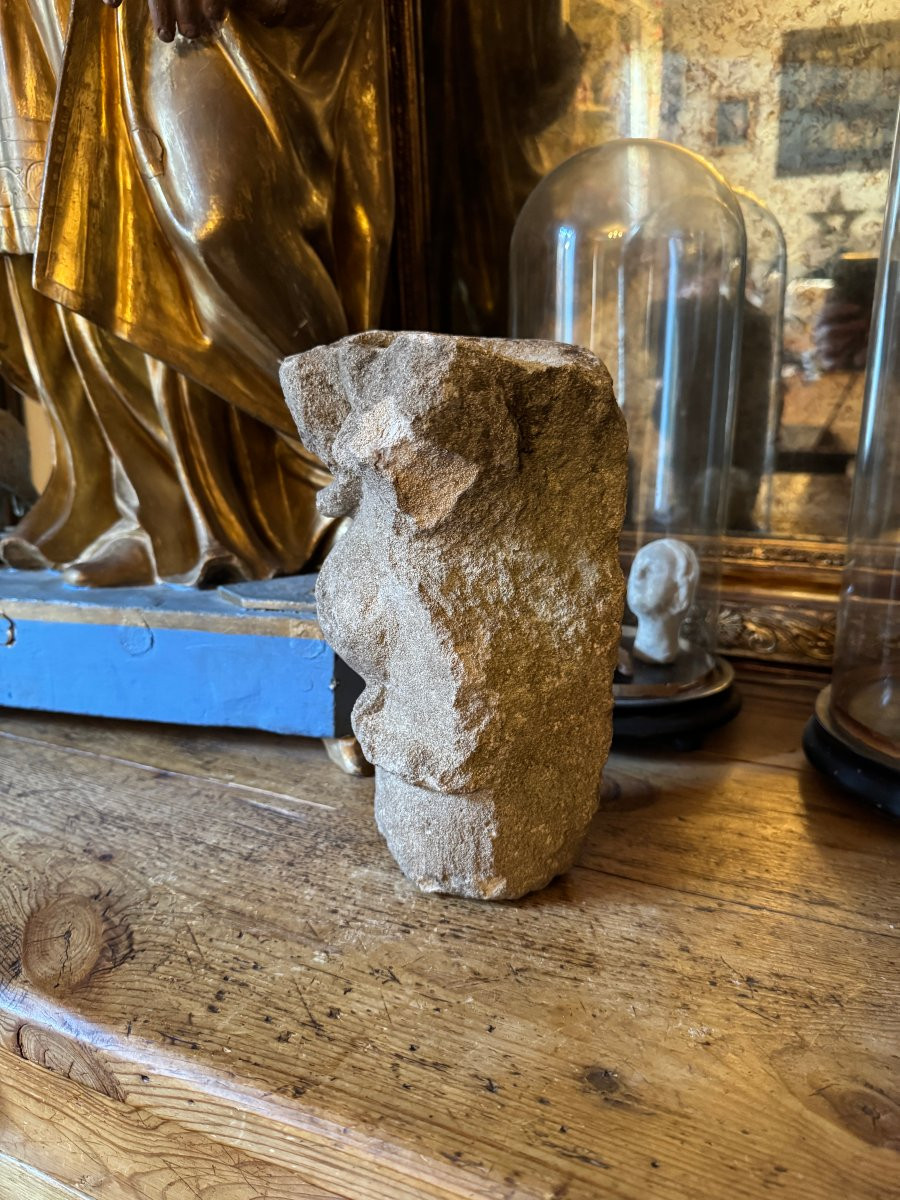
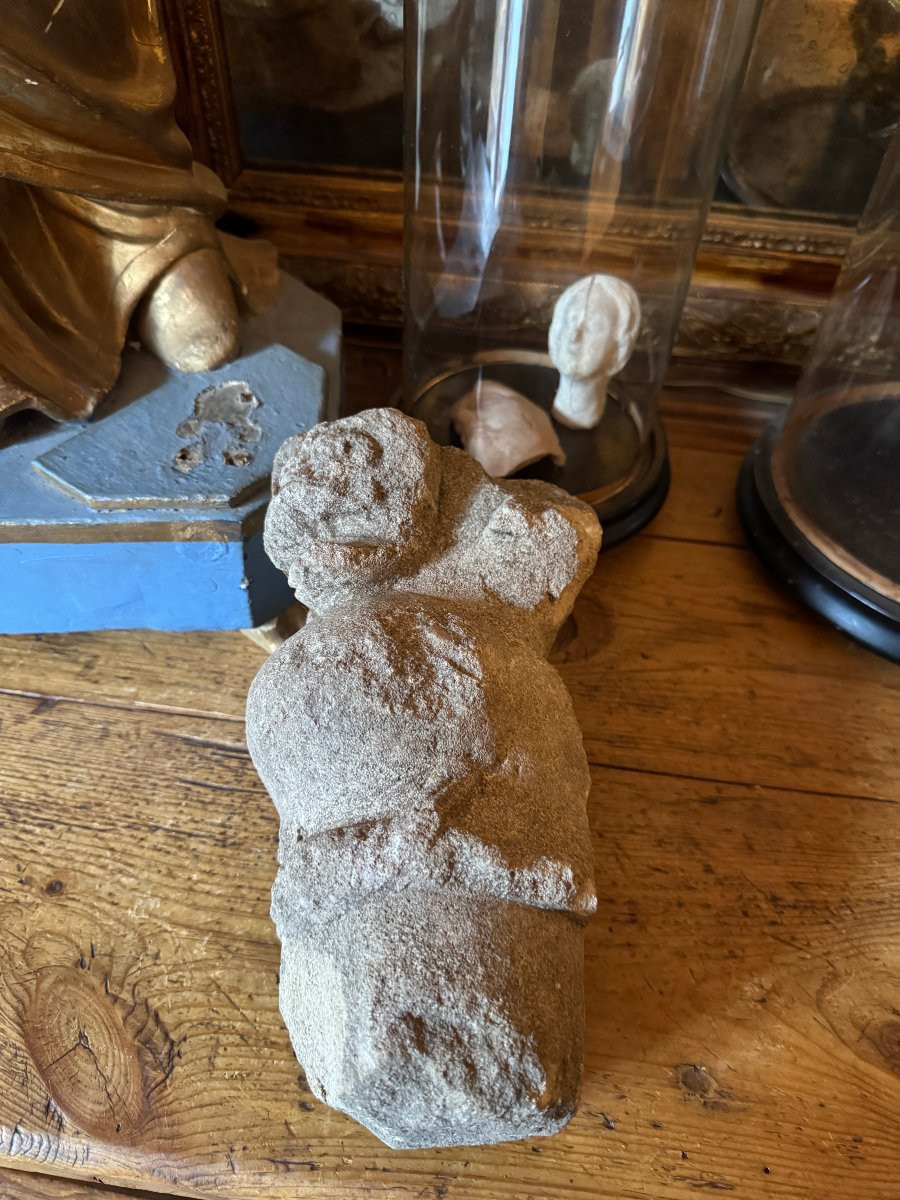
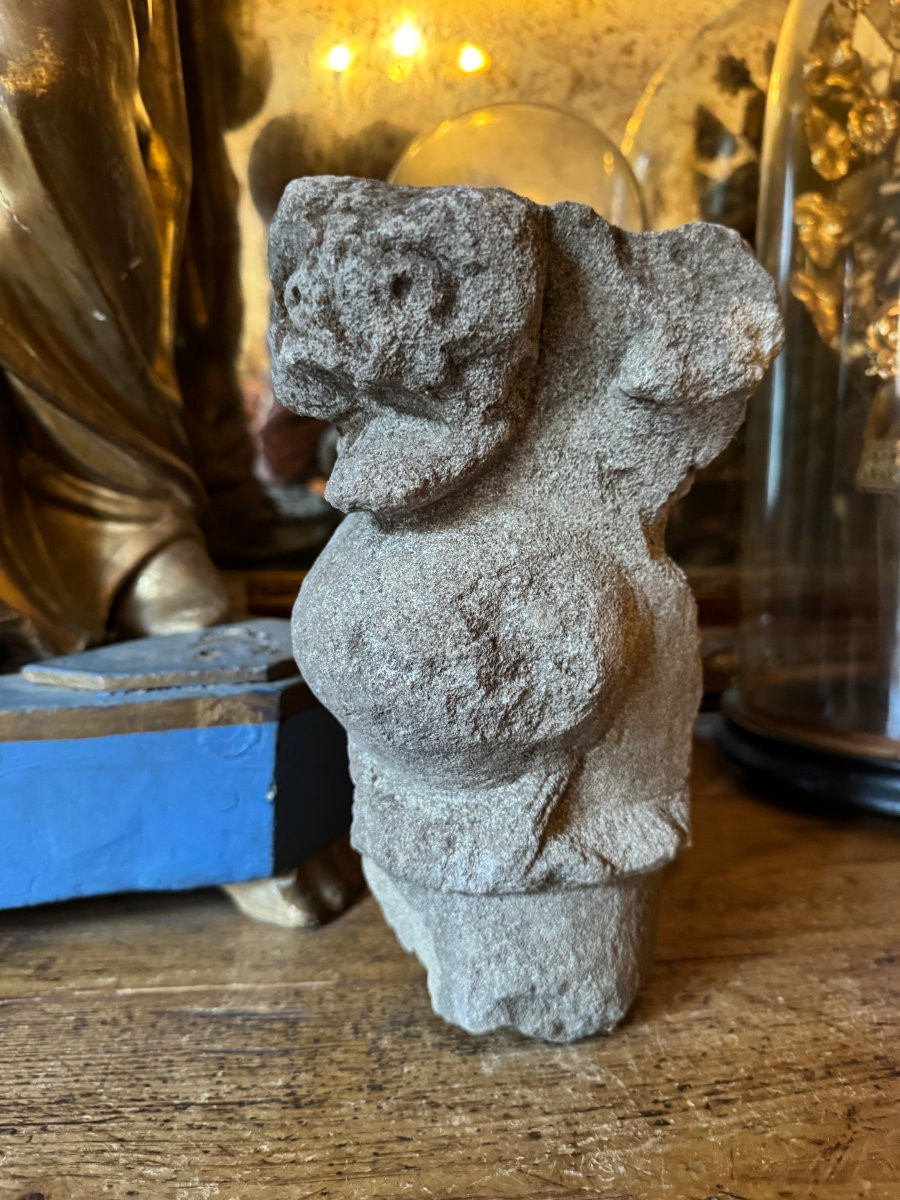
"Fragment - Medieval Sculpture - Statuary, Creature - Bestiary - Cockatrice - Early Period"
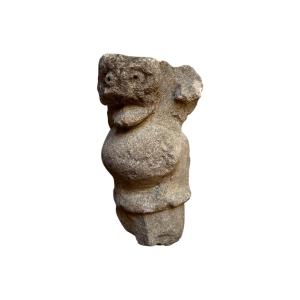
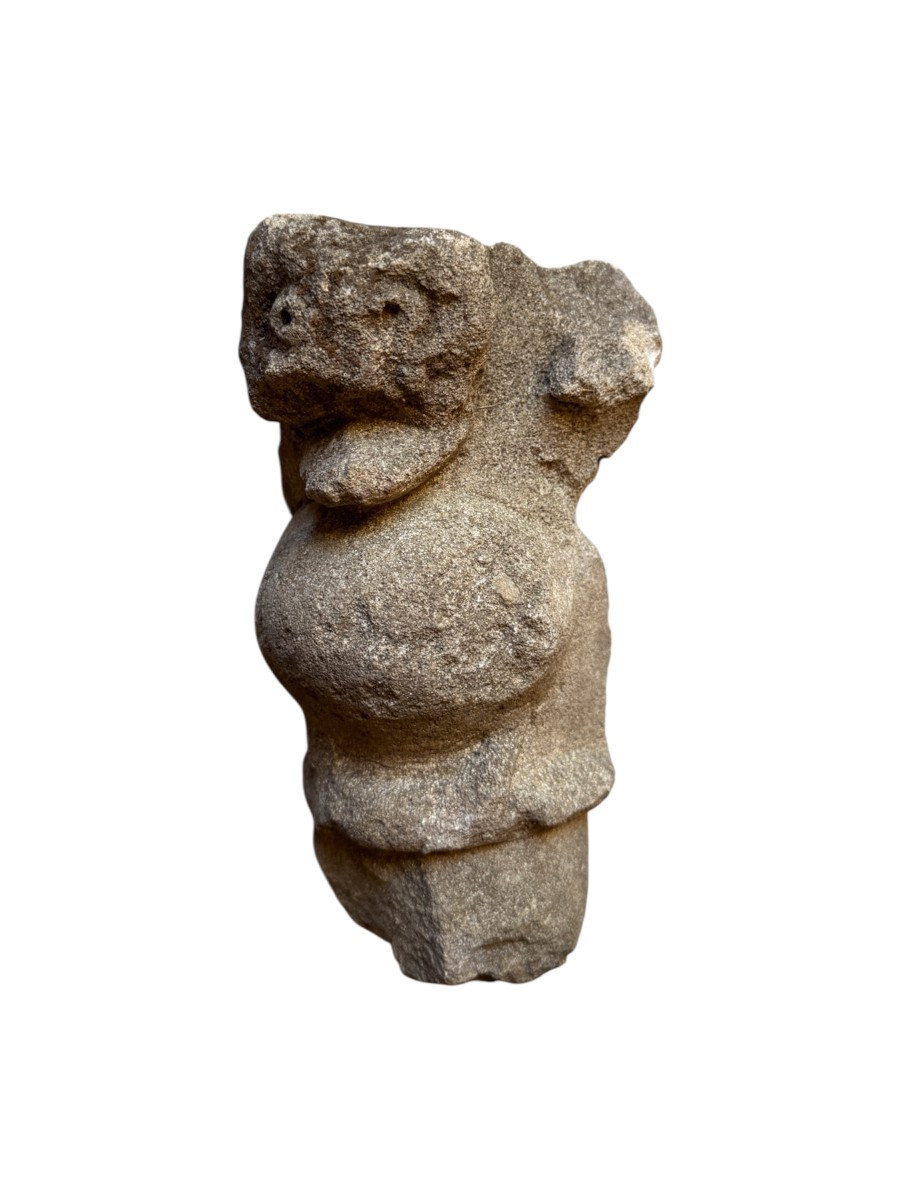
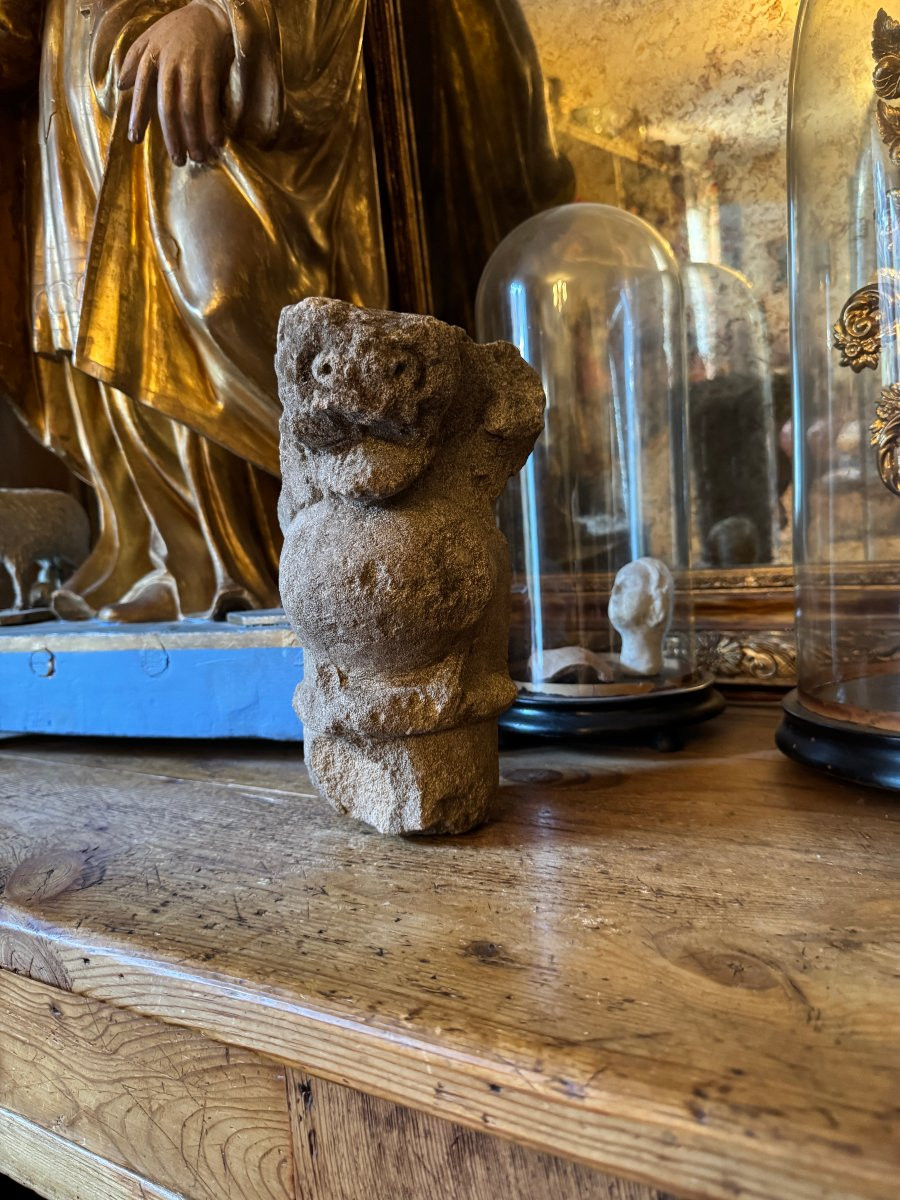
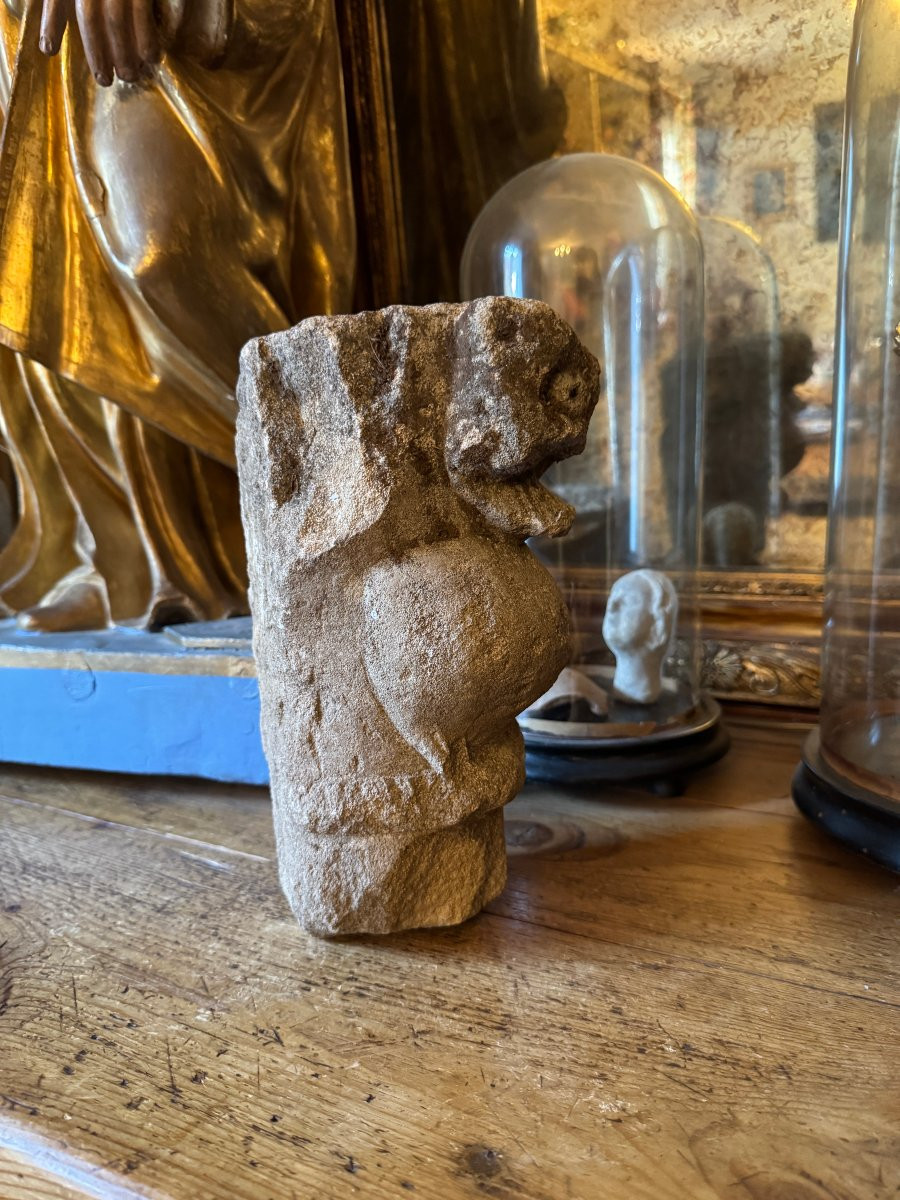
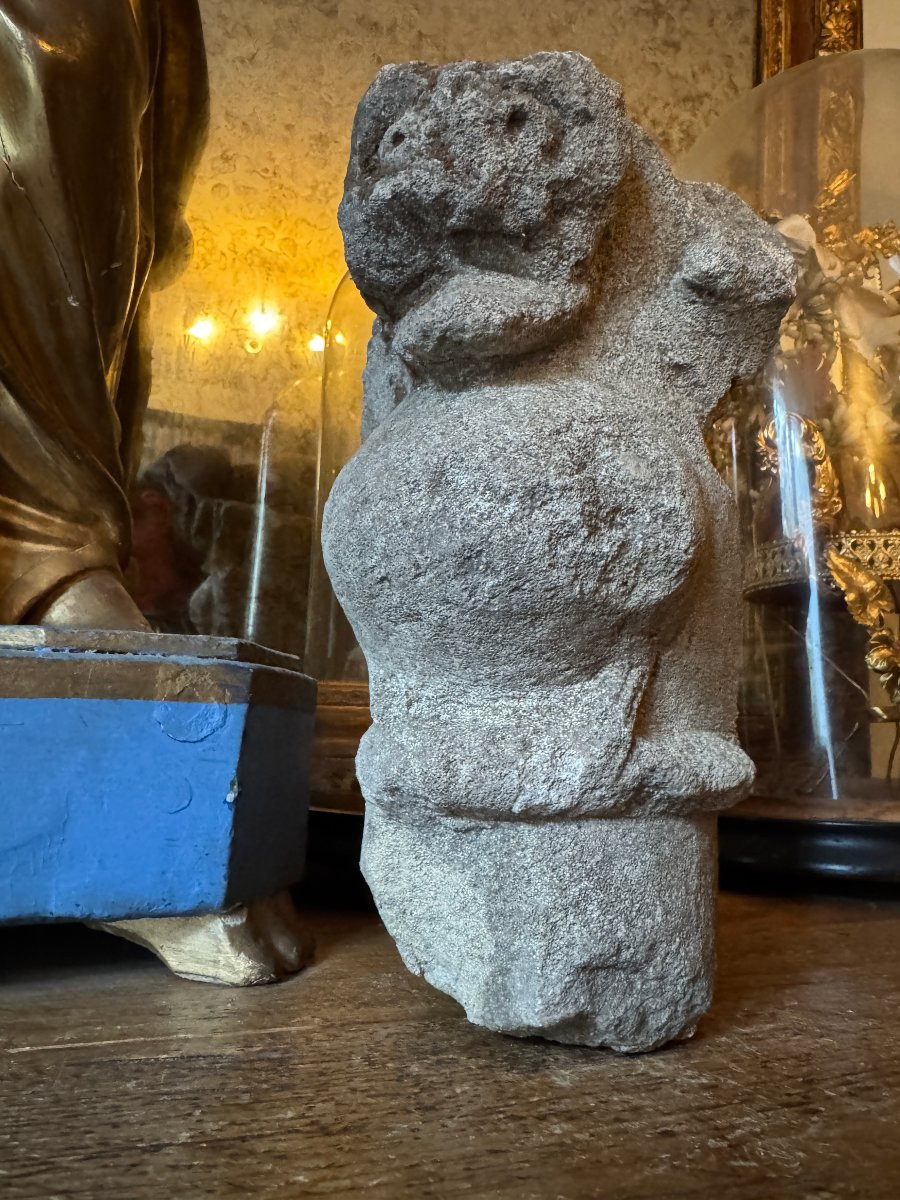
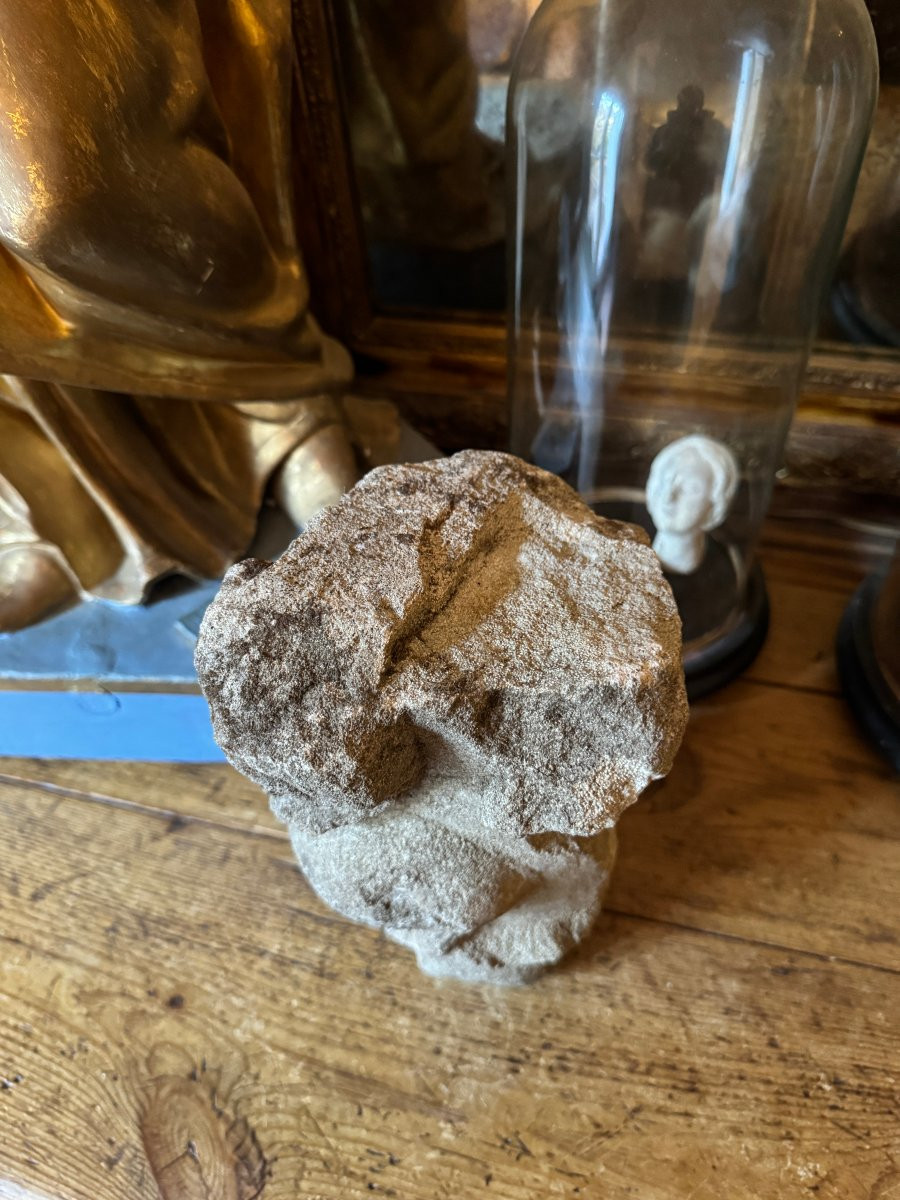
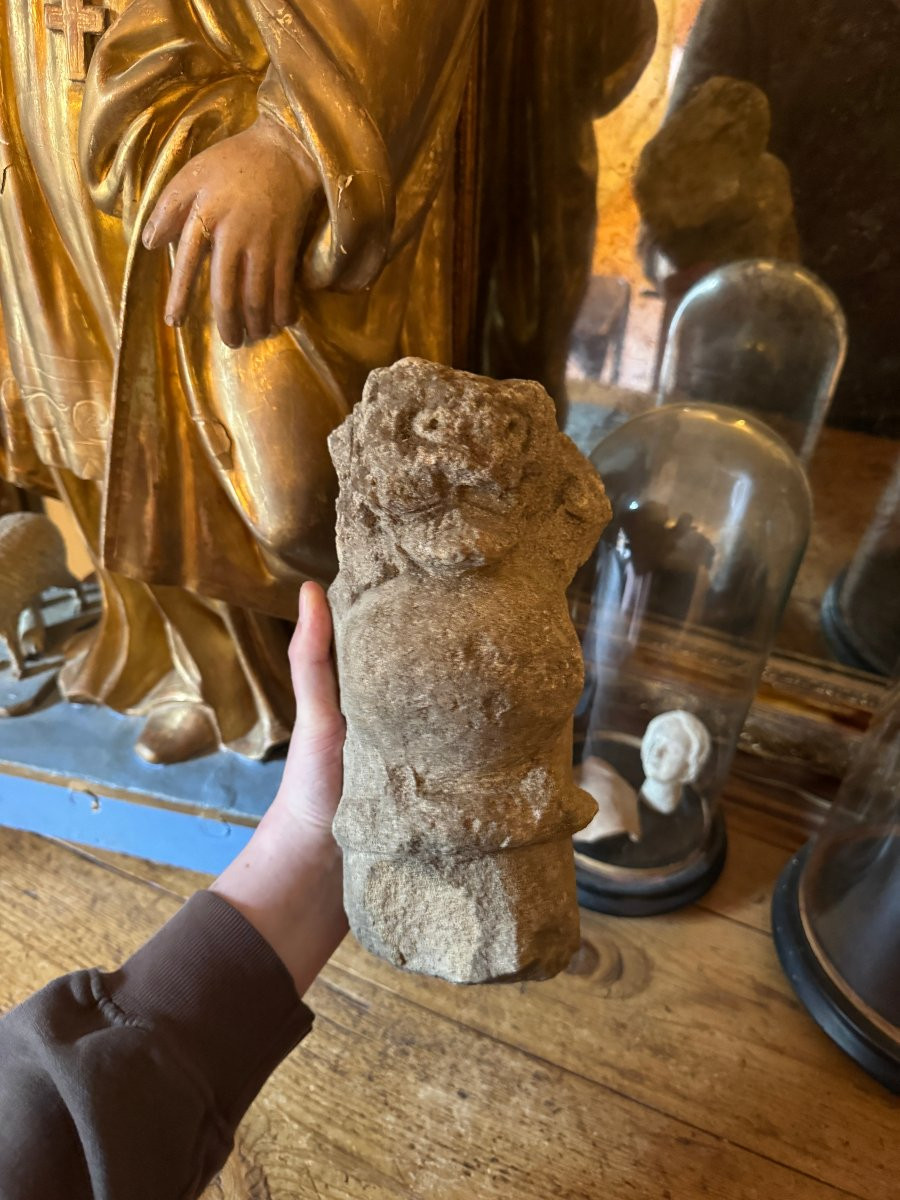
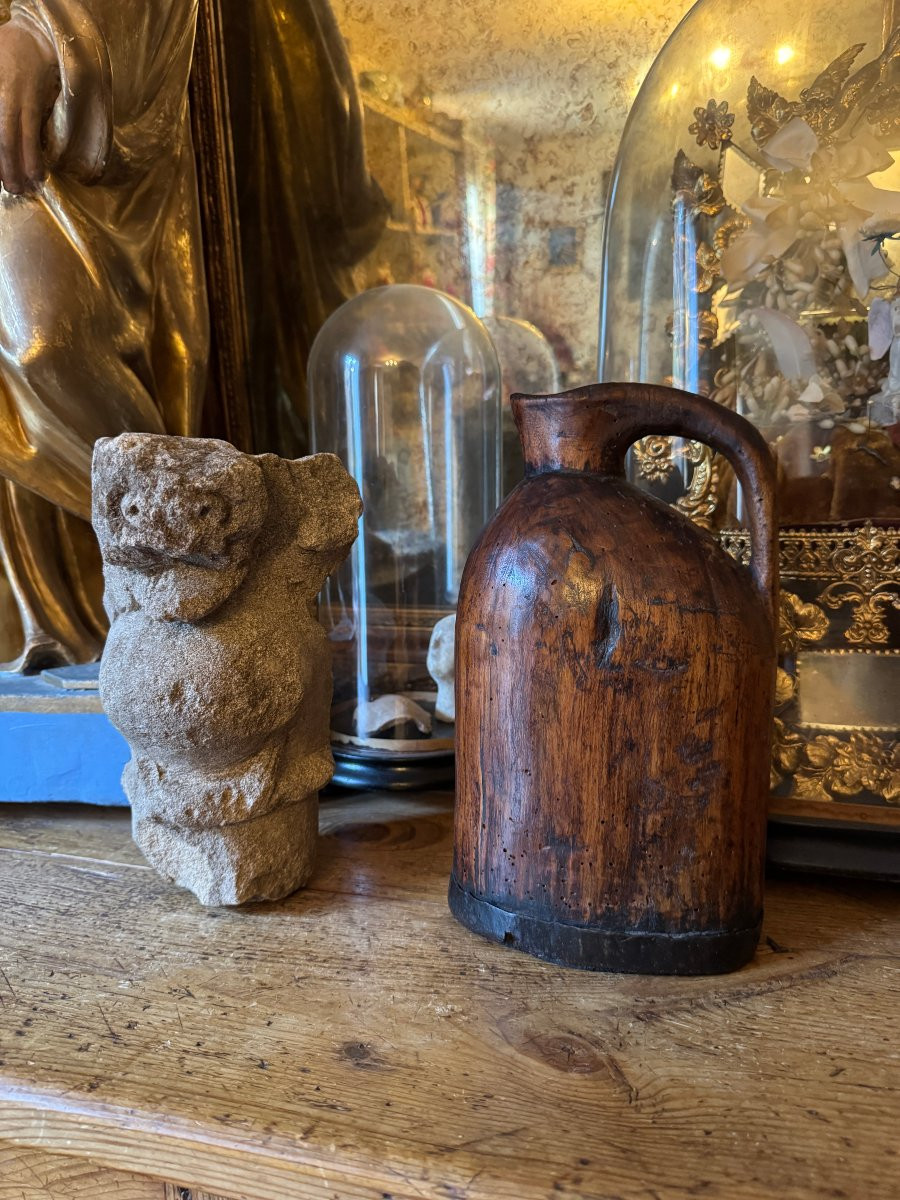
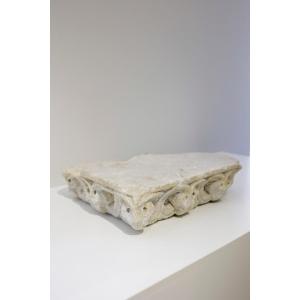
Late 12th century France – Massif Central. Rare medieval stone sculpture, a fragment of statuary belonging to the register of medieval bestiaries, representing a cockatrice (or cocatrix), a hybrid and mythical creature from the symbolic imagination of the Middle Ages. This figure belongs to an ancient iconographic vocabulary, deeply rooted in a way of thinking where the image does not illustrate but acts, warns, and protects. The sculpture is characterized by a deliberate simplification of forms: a massive head with eyes indicated by simple cupules, a thick snout, a compact body, and a strongly domed chest. The volumes are treated in a rough and direct manner, without striving for naturalism, favoring expressive power and symbolic presence. The legs are intentionally blended into the mass, reinforcing the compact and almost earthy aspect of the figure. The stone used is a local sedimentary rock, probably a coarse limestone or sandstone, a material commonly used in rural Romanesque statuary of the Massif Central. The surface shows consistent, ancient erosion, consistent with prolonged exposure to the elements. The base is truncated, indicating an earlier removal, suggesting that this sculpture was originally an architectural element: a corbel, a fragment of a capital, or a secondary element of a cornice or portal. In medieval bestiaries, the cockatrice is described as a fearsome monster, a cousin of the basilisk, with a deadly gaze and incendiary breath. According to tradition, it could only be born from an egg laid by a seven-year-old rooster, then incubated by a toad for many years. A rare and unnatural creature, it embodies the disorder of the world, the inversion of natural laws, and the spiritual dangers threatening the soul. Placed on religious or civic buildings, the cockatrice serves an apotropaic function: it does not glorify evil, but rather displays it in order to ward it off. Its sculpted presence acts as a warning, a symbolic boundary between the profane world and sacred space, reminding the faithful of the dark forces lurking outside the divine order. Through its formal treatment, material, and iconography, this sculpture is fully in keeping with the Romanesque tradition of the Massif Central, originating from a local workshop, on the outskirts of major centers, where statuary retains an archaic, powerful, and profoundly expressive dimension. A fragmentary piece, yet of indisputable authenticity, it lies at the crossroads of sculpture, architecture, and symbol. A rare testament to medieval visual thought, where stone becomes language, and the animal, a lesson. Condition: ancient fragment, original breaks and losses, ancient erosion consistent with age and exposure, no visible modern restoration. Dimensions: height: 25 cm. Shipping: ALL DELIVERIES ARE MADE BY DHL EXPRESS ONLY. 







 Le Magazine de PROANTIC
 TRÉSORS Magazine
 Rivista Artiquariato