




Demeter Or Ceres, 18th Century Marble: Goddess Of Harvests And Agriculture
18th Century Marble: Demeter, Goddess of Harvests and Agriculture.
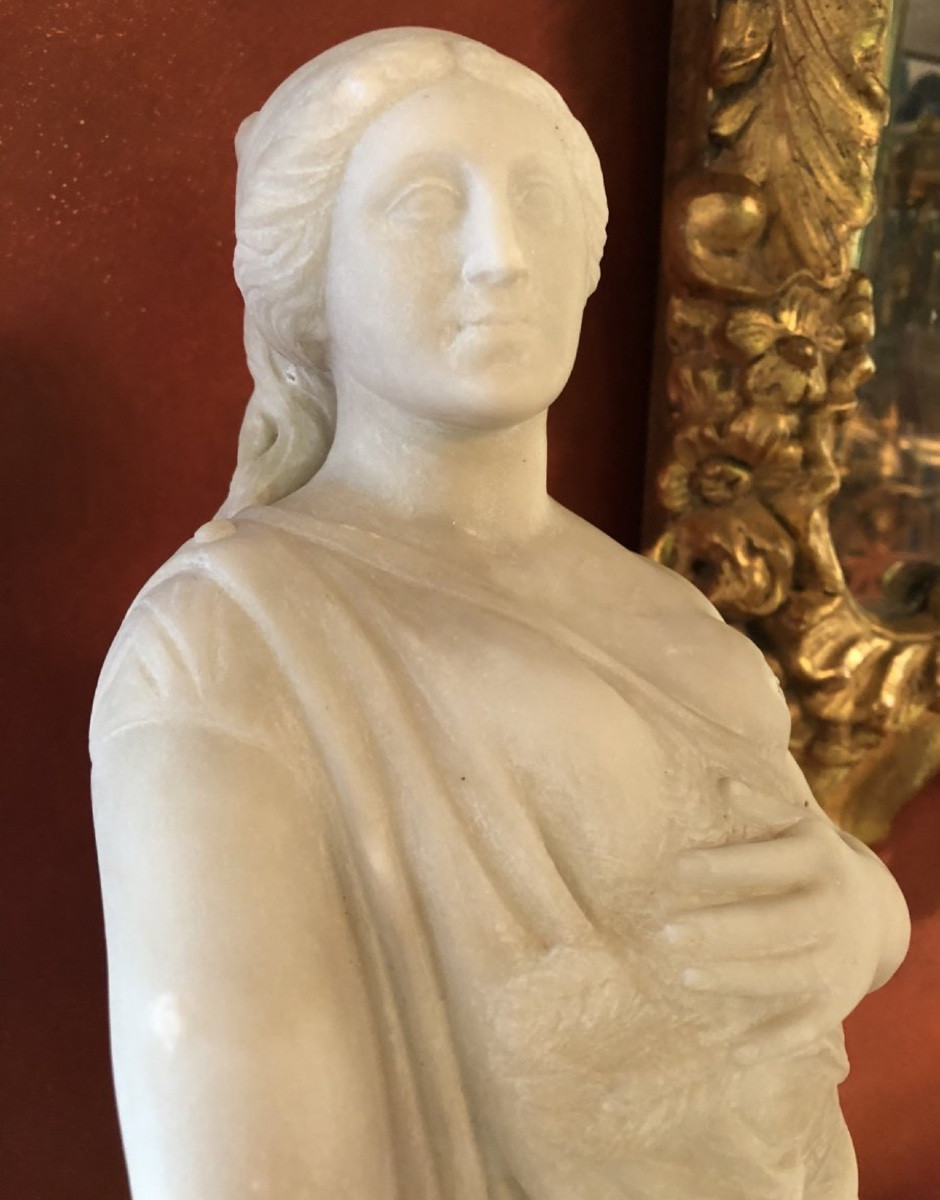
Rare mythological marble statue depicting the goddess Demeter, or Ceres in Latin.
This is a rare representation dating from the mid-18th century of the goddess of agriculture and harvests, mother of Persephone.
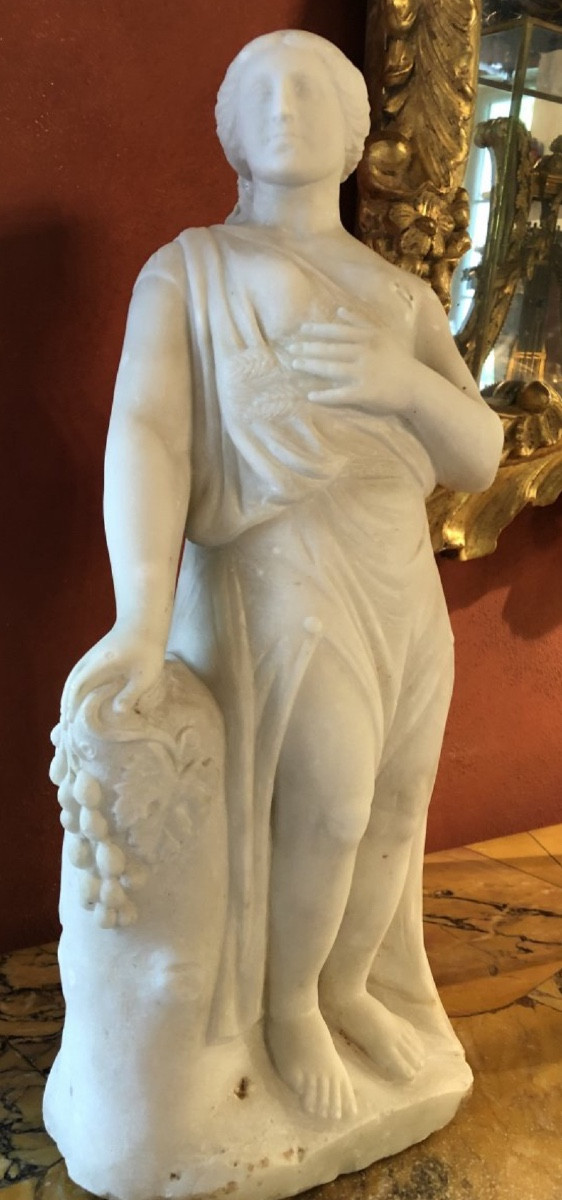
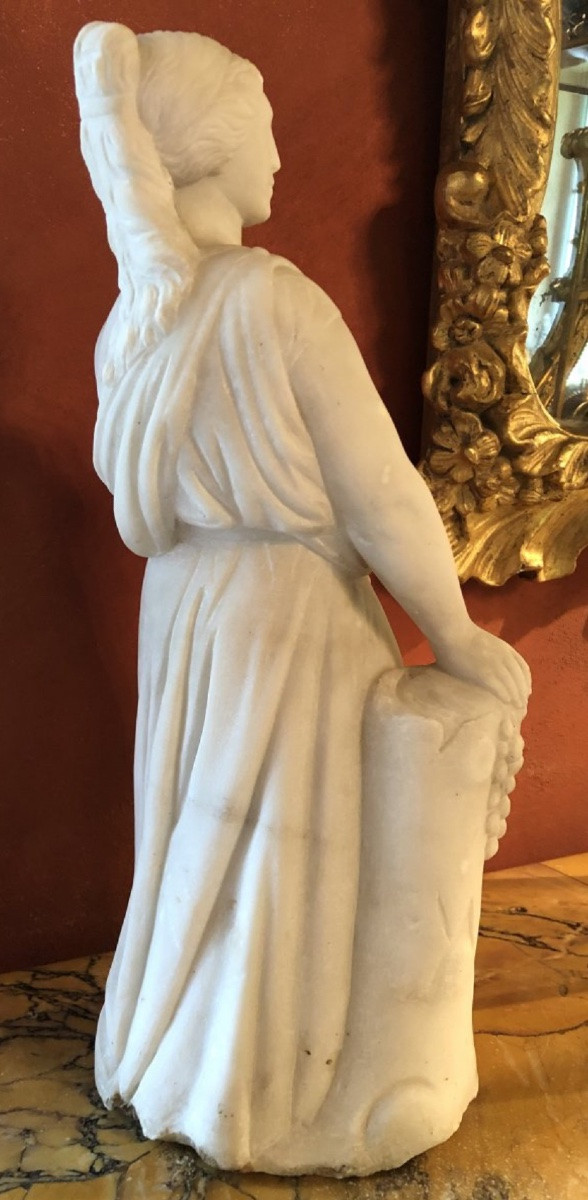
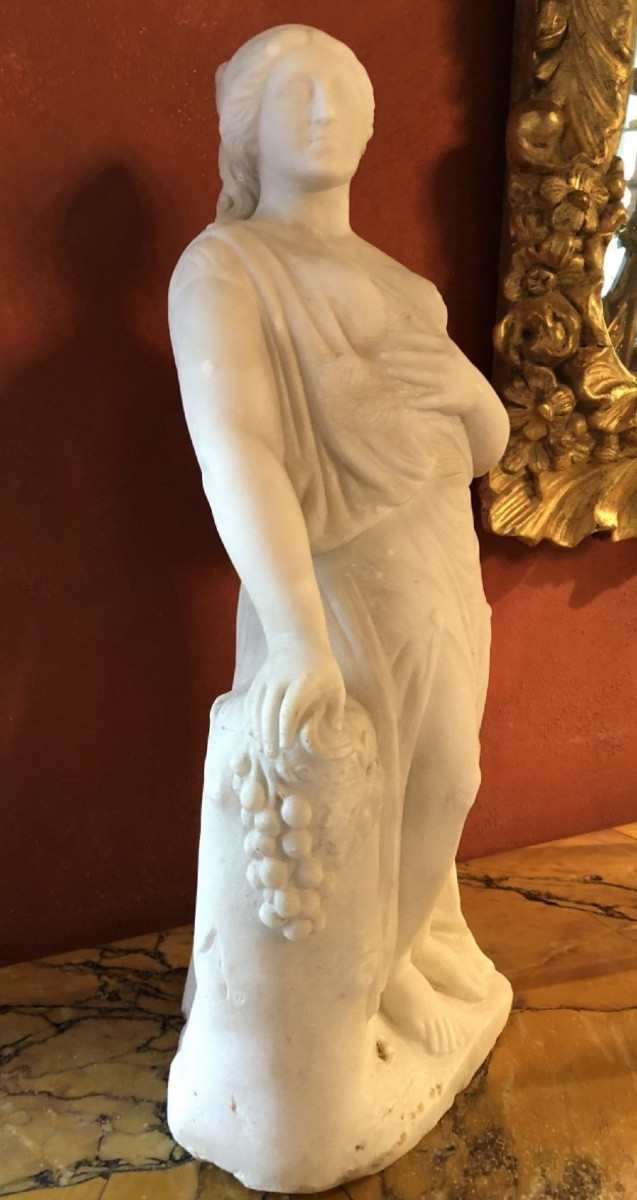
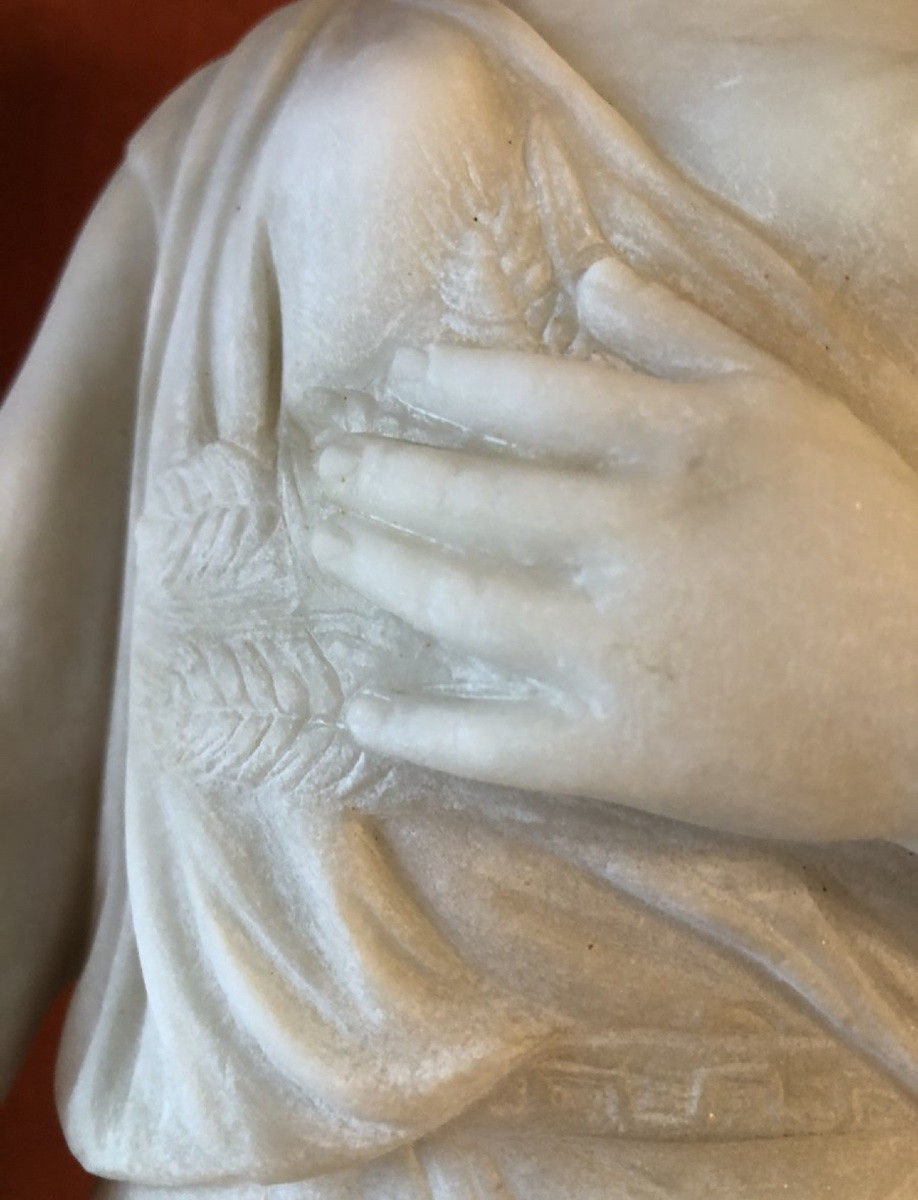
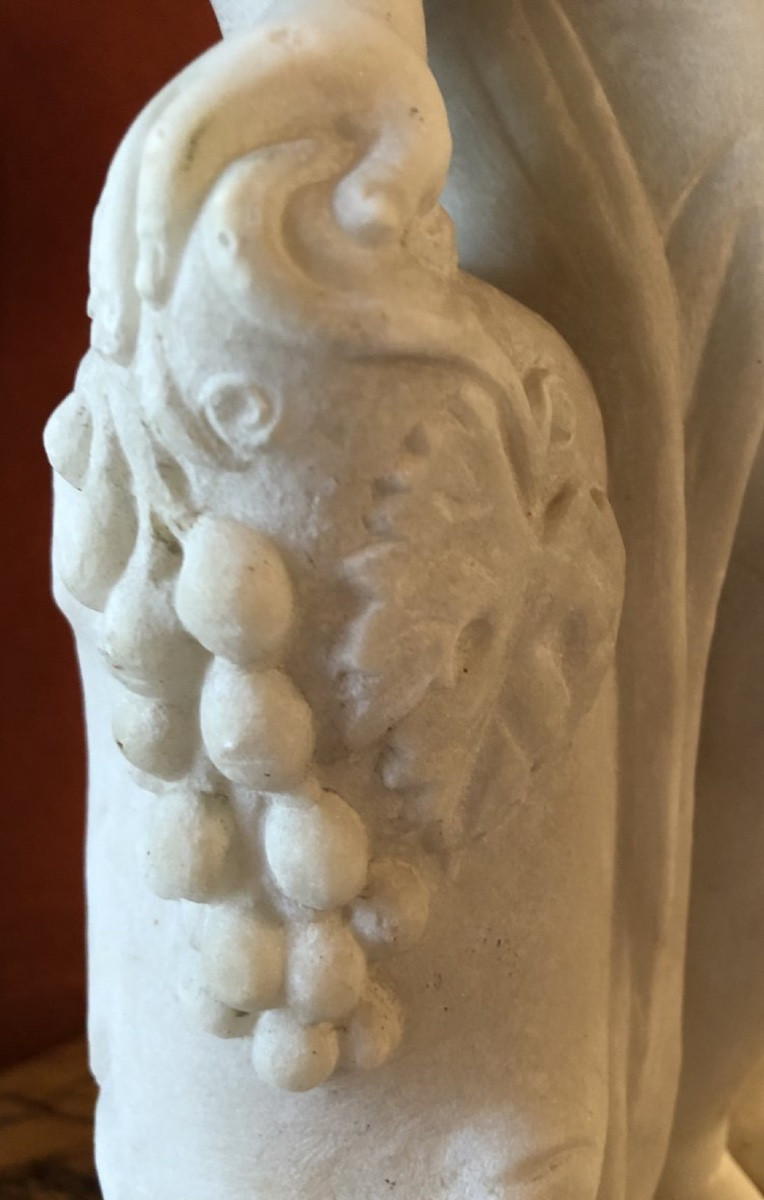
This marble statue shows the goddess holding sheaves of wheat against her breast, while her other hand rests on a vine from which bunches of grapes emerge.
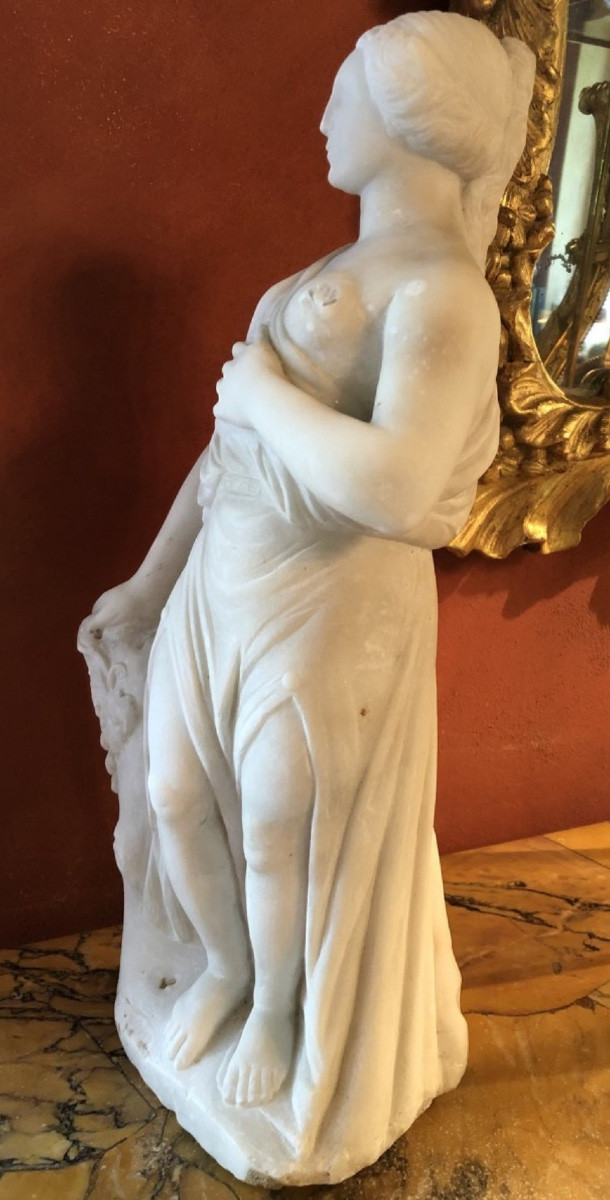
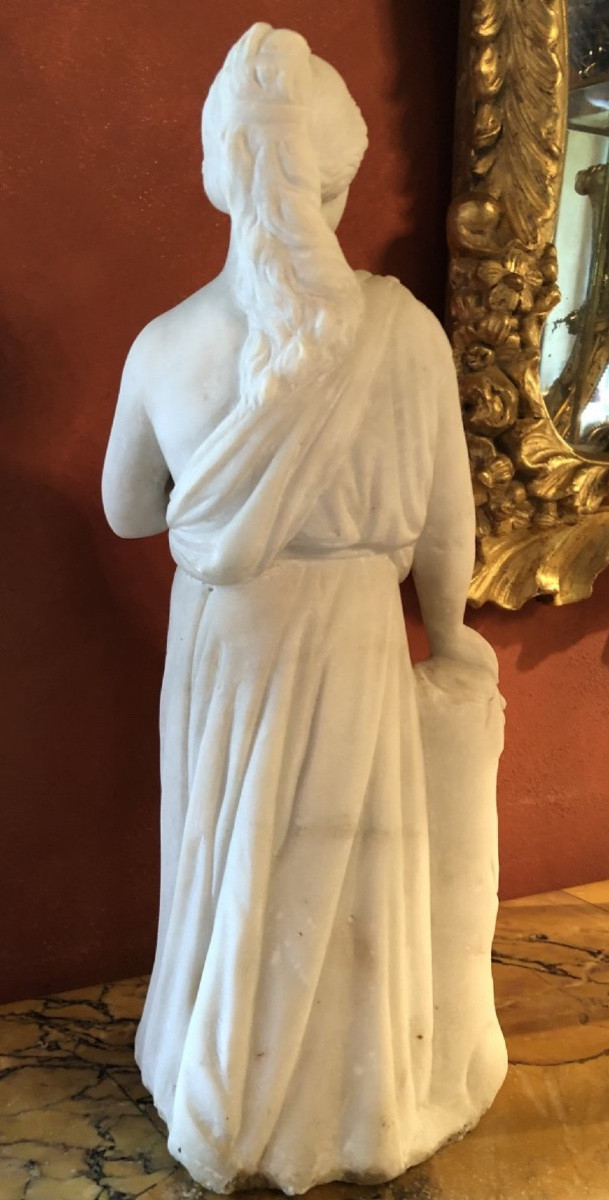
She wears a long, elaborately draped robe that reveals her breasts.
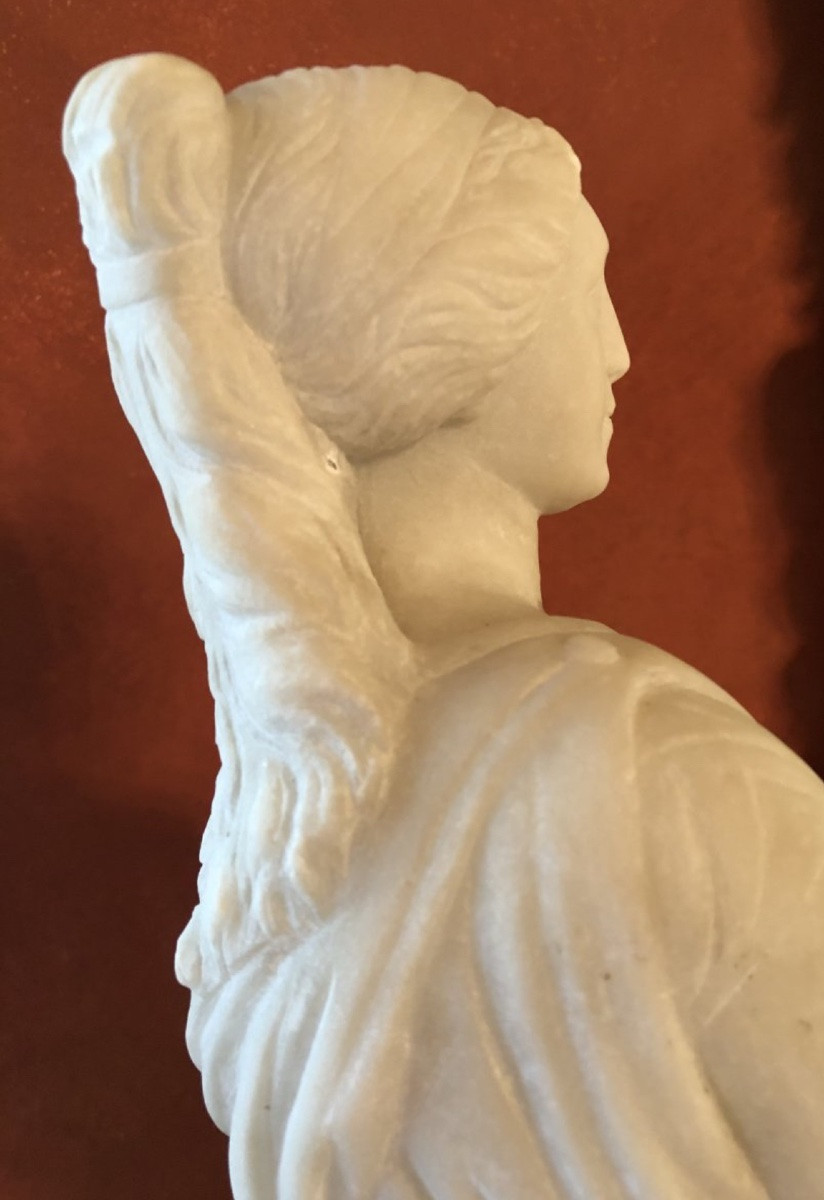
Her hair is particularly well-groomed and ends in a long ponytail. She has a proud, haughty pose that reflects her personality and divine nature.
A rare representation of this important goddess of classical mythology.
A very beautiful early statue, executed in fine white marble. Some scratches and a small chip on the breast.
Dimensions:
45 cm high.
We deliver and ship worldwide; please contact us for a precise quote. Myth of Demeter, goddess of Agriculture and harvests: When Hades, ruler of the dead, abducted Persephone to make her his wife, her mother, Demeter, set out to find her, neglecting the Earth's crops. Taking the form of an old woman named Doso, she wandered for nine days and nine nights. Realizing that famine threatened mortals, Zeus decided to send his messenger Hermes to Hades' realm to ask him to return Persephone to her mother. But Persephone had eaten six seeds from the pomegranate that the cunning Hades had given her to keep her with him, as tradition held that whoever eats in the realm of the dead can never leave. Zeus obtained permission for Persephone to spend the winter in the Underworld and the rest of the year with her mother. Thus, according to Greek mythology, the cycle of the seasons began. Demeter had other children besides Persephone. The hero Iasion united with her in a field plowed thrice and bore her a son who was named Plutus and became the personification of wealth. Homer mentions that Zeus, out of jealousy, struck Iasion down with a thunderbolt. United with Poseidon, Demeter also conceived Arion, an immortal horse, and a mysterious goddess whose name was forbidden to be spoken, who was known as Despina ("the Mistress"). Legend relates that, having conceived Despina during her quest for Persephone, Demeter had her raised by the Titan Anytus. Demeter taught humans sowing and plowing. During her wanderings in the form of Doso, she met Celeus, king of Eleusis. To thank him for his hospitality, she took the king's sons, Demophon and Triptolemus, with her, attempting to make the former immortal and teaching the latter the art of agriculture. He was to pass this art on to the rest of humanity. According to some traditions, she also gave him grains of wheat to spread across the Earth. (cf. Wikipedia)
Rare mythological marble statue depicting the goddess Demeter, or Ceres in Latin.
This is a rare representation dating from the mid-18th century of the goddess of agriculture and harvests, mother of Persephone.
This marble statue shows the goddess holding sheaves of wheat against her breast, while her other hand rests on a vine from which bunches of grapes emerge.
She wears a long, elaborately draped robe that reveals her breasts.
Her hair is particularly well-groomed and ends in a long ponytail. She has a proud, haughty pose that reflects her personality and divine nature.
A rare representation of this important goddess of classical mythology.
A very beautiful early statue, executed in fine white marble. Some scratches and a small chip on the breast.
Dimensions:
45 cm high.
We deliver and ship worldwide; please contact us for a precise quote. Myth of Demeter, goddess of Agriculture and harvests: When Hades, ruler of the dead, abducted Persephone to make her his wife, her mother, Demeter, set out to find her, neglecting the Earth's crops. Taking the form of an old woman named Doso, she wandered for nine days and nine nights. Realizing that famine threatened mortals, Zeus decided to send his messenger Hermes to Hades' realm to ask him to return Persephone to her mother. But Persephone had eaten six seeds from the pomegranate that the cunning Hades had given her to keep her with him, as tradition held that whoever eats in the realm of the dead can never leave. Zeus obtained permission for Persephone to spend the winter in the Underworld and the rest of the year with her mother. Thus, according to Greek mythology, the cycle of the seasons began. Demeter had other children besides Persephone. The hero Iasion united with her in a field plowed thrice and bore her a son who was named Plutus and became the personification of wealth. Homer mentions that Zeus, out of jealousy, struck Iasion down with a thunderbolt. United with Poseidon, Demeter also conceived Arion, an immortal horse, and a mysterious goddess whose name was forbidden to be spoken, who was known as Despina ("the Mistress"). Legend relates that, having conceived Despina during her quest for Persephone, Demeter had her raised by the Titan Anytus. Demeter taught humans sowing and plowing. During her wanderings in the form of Doso, she met Celeus, king of Eleusis. To thank him for his hospitality, she took the king's sons, Demophon and Triptolemus, with her, attempting to make the former immortal and teaching the latter the art of agriculture. He was to pass this art on to the rest of humanity. According to some traditions, she also gave him grains of wheat to spread across the Earth. (cf. Wikipedia)
1 850 €
Period: 18th century
Style: Rome and Antic Greece
Condition: Good condition
Material: Marble
Height: 45 cm
Reference (ID): 1679998
Availability: In stock
Print