THIS OBJECT WAS SOLD
Transi Memento Mori Plaster Medieval Funeral Art

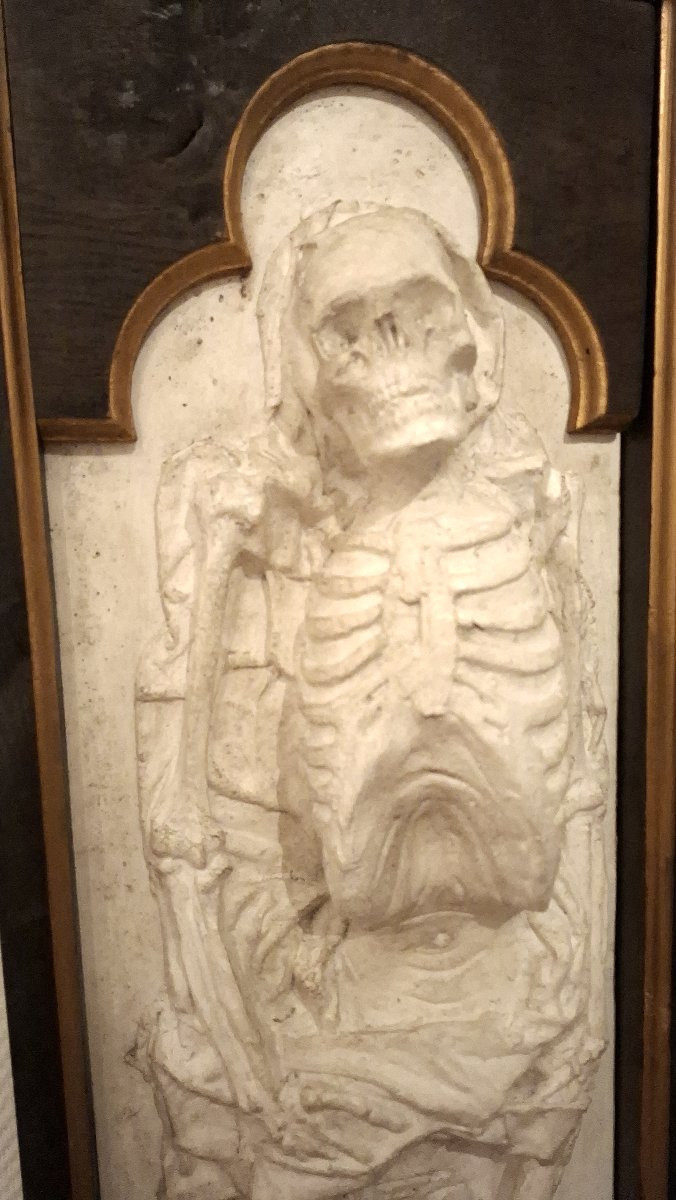

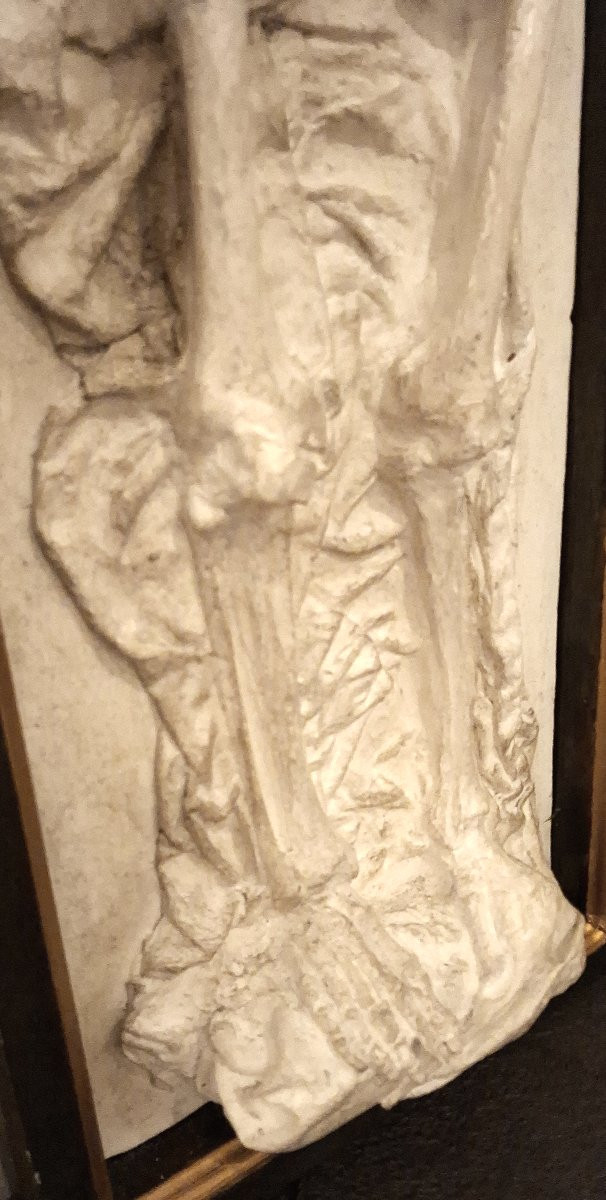

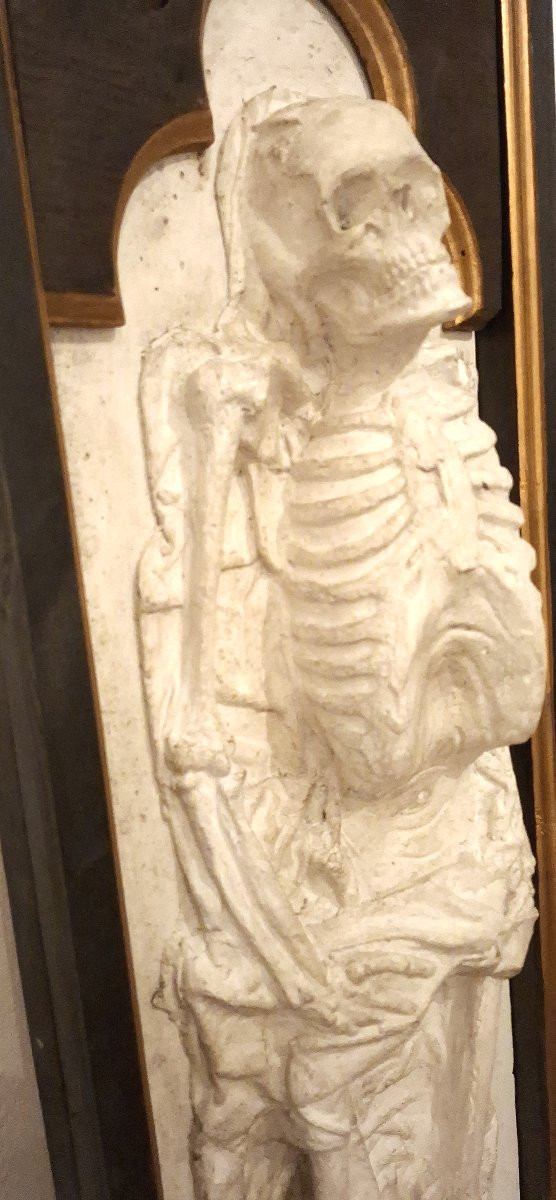

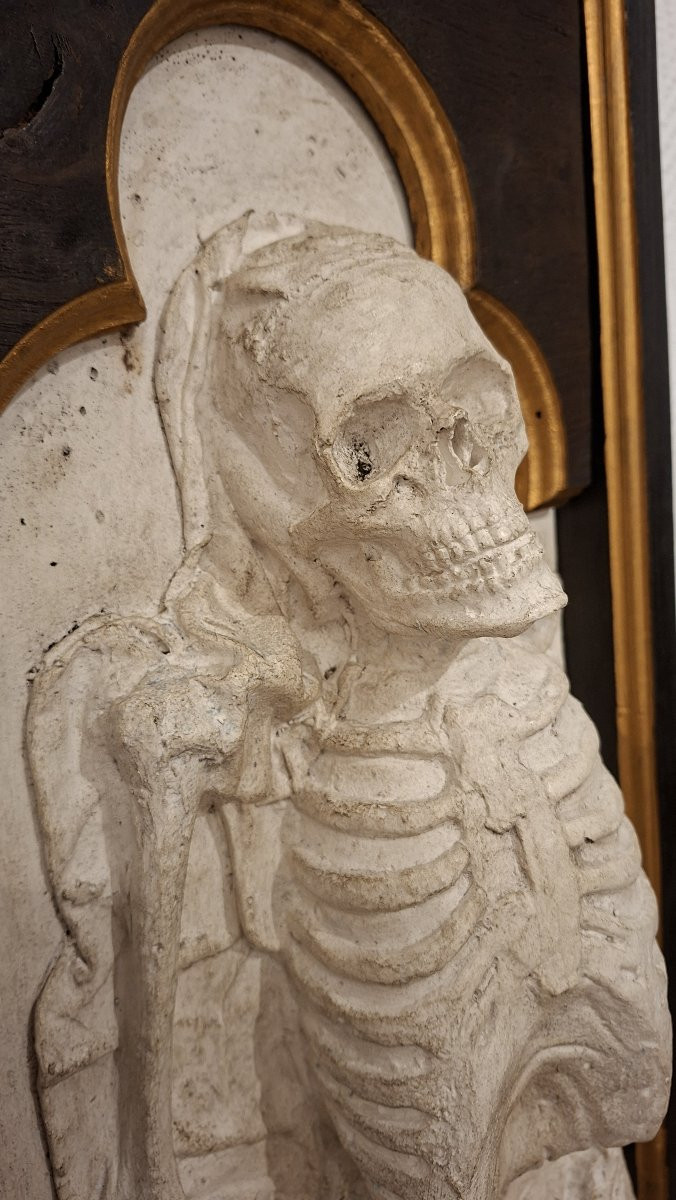
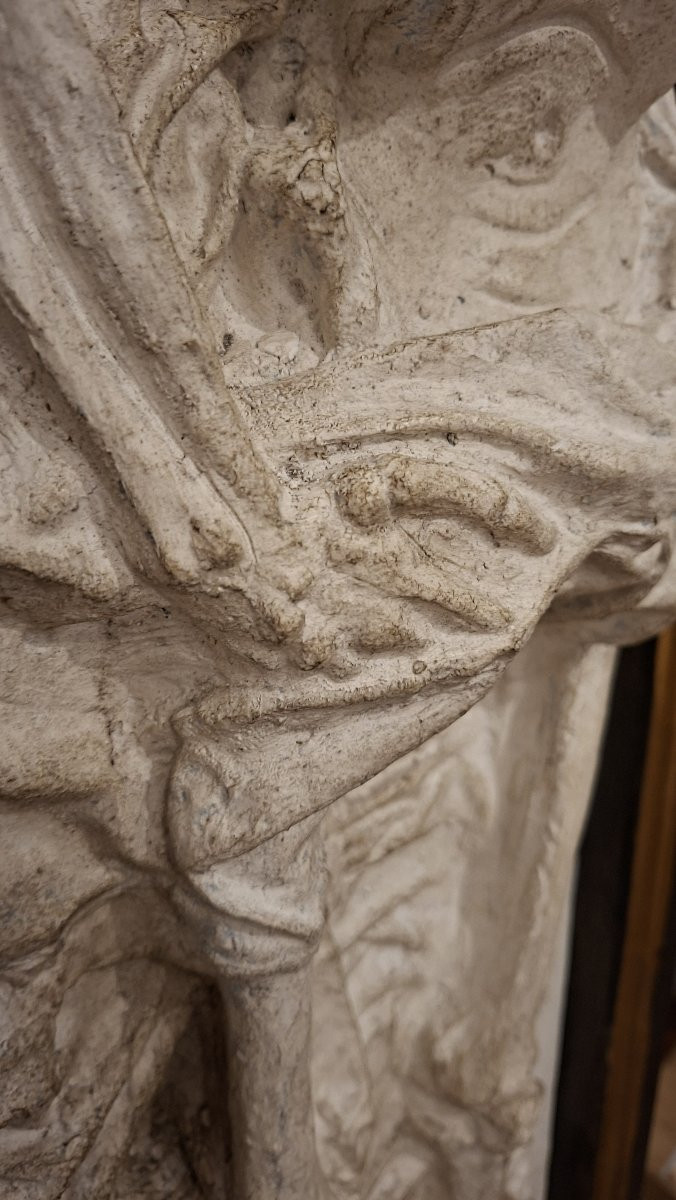
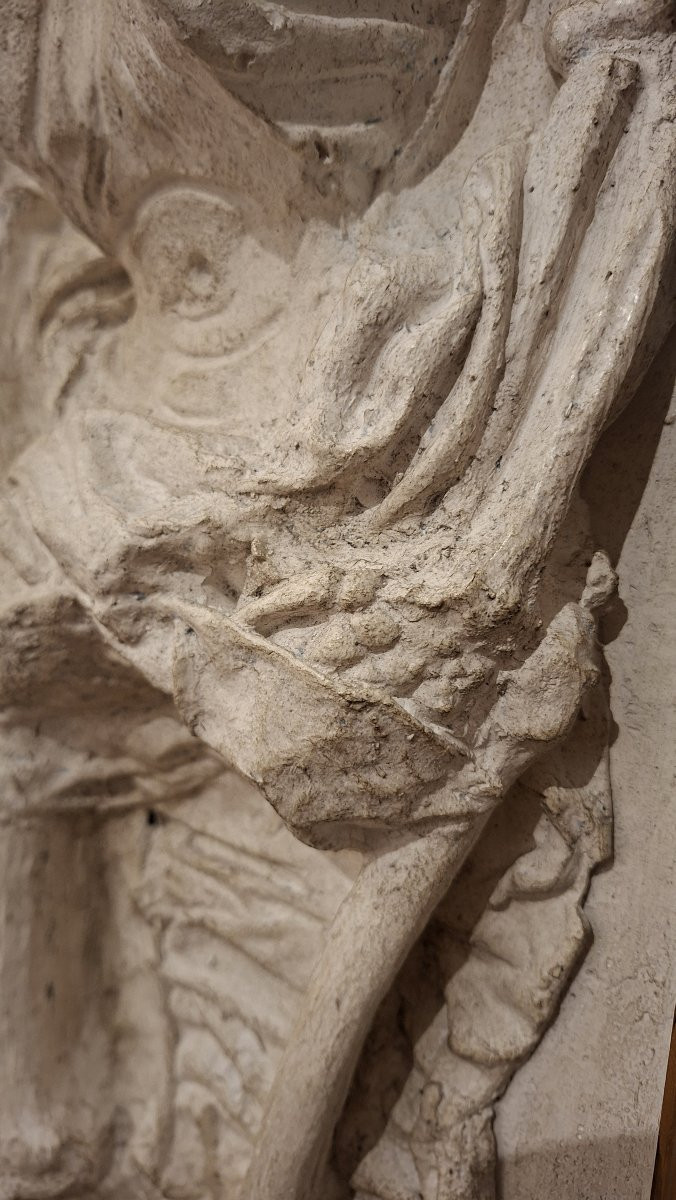
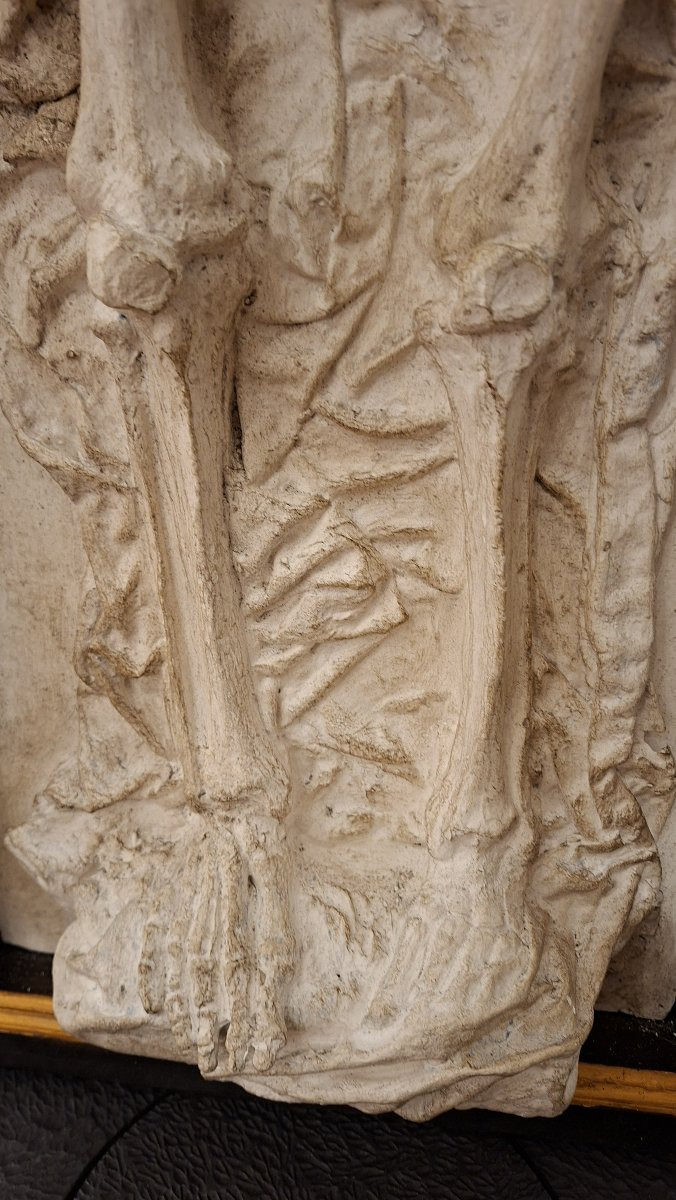


Following the plague epidemics of the 14th and 15th centuries, there was a surge in France towards realistic depictions of death. In contrast to the recumbent effigies of noble and pious figures of importance, which presented an idealized image, the transi (a effigy of a deceased person) represented a decomposing body (a skeleton or emaciated corpse) to symbolize human mortality and recall the principle of memento mori ("Remember that you will die"). These monuments, often placed on the tombs of nobles, illustrated the vanity of earthly possessions and the inevitable passage from life to death, becoming works of art that served as reminders of the fragility of existence. They can also be found in the porches of some churches. This plaster cast, encased in its blackened and gilded wooden sarcophagus, is in perfect condition. Due to the weight of the object, it will be shipped by courier. Shipping costs will depend on the destination. AND MERRY CHRISTMAS TO ALL… MESSAGE TO ALL HUMANS ON EARTH: I hope that 2026 will bring some common sense back to this Earth… WE REALLY NEED IT.
Explore similar pieces and discover your ideal find:
Curiosities