THIS OBJECT WAS SOLD
Jacob Desmalter, Pair Of Mahogany Armchairs Stamped Empire Period, Circa 1810
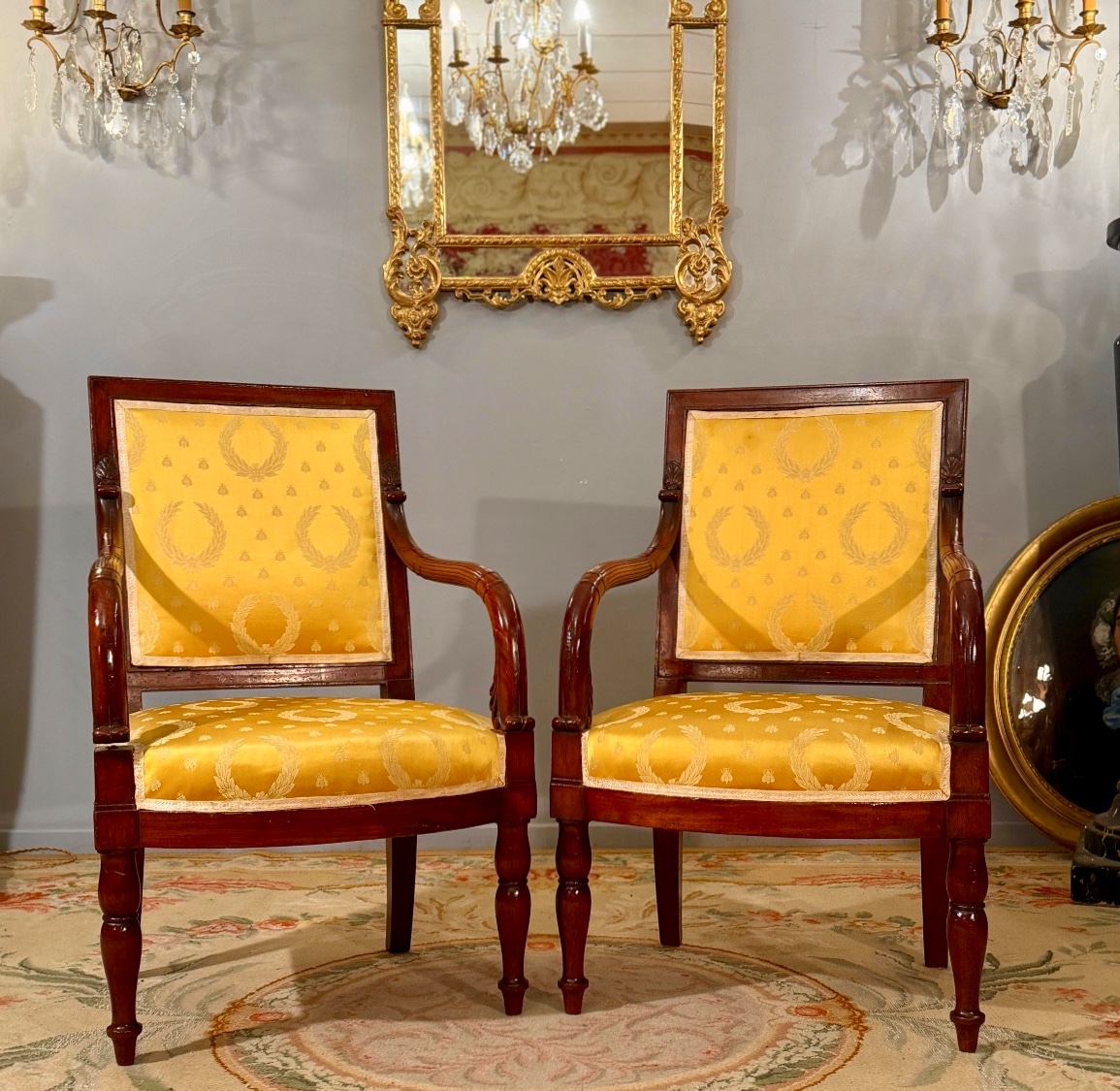
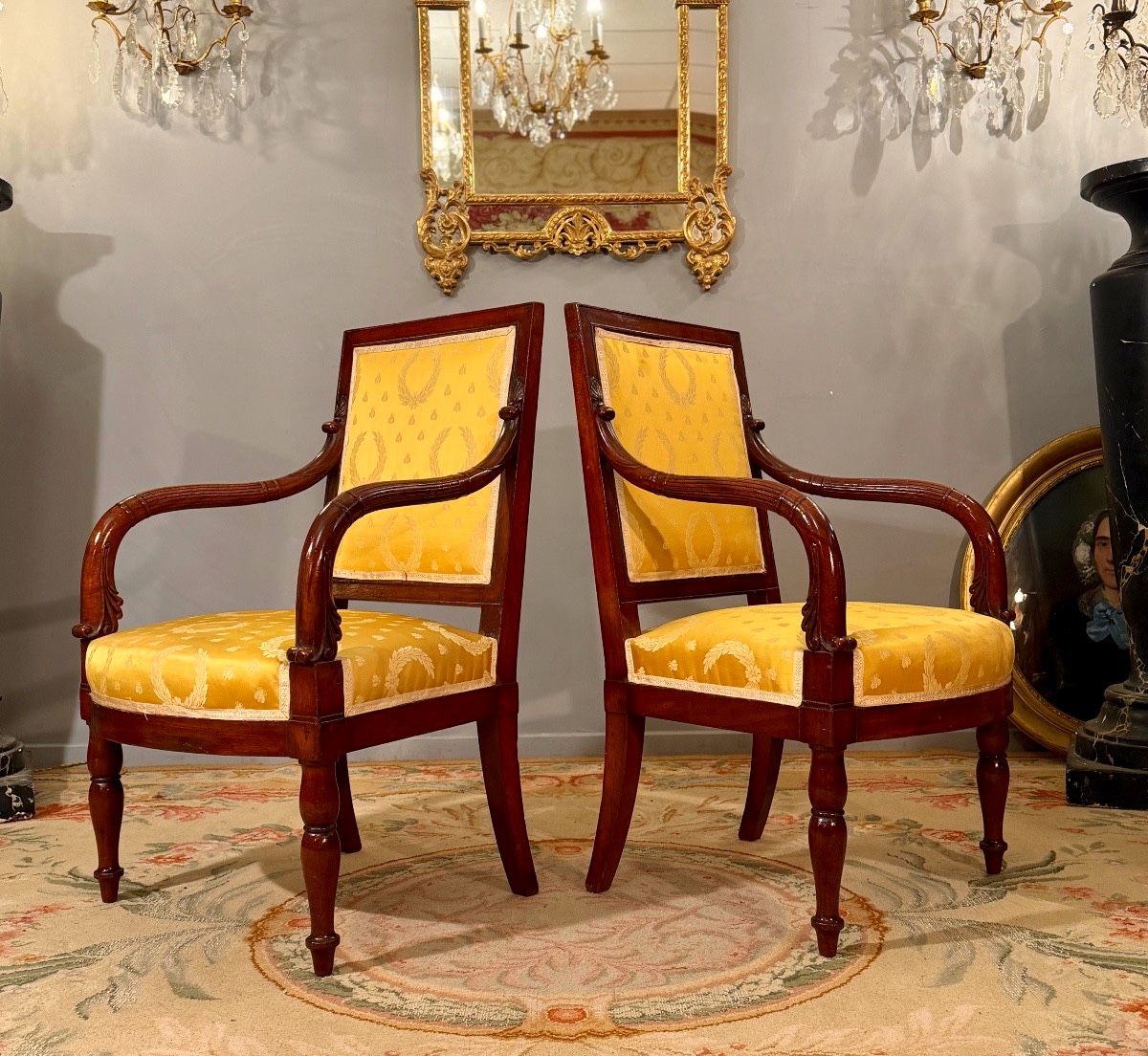
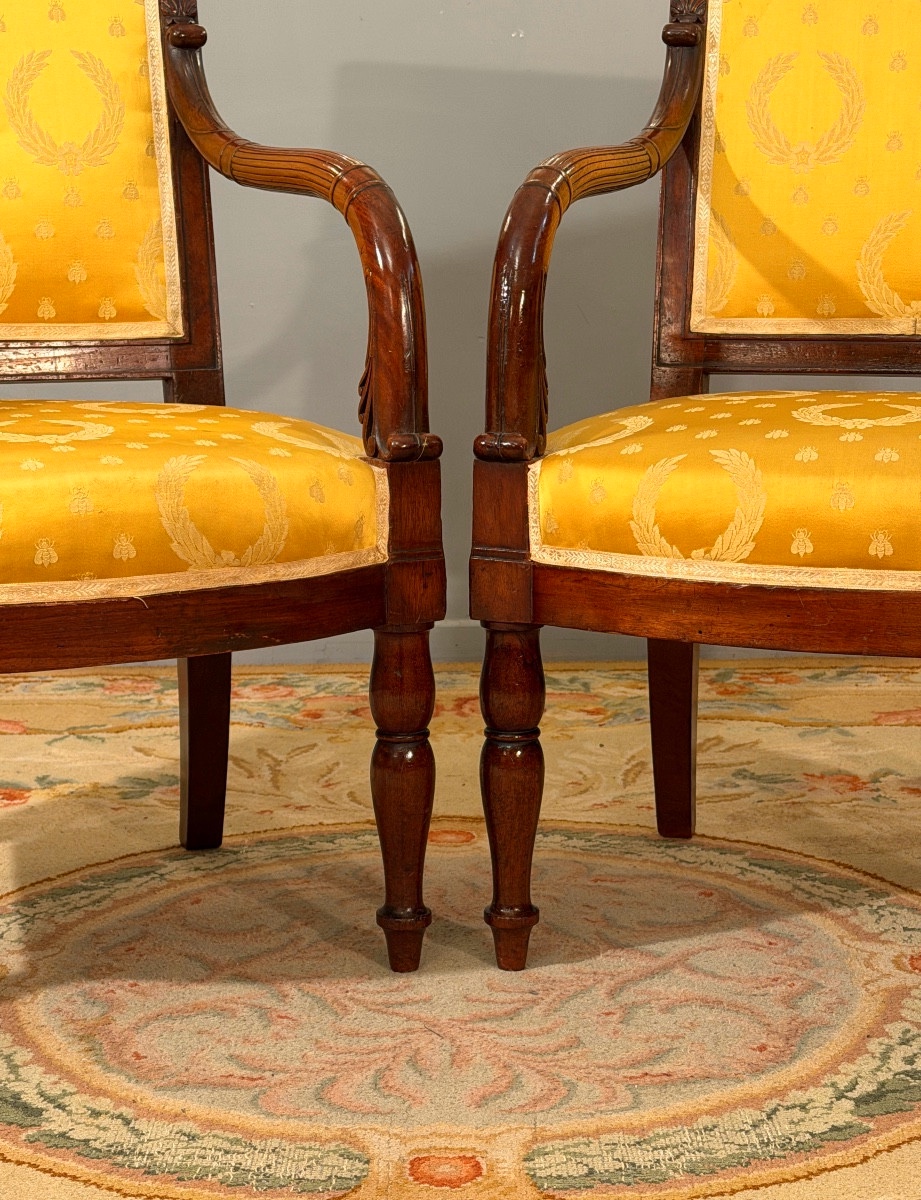
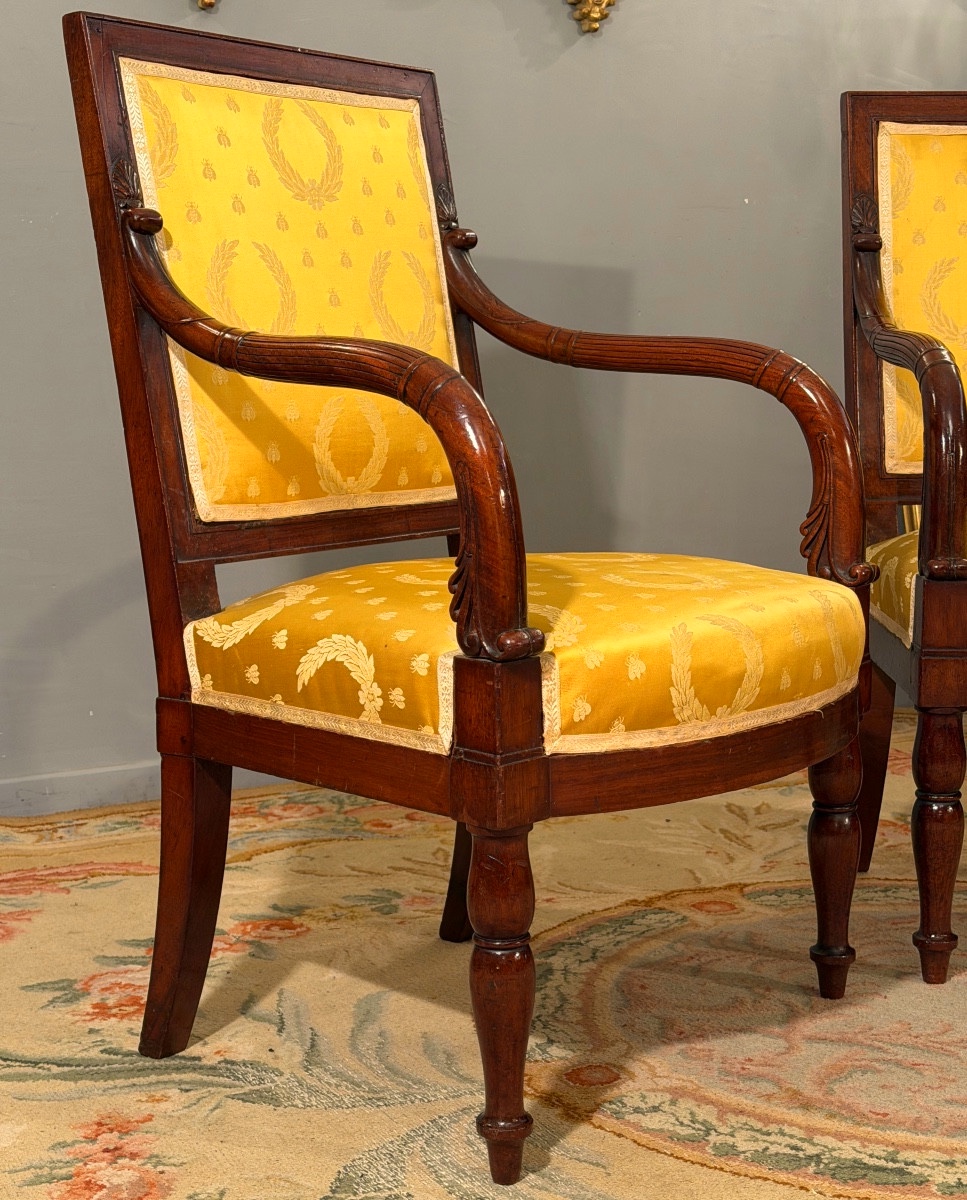

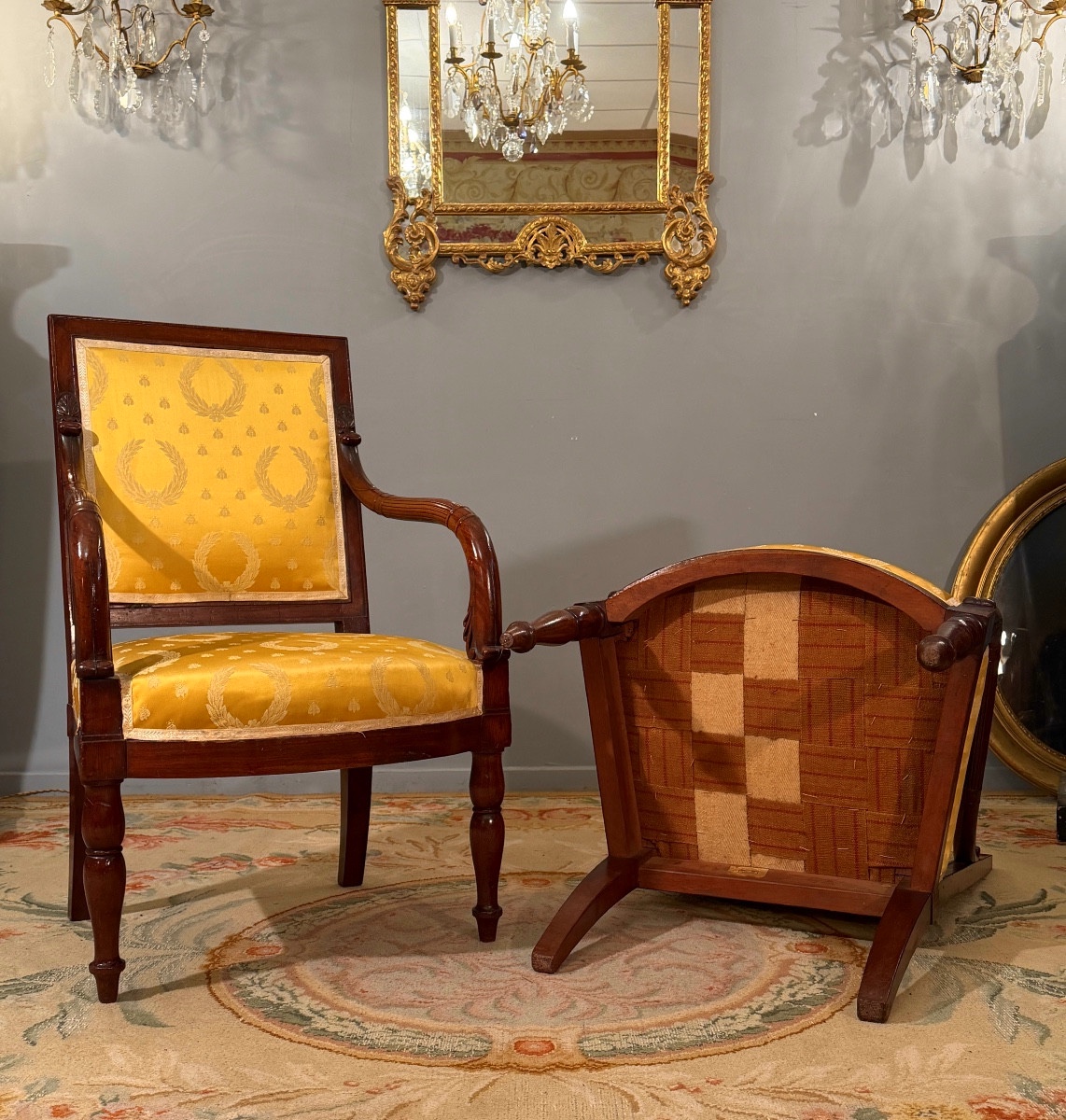
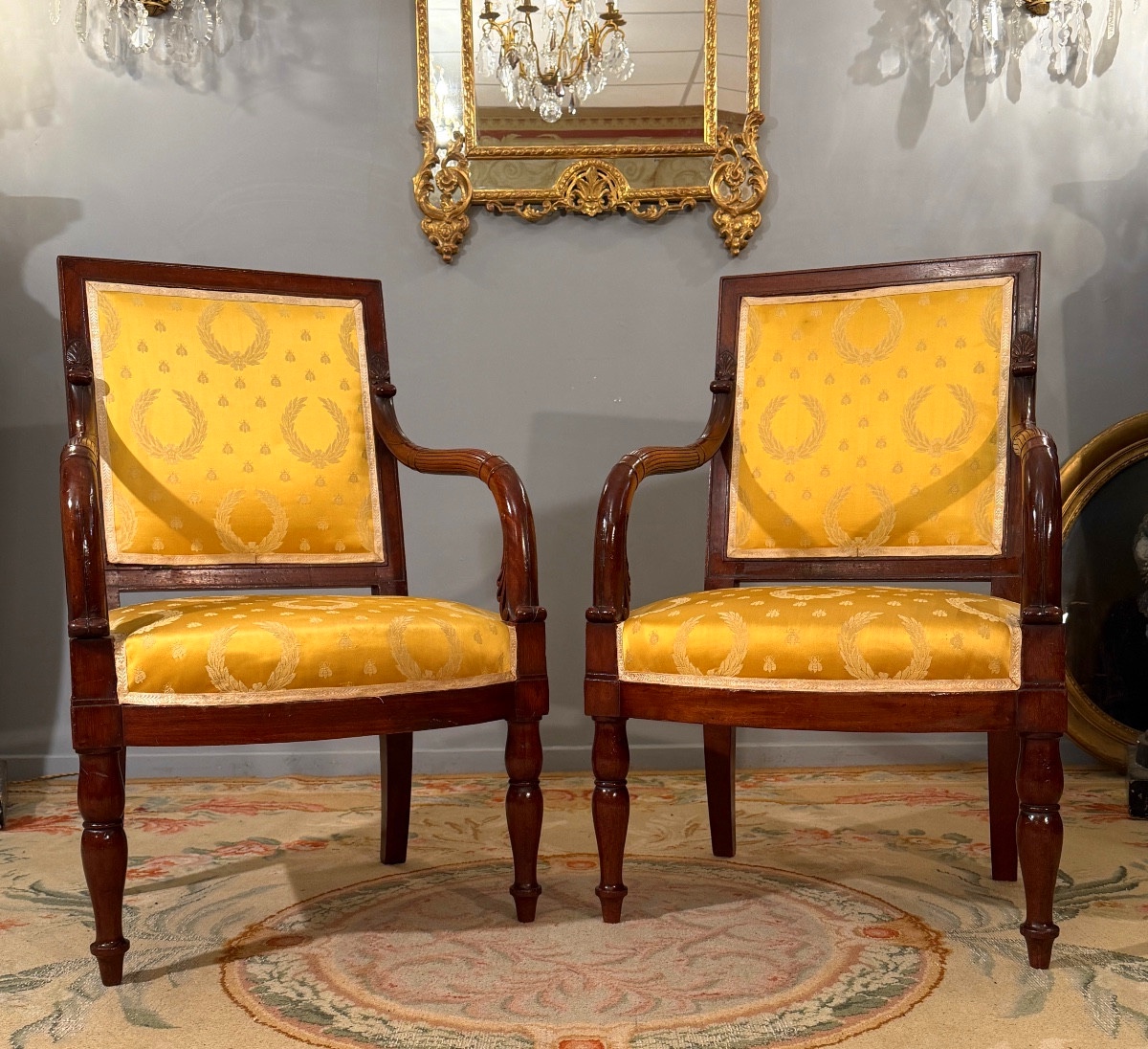
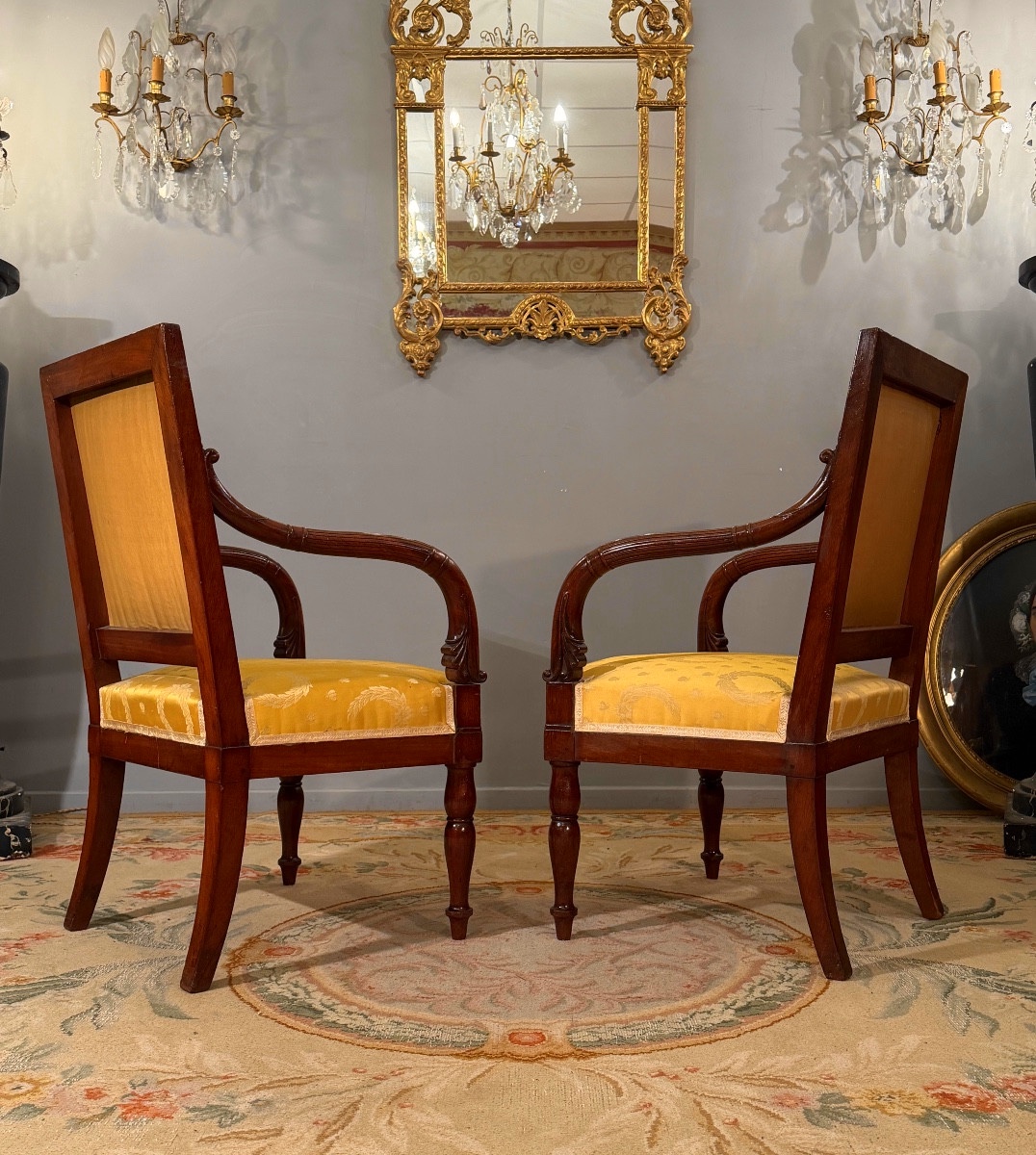
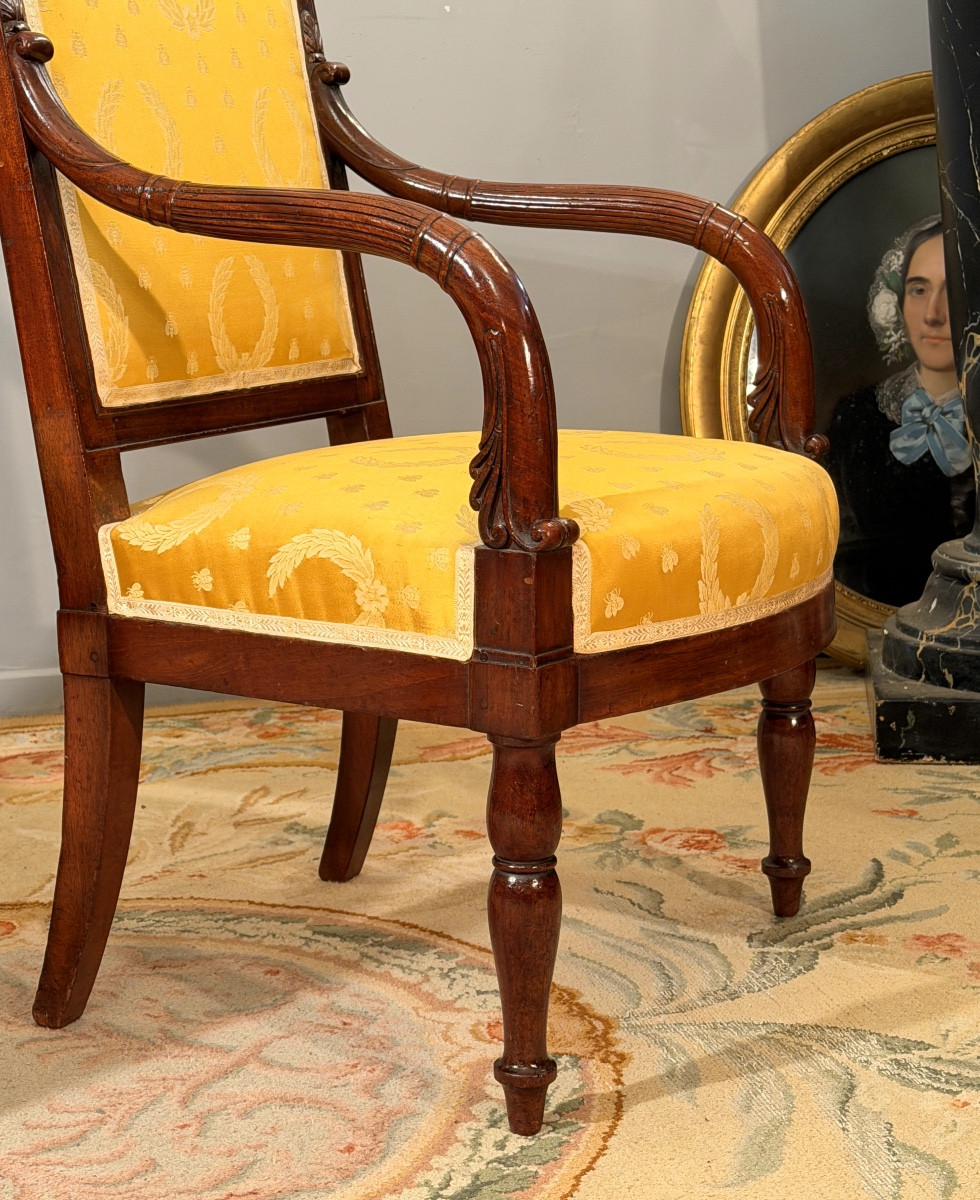
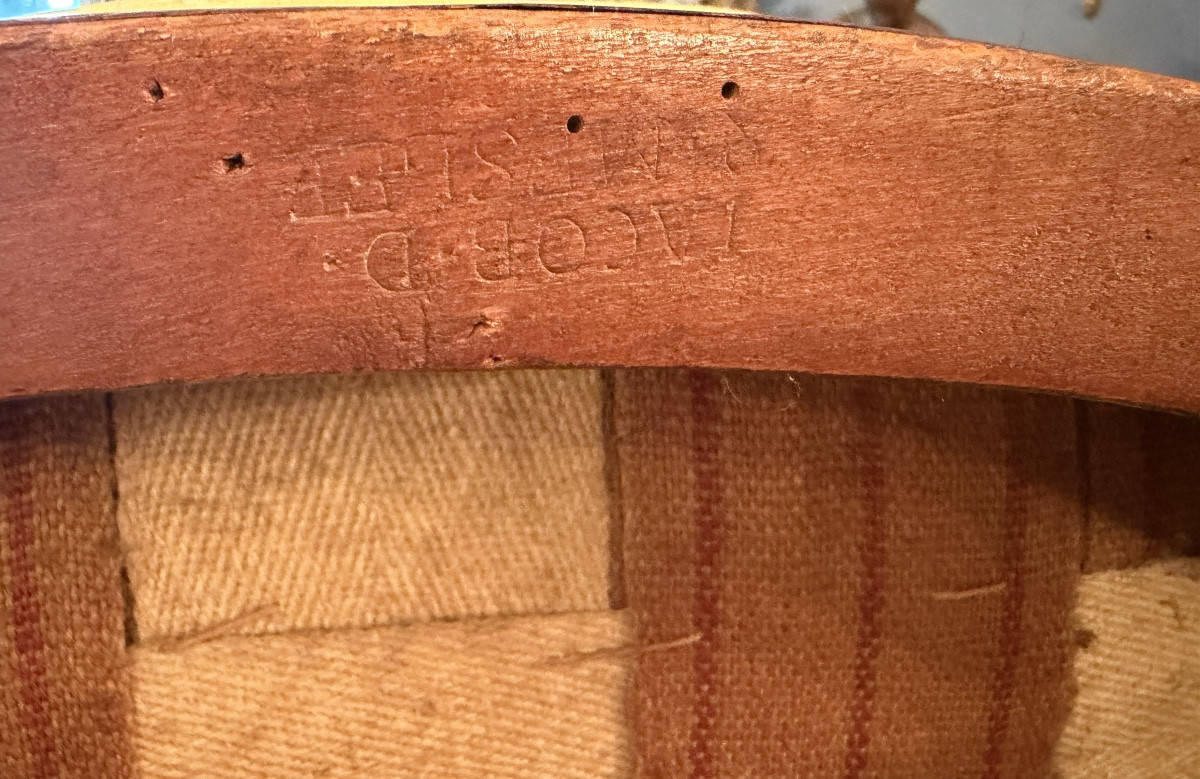
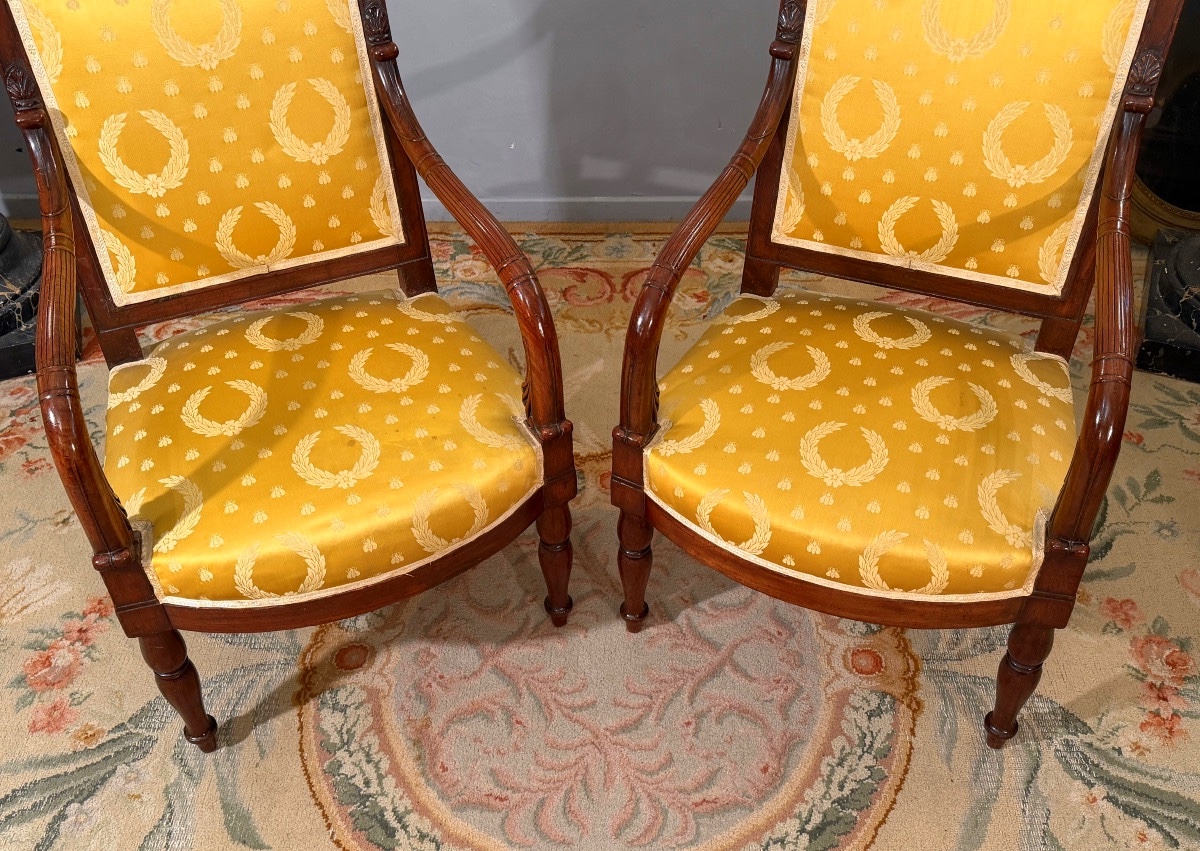
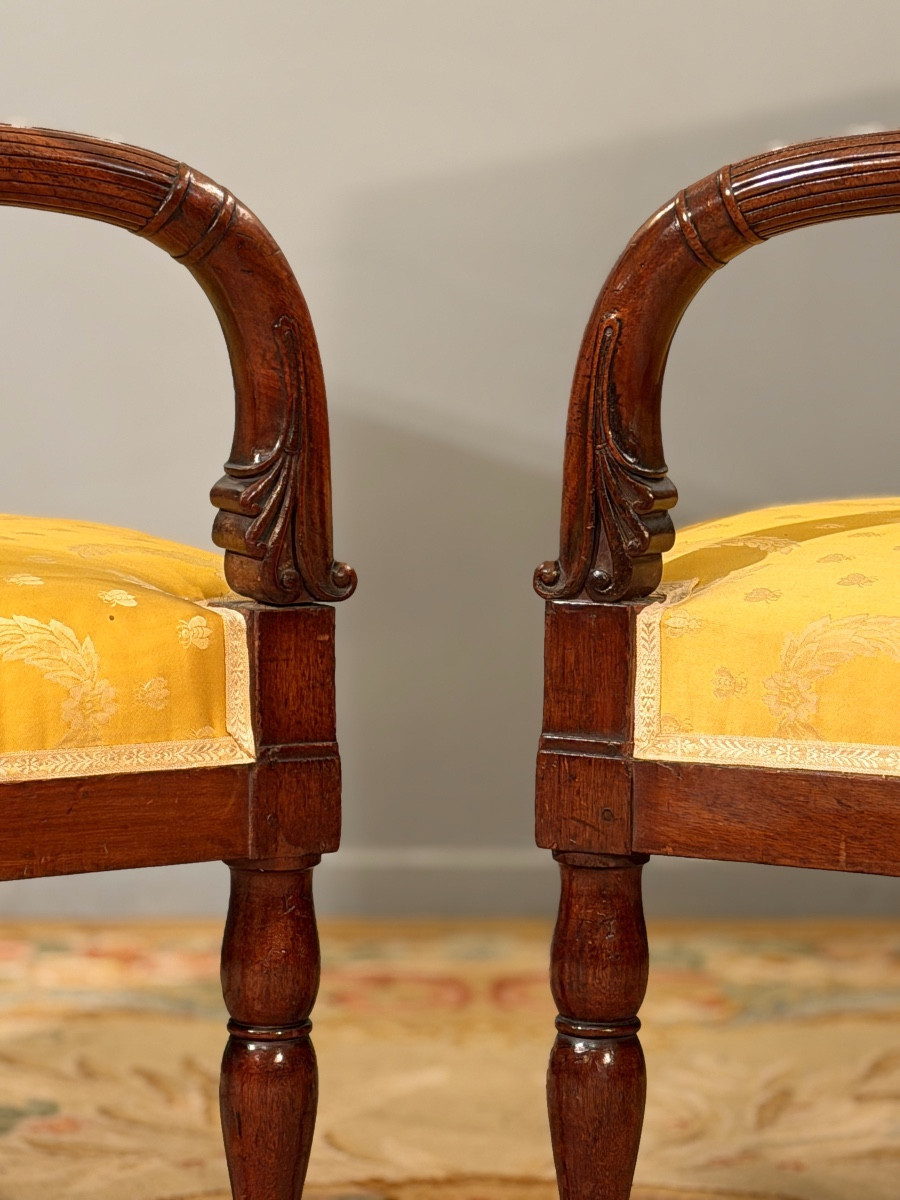


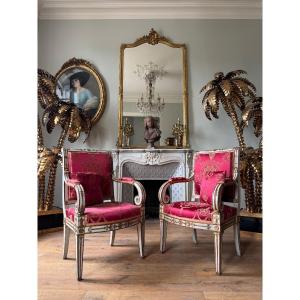
Jacob Desmalter, Pair of Mahogany Armchairs, Stamped, Empire Period, Circa 1810. Superb pair of mahogany and mahogany veneer armchairs from the Empire period, resting on baluster front legs and saber rear legs. These armchairs with straight, rectangular backs are upholstered in a lovely damask fabric in shades of yellow, decorated with laurel wreaths and bees, finished with passementerie trim. Their scrolled armrests, finely fluted, extend with lotus leaves to the seat rails. Good seating. Good stability. Very fine mahogany wood, beautiful patina. Bearing the stamp, JACOB DR MESLEE on the front rails. Furniture of very high quality craftsmanship, with refined and elegant lines, stamped JACOB DR MESLEE, a famous and renowned partnership of Jacob and his son François-Honoré. These chairs combine practical utility with their wide and comfortable seats, while also offering a very attractive visual appeal with their delicate and harmonious curves. They will easily adapt to your decor. These armchairs, with their lovely shades and meticulous finishes, worthy of the masters, embody the refinement of Empire-era furniture and will bring prestige and luxury to your home. JACOB DESMALTER ET CIE Jacob Desmalter et Cie is the partnership of Jacob and his son François-Honoré, who added the name "Desmalter" to his surname. This partnership was formed after the death of George II Jacob. From then on, his works bore a different inscription, arranged like the previous one on two lines. Georges Jacob's traditions were continued by his sons, Georges and François-Honoré, united under the business name "Jacob Frères." Then, upon the death of the elder Jacob brother on 30 Vendémiaire, Year XII (October 23, 1803), François-Honoré formed a new partnership with his father, under the name "Jacob Desmalter et Cie." By the time he was appointed cabinetmaker to the Emperor, his workshop had grown tremendously. It comprised no fewer than fifteen workshops, including seven for joinery, cabinetmaking, and woodturning; three for sculpture, painting, and gilding; three for bronze work; one for tapestry; and the last for mechanical locksmithing. The father was always there, active and astute, overseeing everything. Much was produced, and "rich" pieces were made, but what had become of the exquisite lines of "Jacob" from the 18th century? Nevertheless, it was during this period that Jacob, working with the painter David, created the Empire style, imitating antiquity and seeking its sumptuous, majestic, and austere lines in the art of Imperial Rome. (18th-century furniture and cabinetmakers) Empire Period work, Early 19th Century, Circa 1810. Dimensions: Height: 93 cm Width: 59 cm Depth: 58 cm Seat Height: 44 cm In good condition, with a few small stains on the fabric; cleaning may be recommended.
Explore similar pieces and discover your ideal find:
Armchairs