

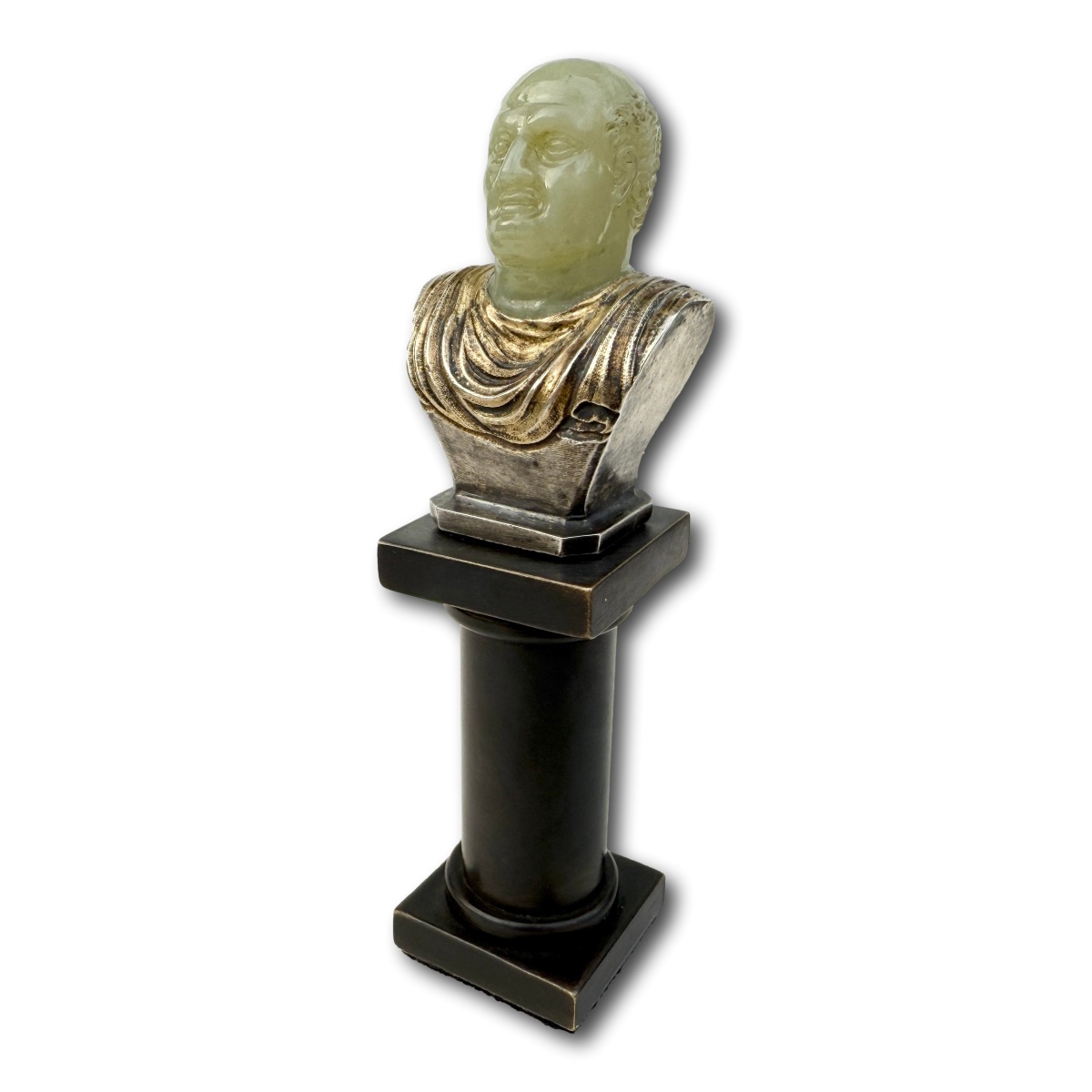


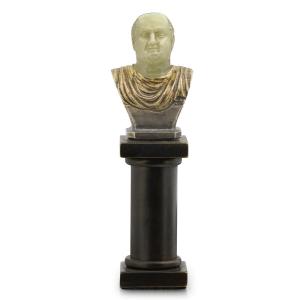


Chalcedony & Silver-gilt Bust Of The Emperor Vespasian. Italy, 17th–18th Century
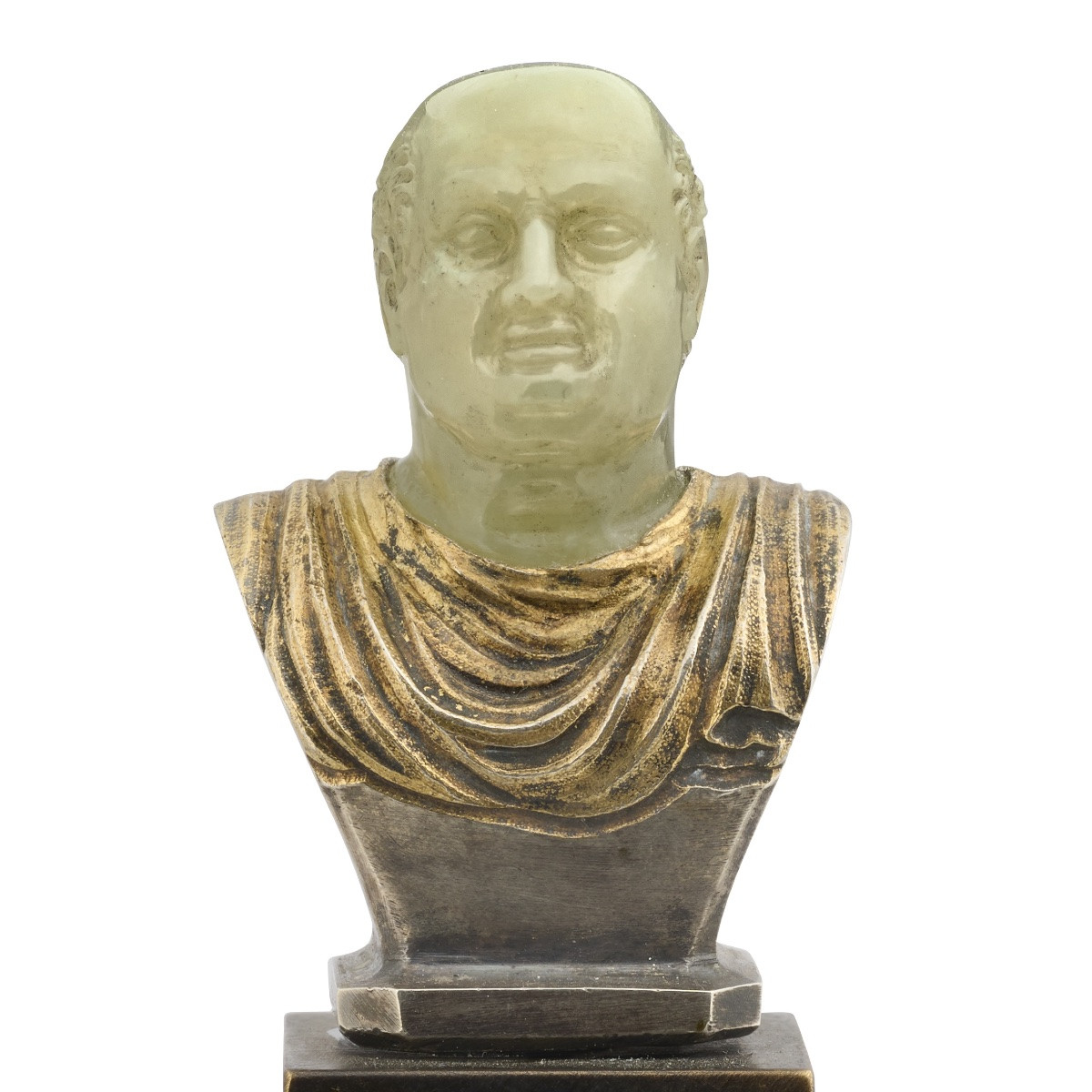
Chalcedony and Silver-Gilt Bust of the Emperor Vespasian.
Italy, 17th–18th century.
Measurements
Height overall: 11 cm
Height of bust: 5 cm
Height of chalcedony head: 2.6 cm
Description
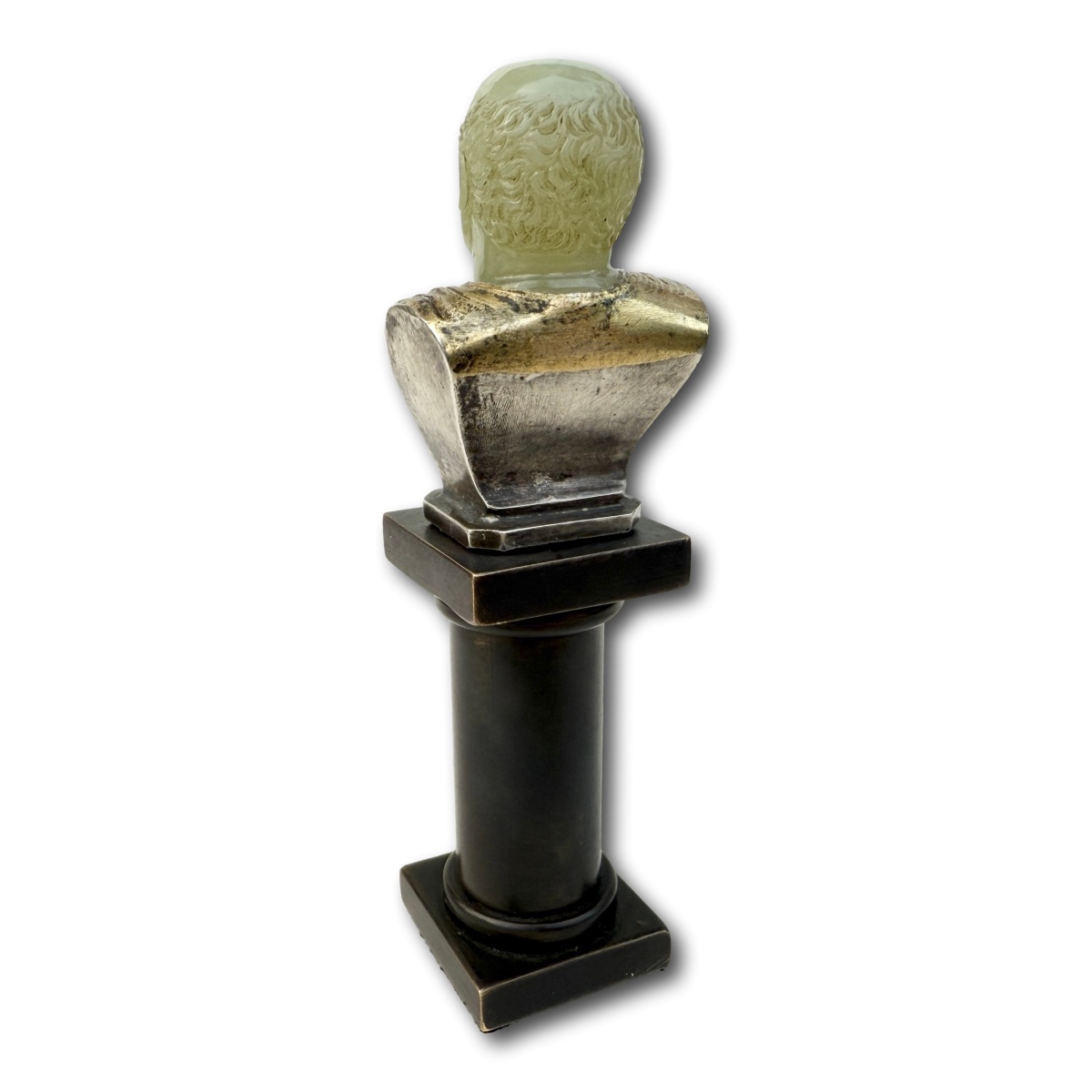
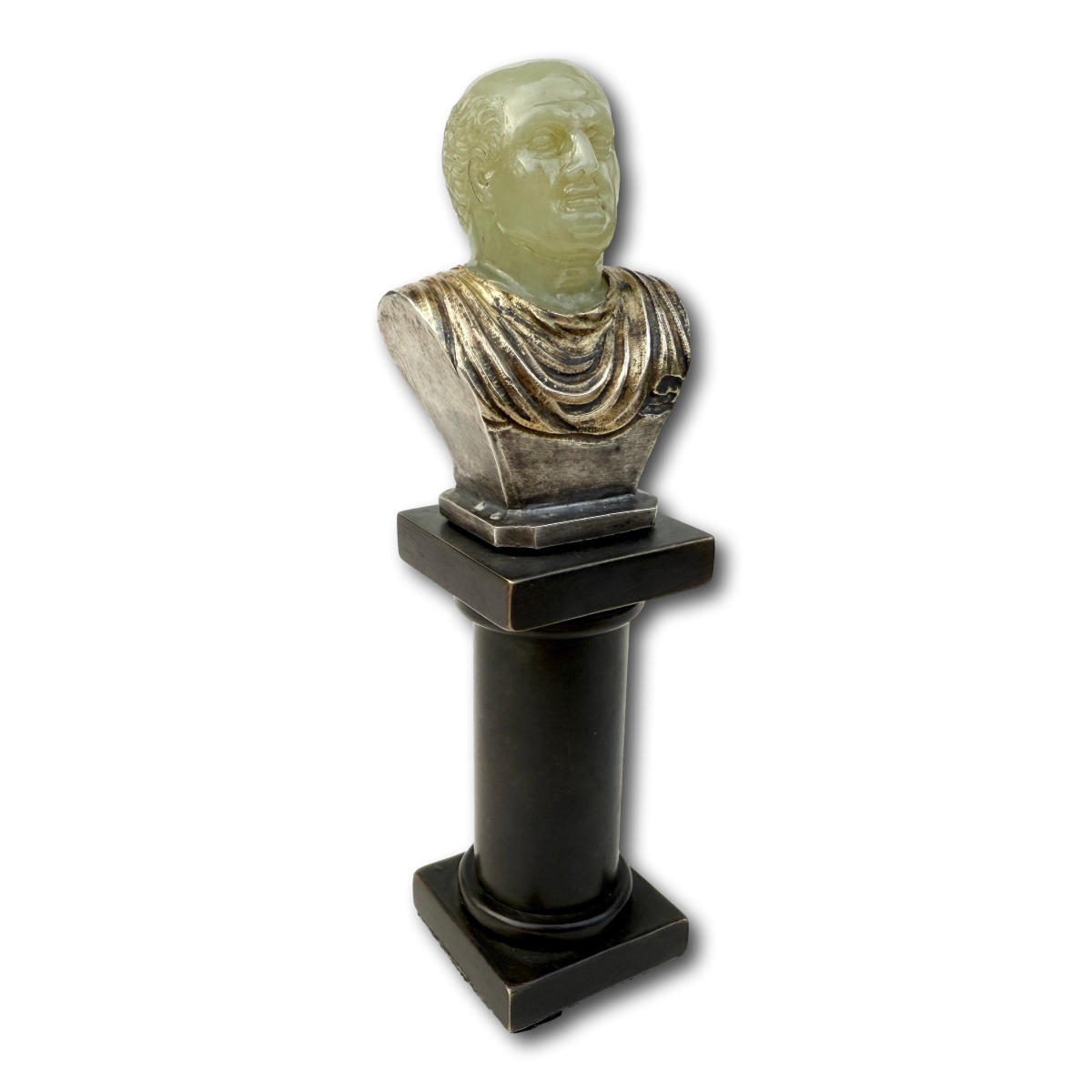
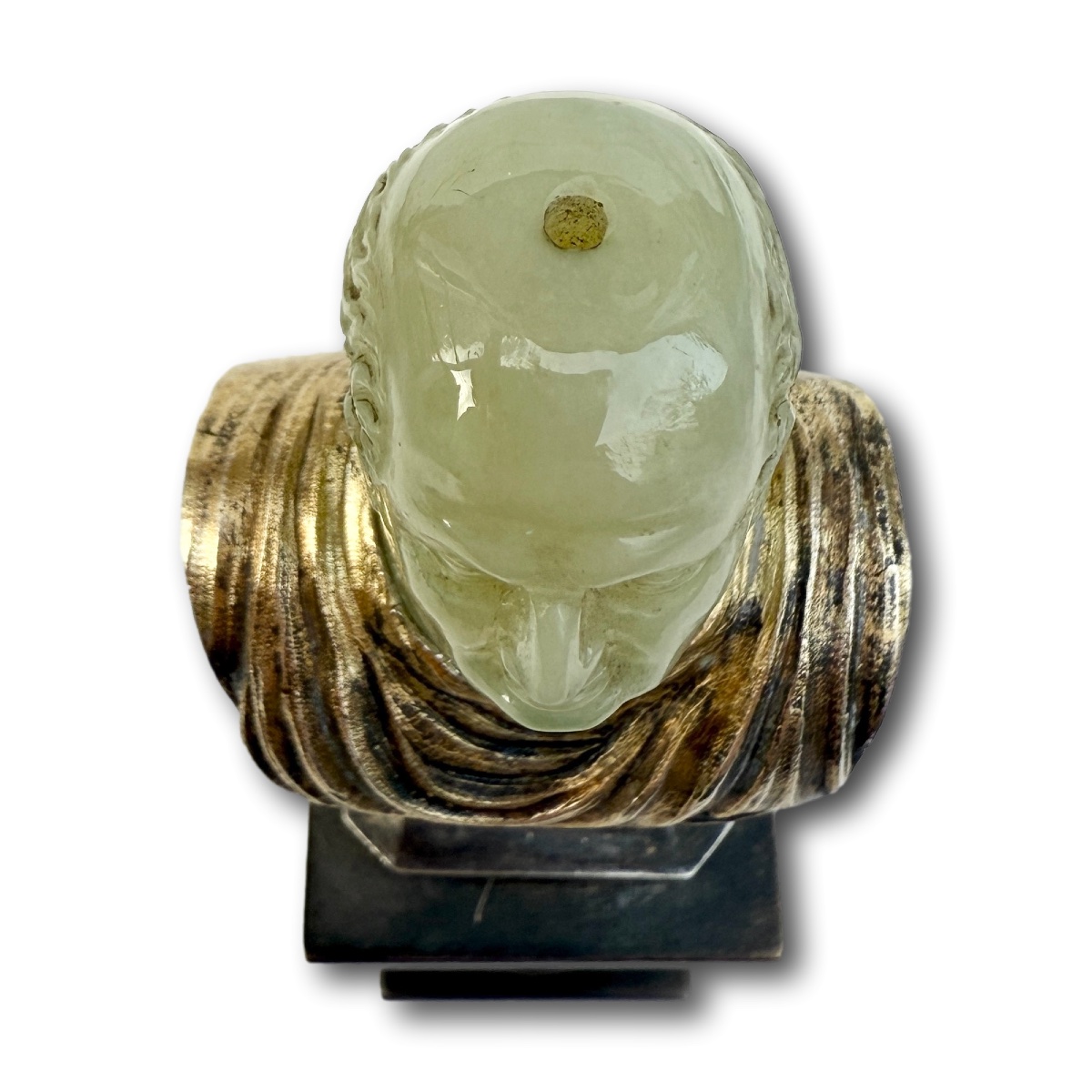
A refined small bust depicting the Roman Emperor Vespasian, the head carved from pale green chalcedony, polished to a smooth lustre and exhibiting a drilled aperture at the crown, suggesting a prior function—possibly as a mount or finial—before its integration into the present bust. The facial features are rendered with confident modelling, the hair treated in tight curls around the nape and crown.
The bust itself is of silver gilt, its draped toga carefully chased with deep folds and traces of gilding across the high points, the surface showing age-consistent toning and oxidation. The composite piece is mounted on a later patinated bronze column stand, conceived in the neoclassical manner and complementing the antiquarian character of the bust.
Context
This small-scale portrait evokes the Roman tradition of imperial portraiture and the early modern fascination with the ancient world. From the seventeenth century onwards, artists and collectors revived classical subjects through hardstone and gilt-metal compositions, often intended for display in Kunstkammer or Grand Tour contexts. The combination of a reused ancient or earlier element with a later mount was a practice typical of the Renaissance and Baroque periods, reflecting the period’s reverence for antiquity and its imaginative recontextualisation of ancient forms.
Comparisons
Comparable mounted hardstone busts of emperors, frequently combining chalcedony, agate or jade with gilt-metal or bronze mounts, are preserved in the Munich Residenz Treasury and the Grünes Gewölbe, Dresden, both collections rich in small-scale lapidary works of the seventeenth and eighteenth centuries.
Italy, 17th–18th century.
Measurements
Height overall: 11 cm
Height of bust: 5 cm
Height of chalcedony head: 2.6 cm
Description
A refined small bust depicting the Roman Emperor Vespasian, the head carved from pale green chalcedony, polished to a smooth lustre and exhibiting a drilled aperture at the crown, suggesting a prior function—possibly as a mount or finial—before its integration into the present bust. The facial features are rendered with confident modelling, the hair treated in tight curls around the nape and crown.
The bust itself is of silver gilt, its draped toga carefully chased with deep folds and traces of gilding across the high points, the surface showing age-consistent toning and oxidation. The composite piece is mounted on a later patinated bronze column stand, conceived in the neoclassical manner and complementing the antiquarian character of the bust.
Context
This small-scale portrait evokes the Roman tradition of imperial portraiture and the early modern fascination with the ancient world. From the seventeenth century onwards, artists and collectors revived classical subjects through hardstone and gilt-metal compositions, often intended for display in Kunstkammer or Grand Tour contexts. The combination of a reused ancient or earlier element with a later mount was a practice typical of the Renaissance and Baroque periods, reflecting the period’s reverence for antiquity and its imaginative recontextualisation of ancient forms.
Comparisons
Comparable mounted hardstone busts of emperors, frequently combining chalcedony, agate or jade with gilt-metal or bronze mounts, are preserved in the Munich Residenz Treasury and the Grünes Gewölbe, Dresden, both collections rich in small-scale lapidary works of the seventeenth and eighteenth centuries.
4 200 €
Period: 17th century
Style: Renaissance, Louis 13th
Condition: Good condition
Material: Vermeil
Reference (ID): 1669487
Availability: In stock
Print