


"Theodor Kurzweil (vienna, 19th – 20th Century), Attr., Allegory Of Sculpture"
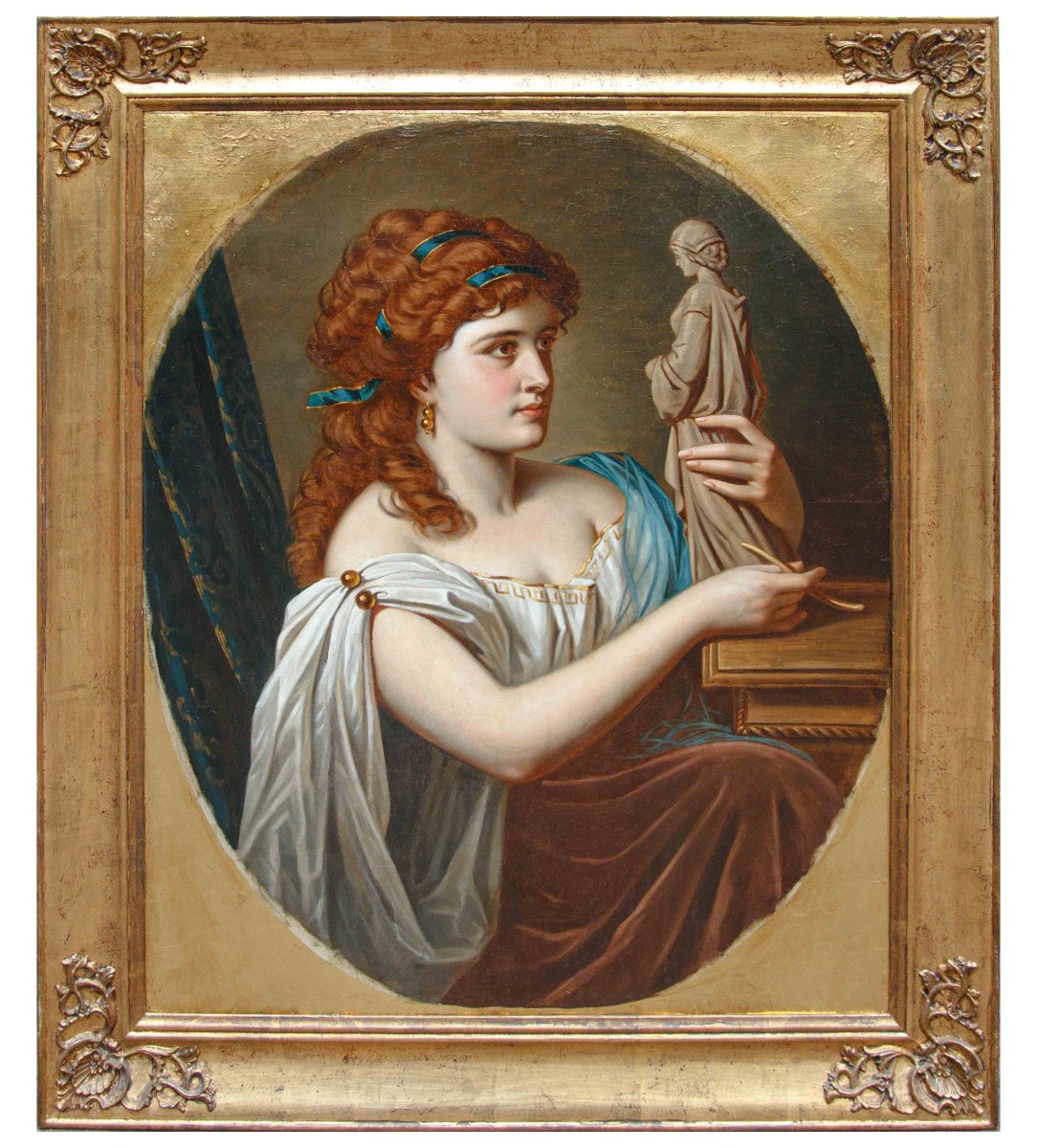
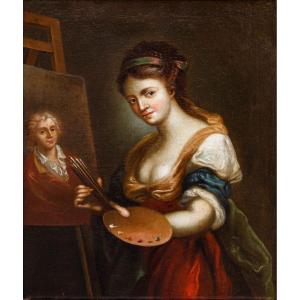
Theodor Kurzweil (Vienna, 19th – 20th century), attr.Allegory of sculpture
Oil on canvas, 95 x 76 cm
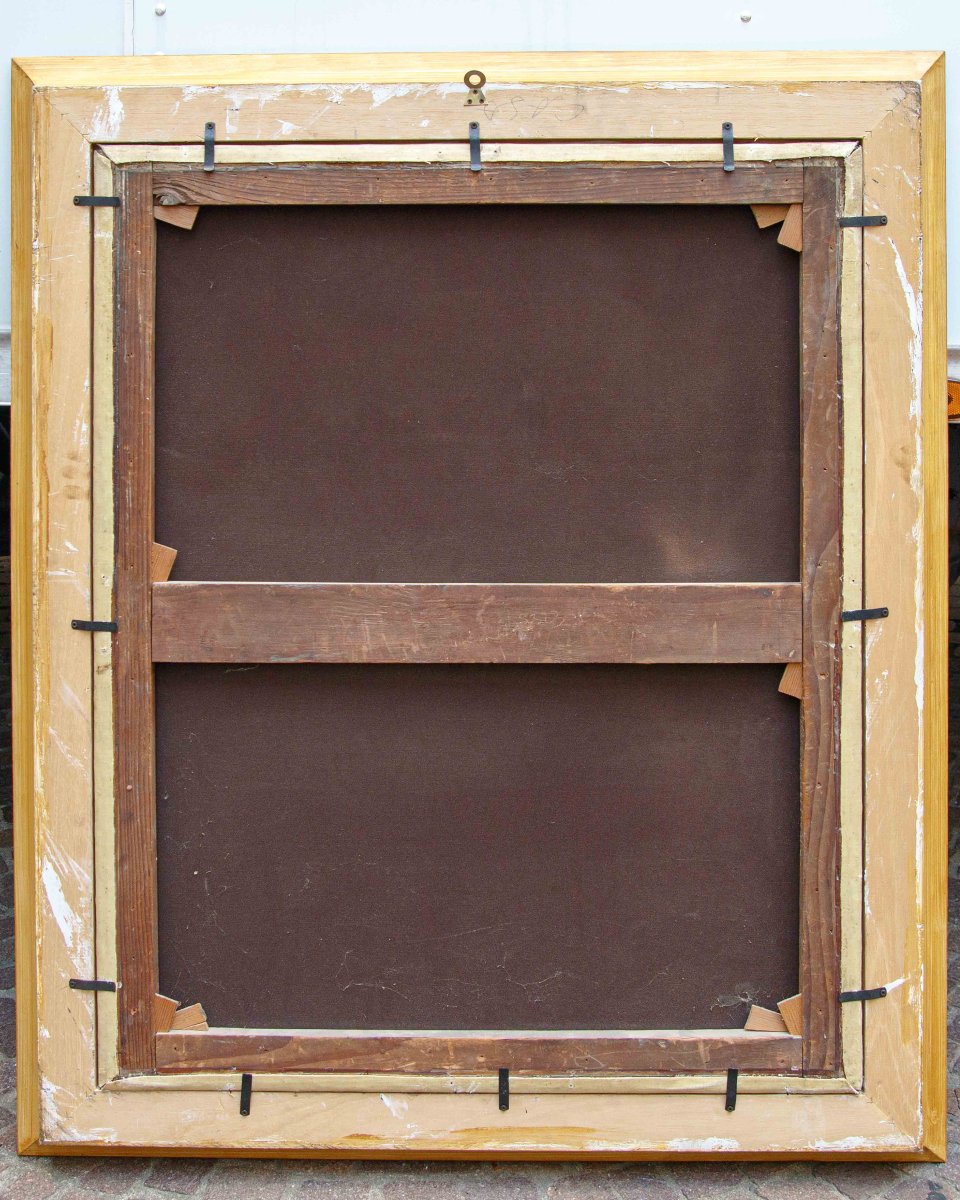
With frame, cm 115 x 96
The canvas under examination, an elegant neoclassical portrait of a girl, can be attributed to the Austrian artist Theodor Kurzweil, whose biography is still largely shrouded in mystery. Sources, in fact, report him as active between the 19th and 20th centuries, but little is known about his education, which most likely took place in the fervent Viennese context. The known works, typically made in oil on canvas, show meticulous attention to the rendering of the details of his subjects, particularly in his clothes, accessories and interiors. This precision was aligning with an extremely popular and sought-after pictorial tradition in the salons and private collections of the Viennese and Central European bourgeoisie of the time. The artist's favorite subjects were predominantly female figures captured in static and contemplative poses, often absorbed in domestic or recreational activities, such as playing an instrument or reading. These representations embodied and reflected the ideals of grace, refinement and decorum typical of pre-modern society, effectively constituting a primordial bridge between the late Biedermeier and an approach more influenced by French academic painting. Although there can be no direct adherence to avant-garde movements such as the Secession, his style was characterised by a technical solidity and a sensitivity to light influenced by nineteenth-century Naturalism and, in some cases, a moderate assimilation of Impressionist techniques with regard to the rendering of ambient light, while maintaining a highly polished and non-divisionist finish. Theodor Kurzweil's importance today lies mainly in his ability to document, through his art, the aesthetics and customs of the Austrian wealthy class at the turn of the century. His works, more than revolutionary, are testimonial, providing an example of the quality pictorial production that satisfied the taste of private collecting not aligned with the radical pushes of the Wiener Secession.
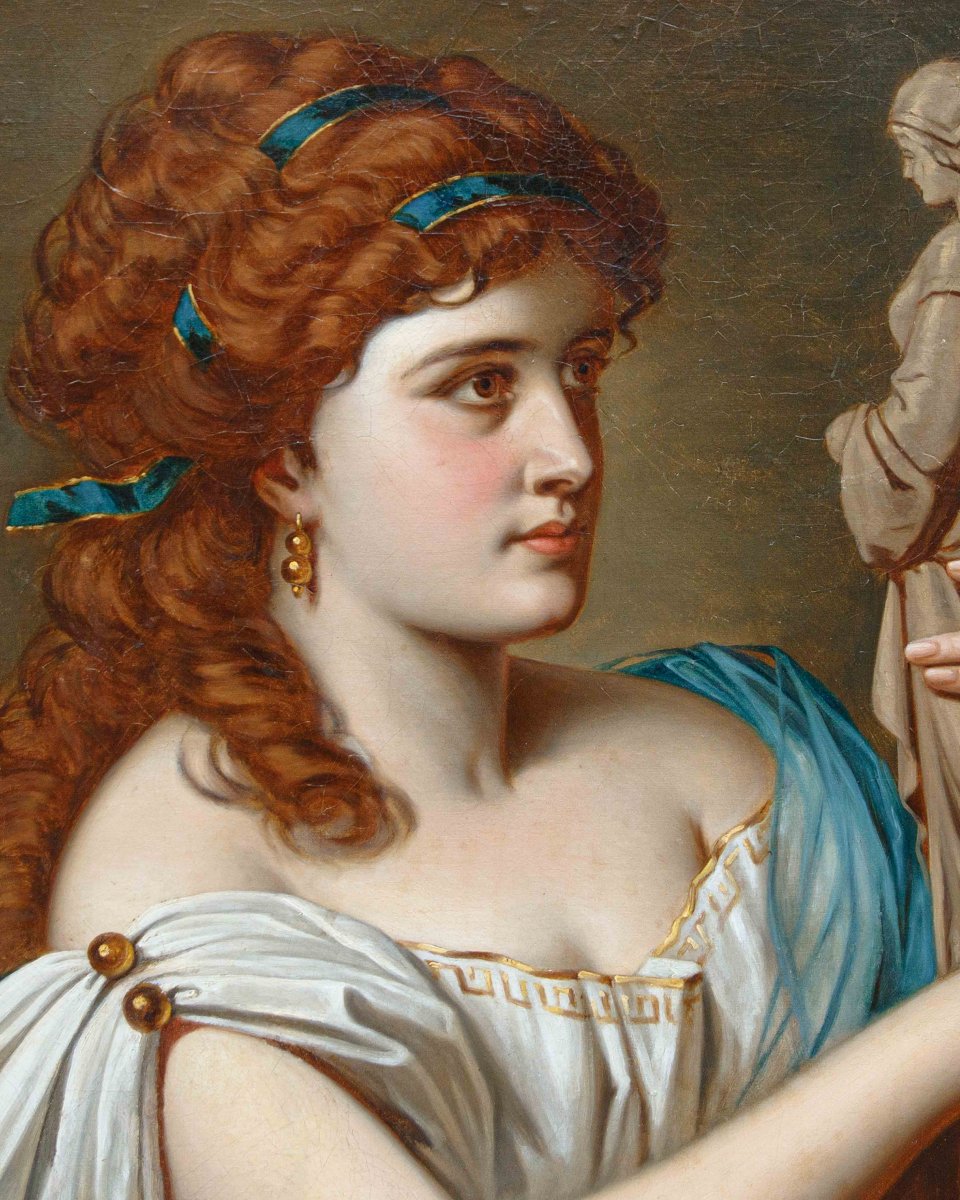
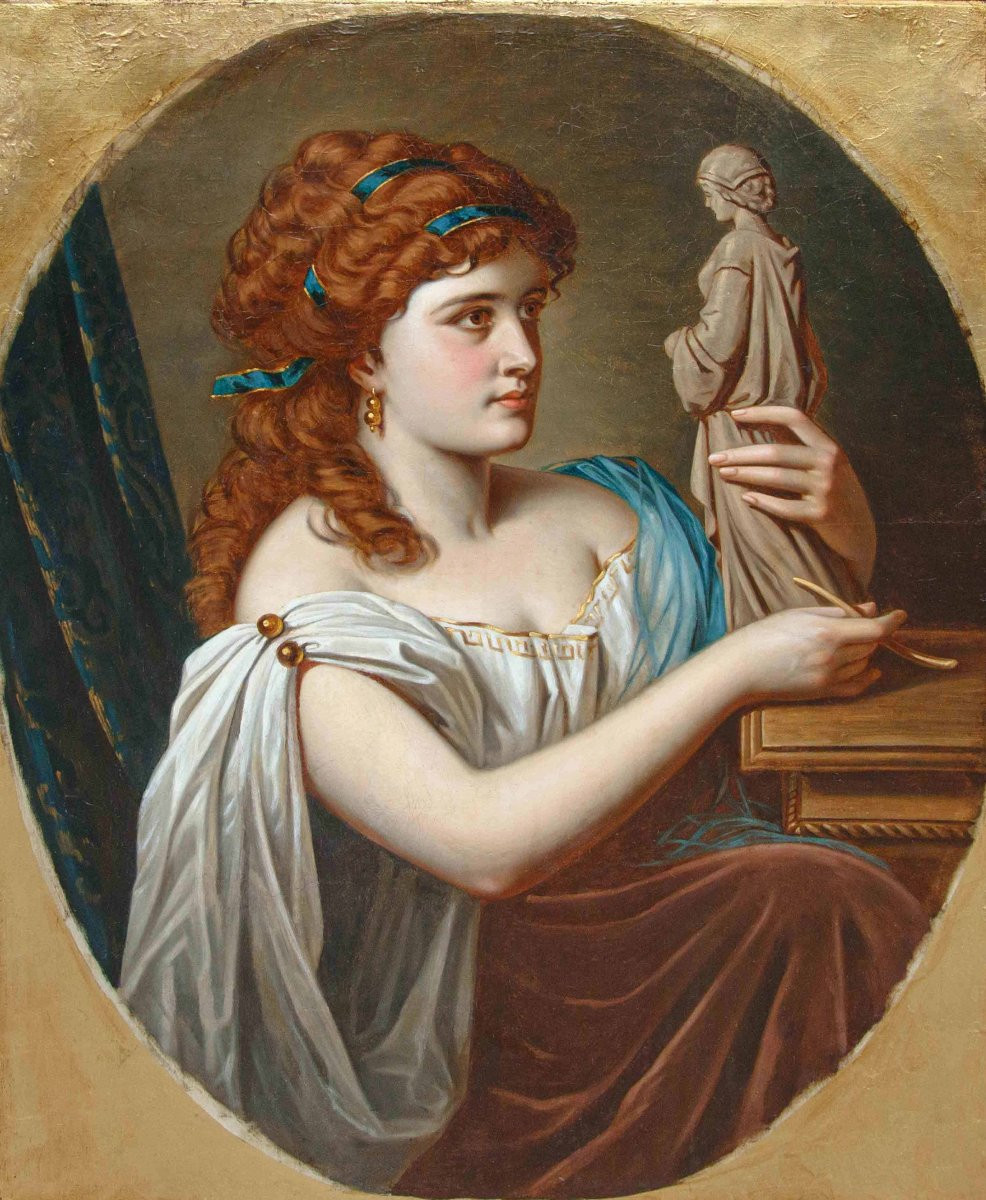
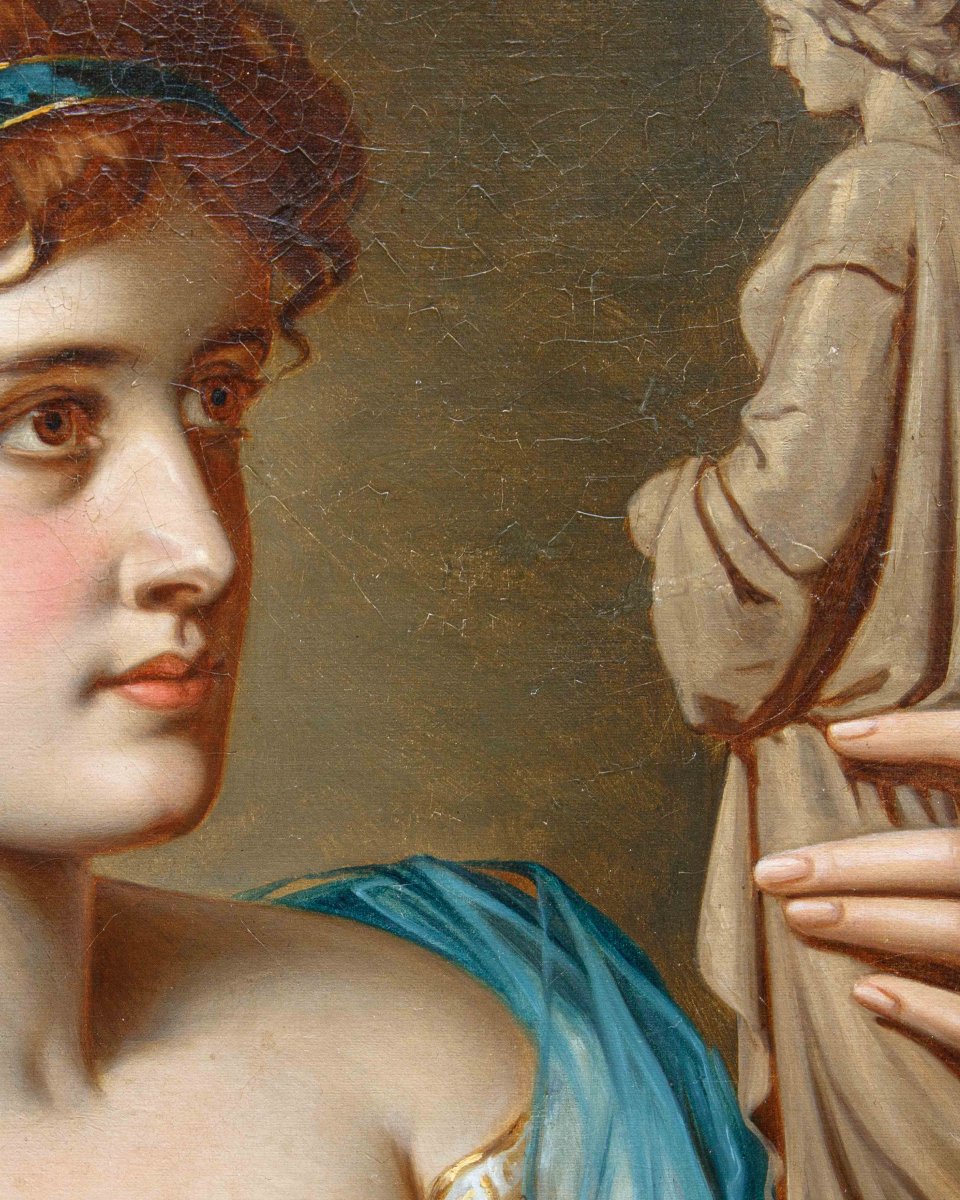
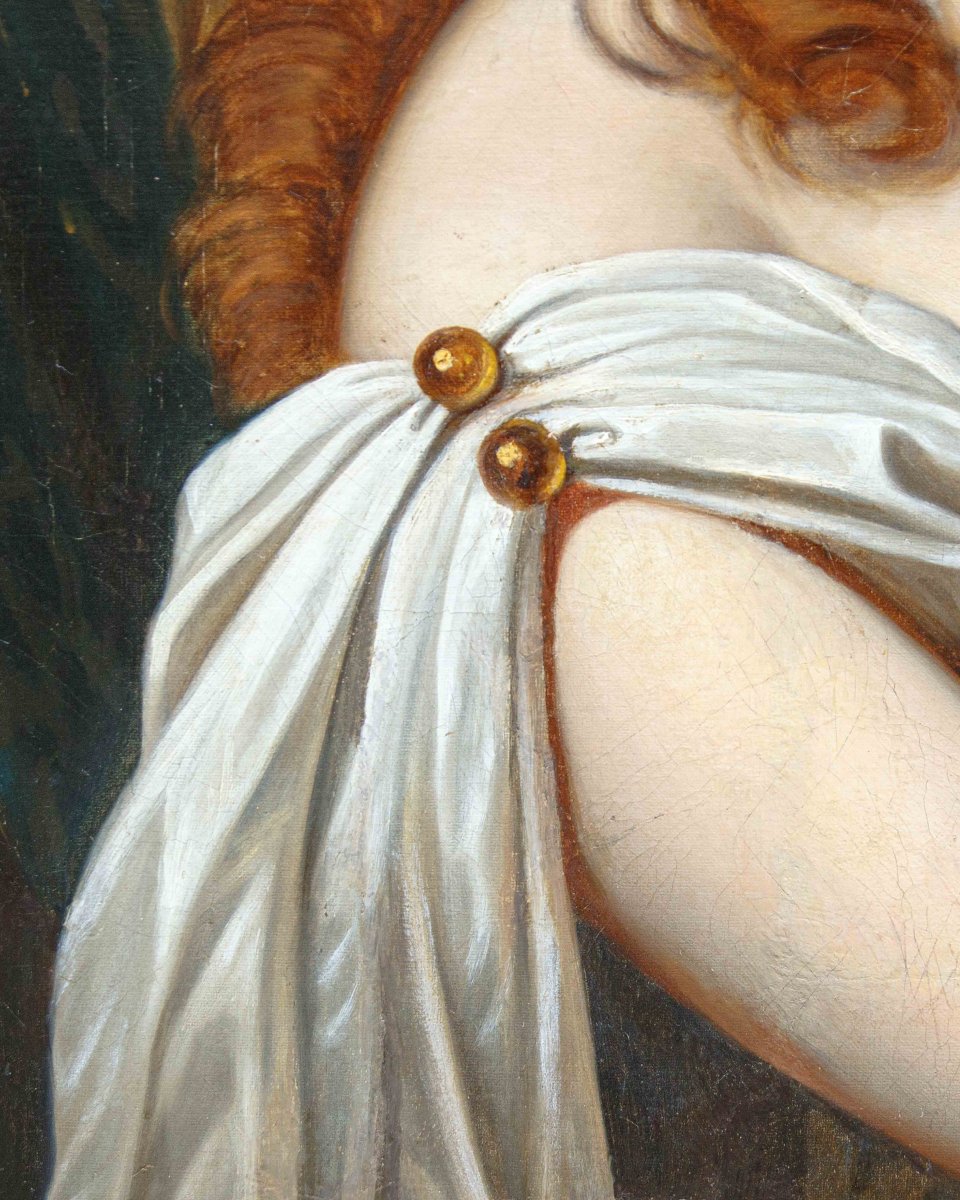
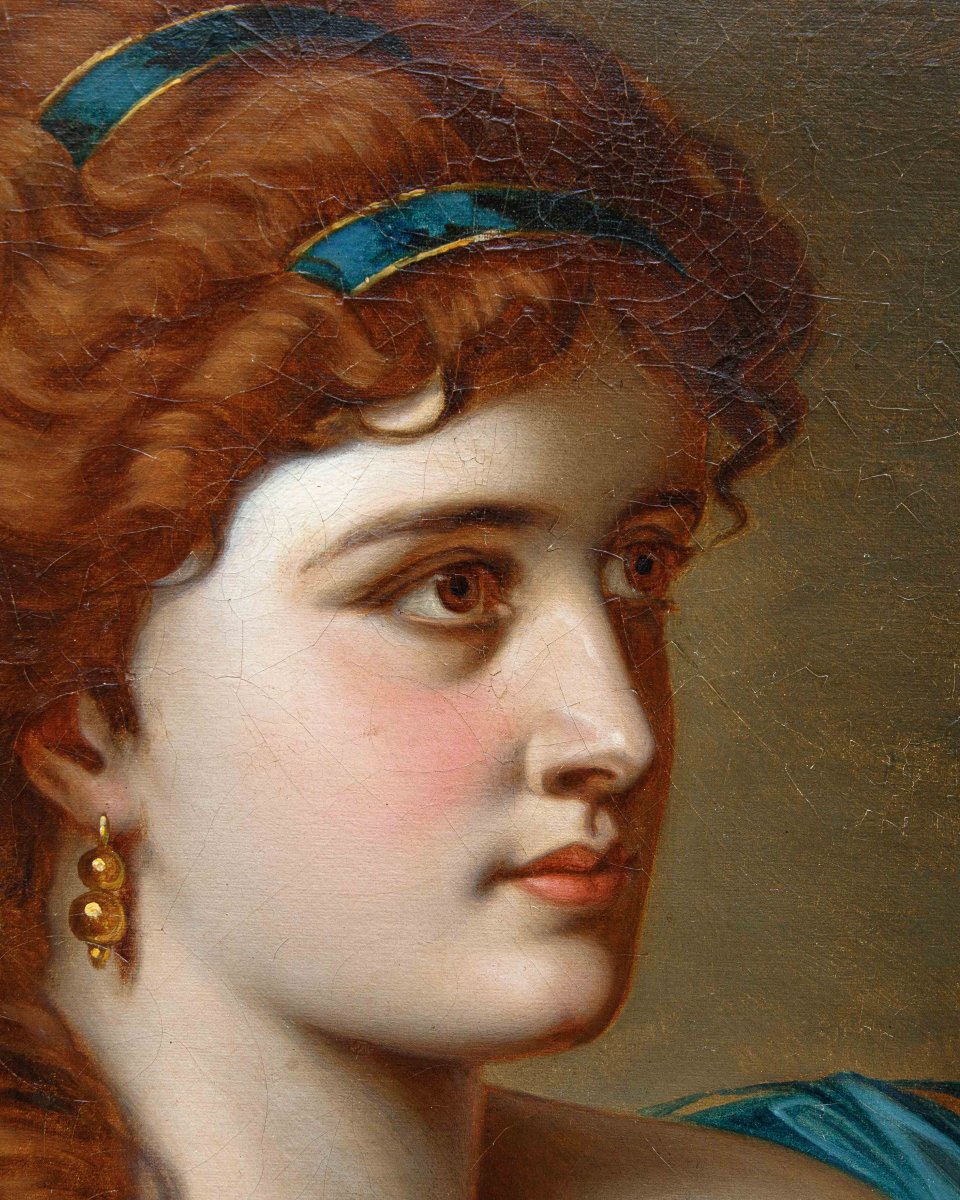
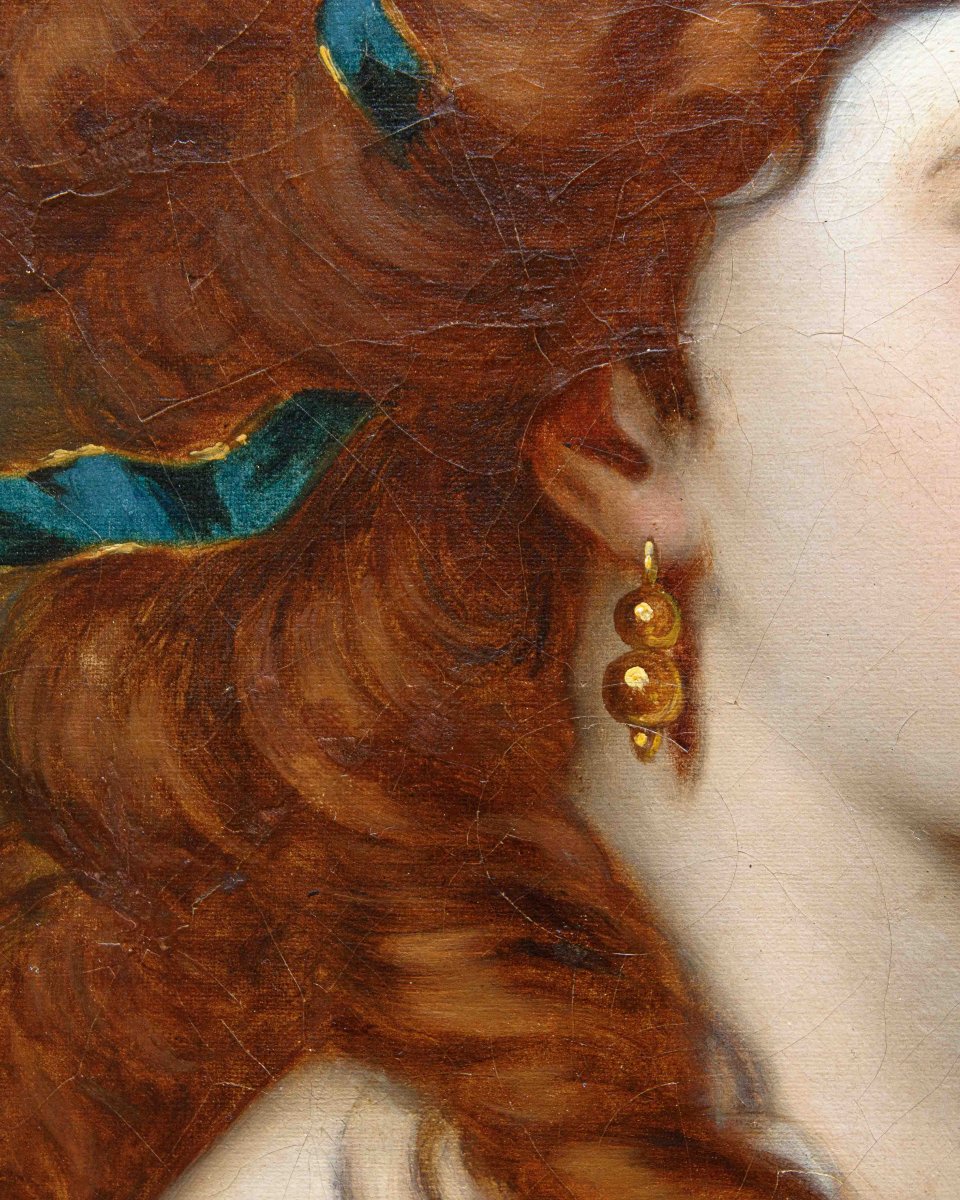
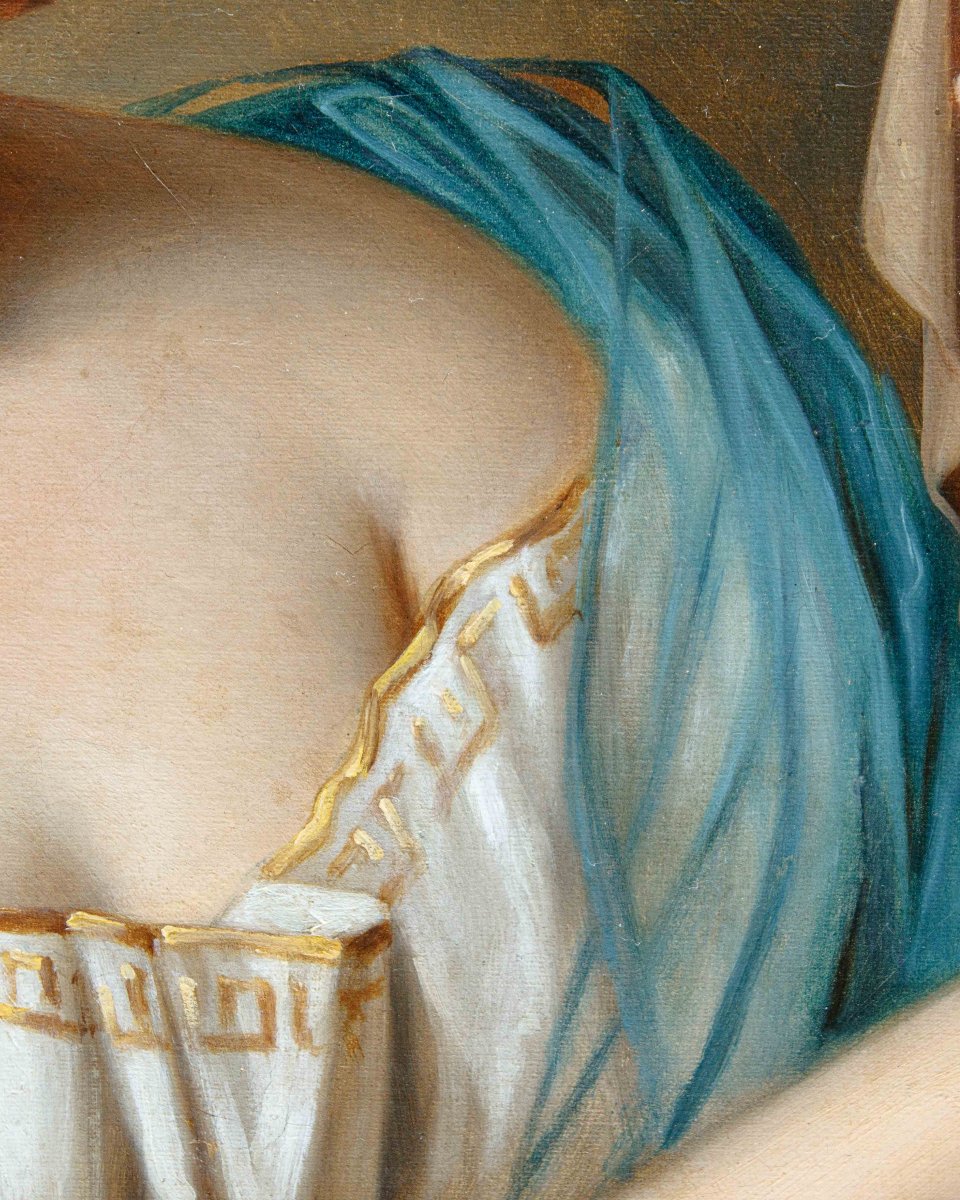
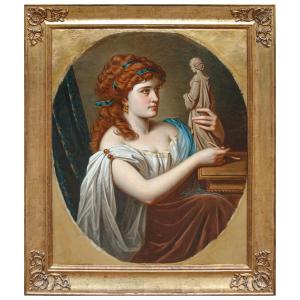
Analyzing the work presented here, we note that the protagonist is a richly styled young woman, portrayed half-length, with her gaze turned outside the observer's field of vision, suggesting a moment of profound concentration or inspiration. His attire is not contemporary, but recalls classical and neoclassical robes (a flowing tunic that slips from the right shoulder, leaving the left arm partially exposed).
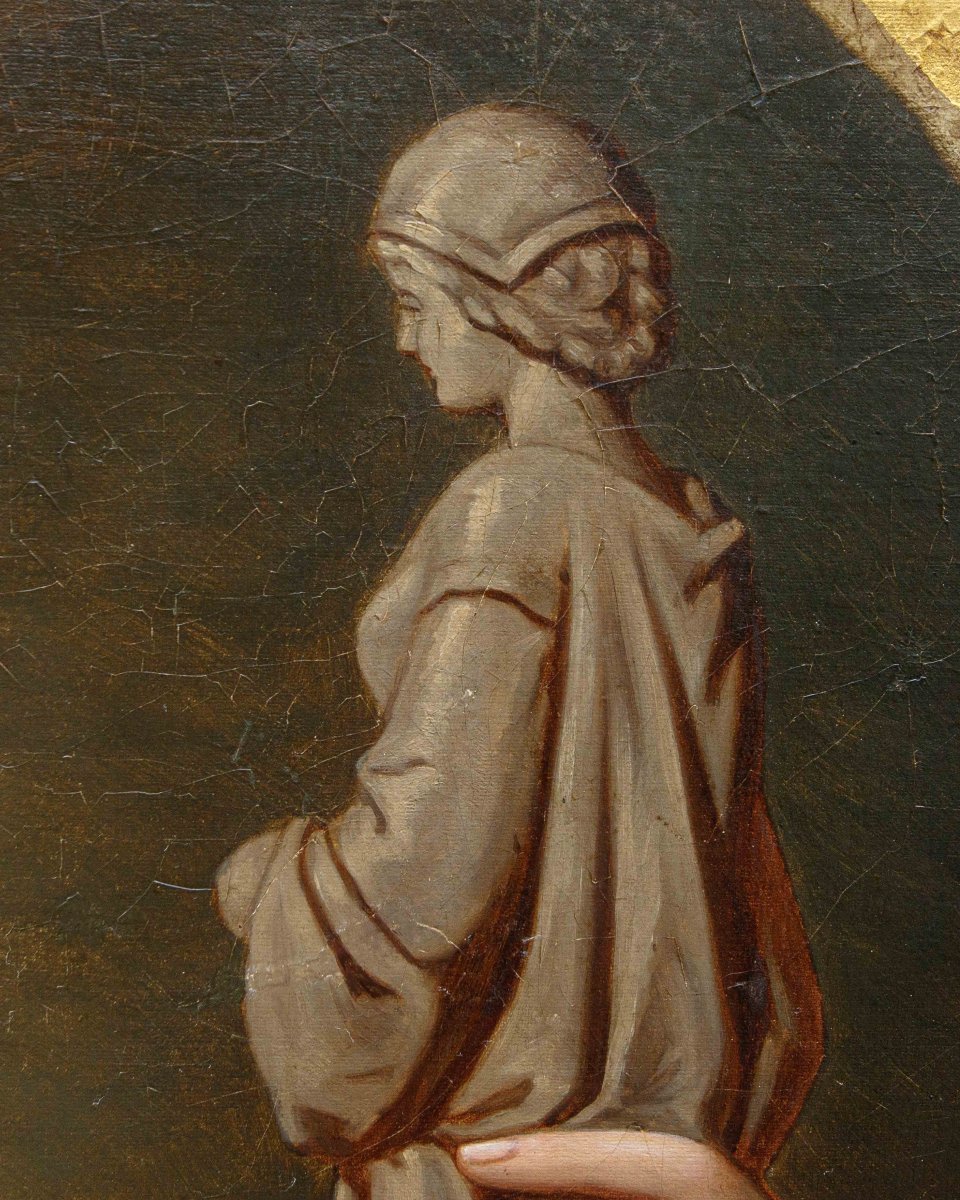
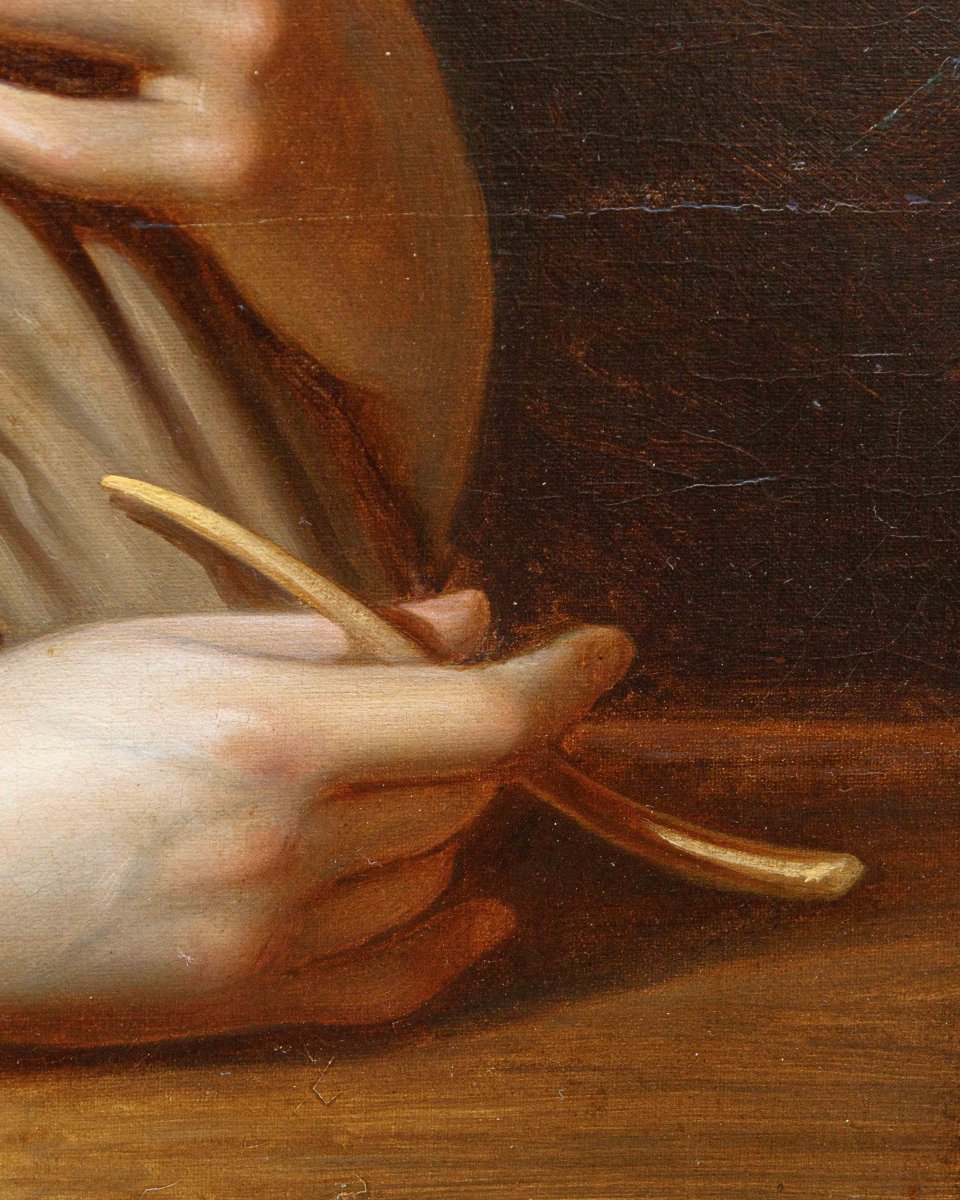
In his hands he delicately holds a small sculpture, probably a clay or plaster sketch, an object that would suggest a possible personification or allegorical portrait of Art or Sculpture. The absorbed pose and gestures therefore give women the role of artist-sculptor, a theme that, although not unprecedented, was particularly significant in the context of the 19th century, in which women fought for recognition in the artistic professions. The idealized rendering of female sensuality, the oval composition and the subject that honors the arts all constitute elements that reflected the taste for formal elegance and social ennoblement typical of the bourgeois sensibility of that era.












 Le Magazine de PROANTIC
 TRÉSORS Magazine
 Rivista Artiquariato