



"First Quarter Of The 19th Century, Camp Scenes"
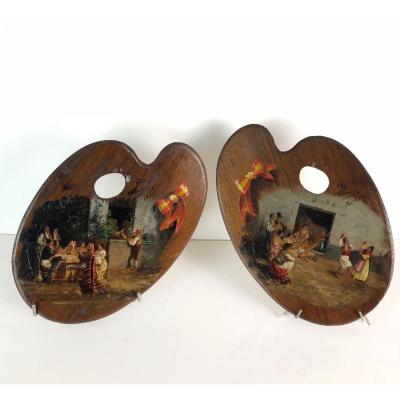
First quarter of the 19th centuryCamp scenes
(2) Oil on panel, 24.5 x 33 cm
With frame, 34 x 43 cm
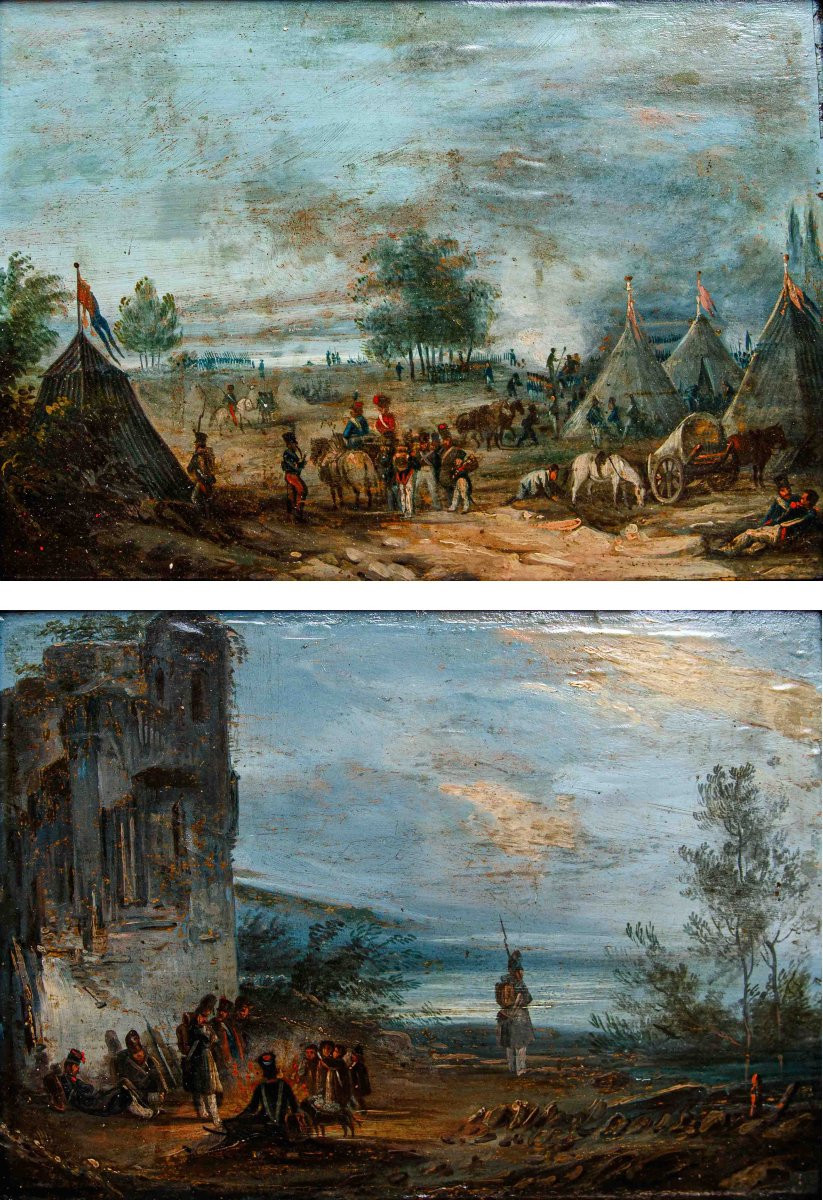
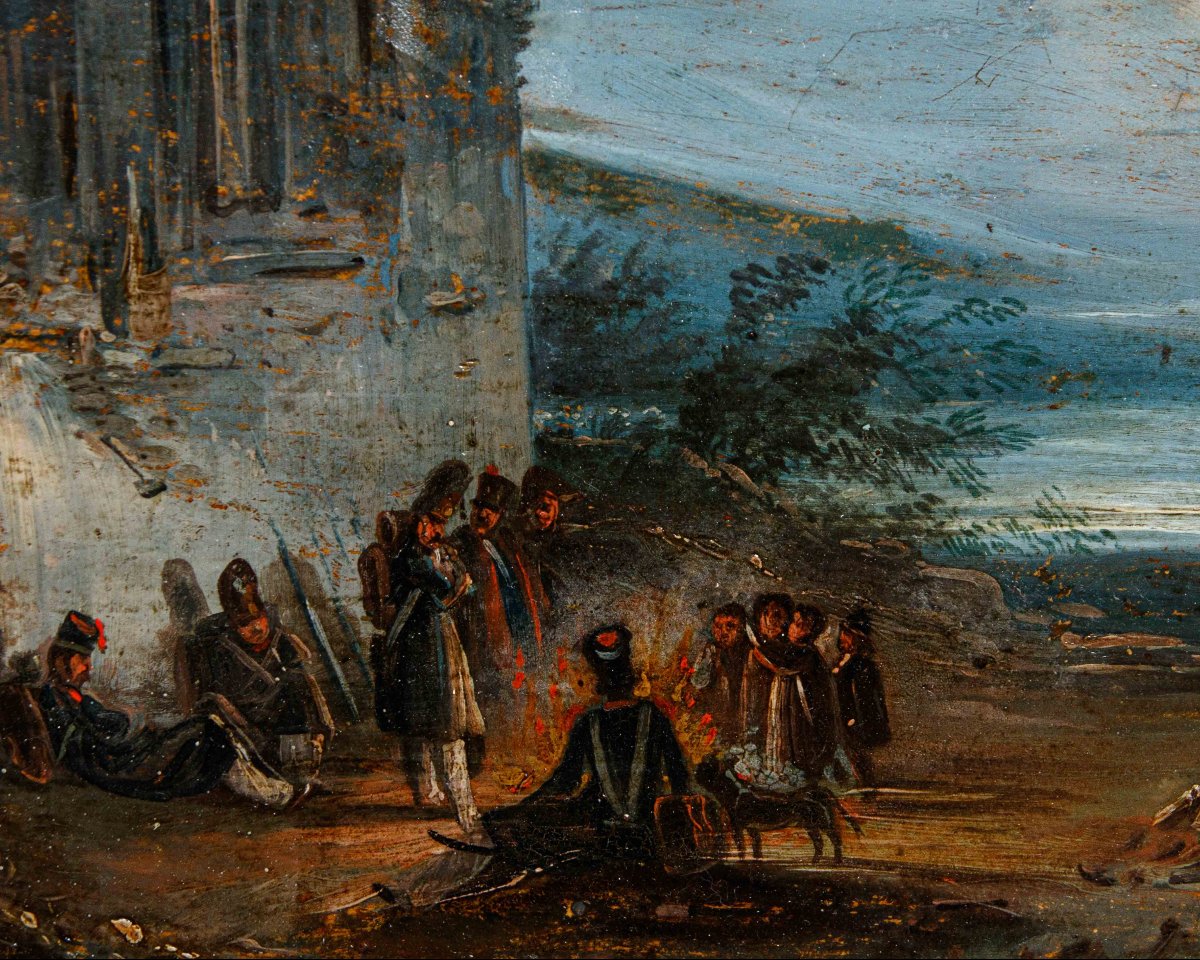
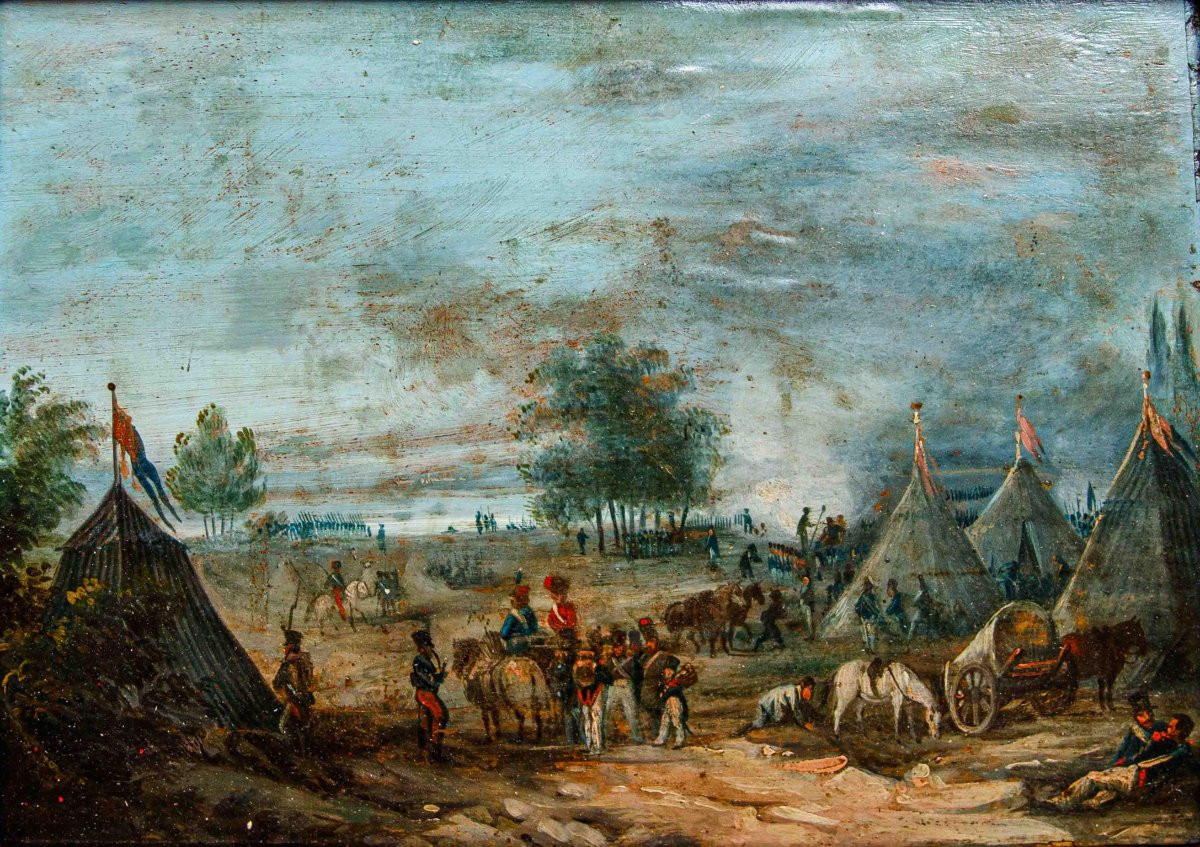
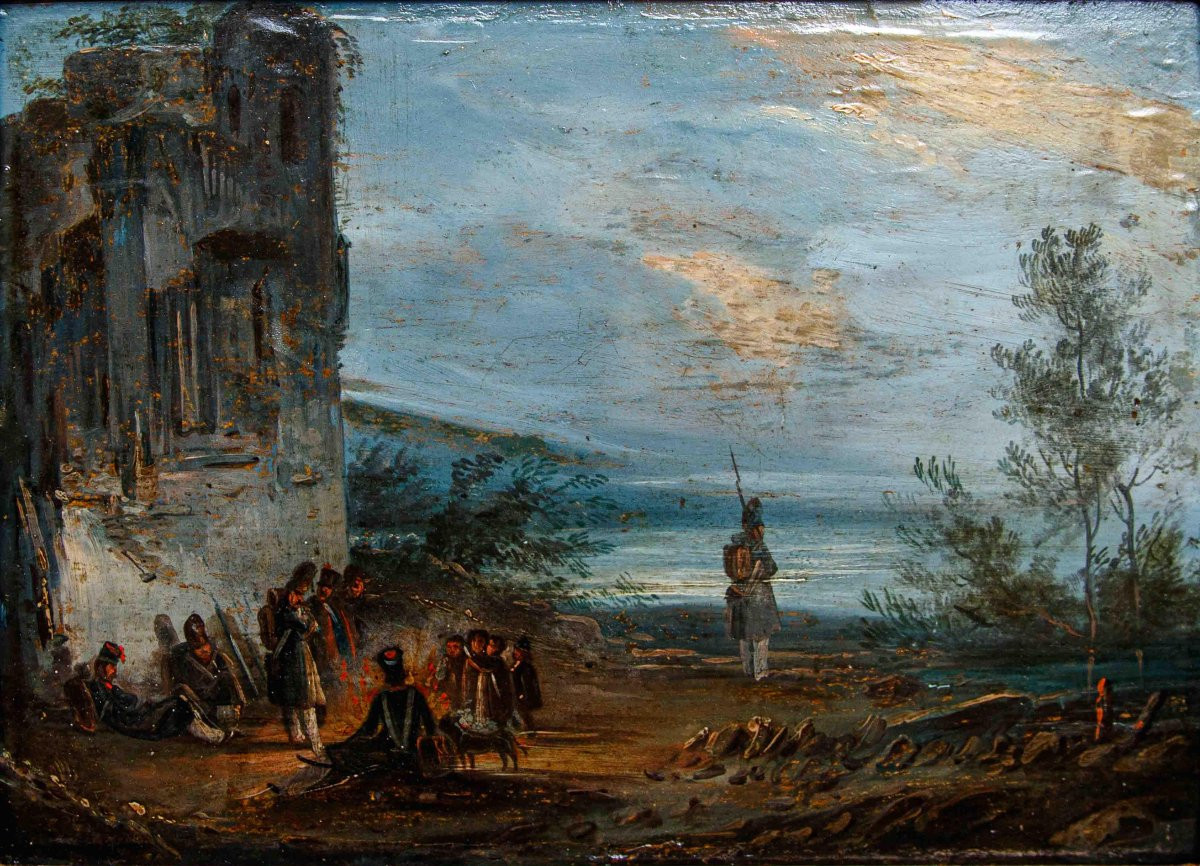
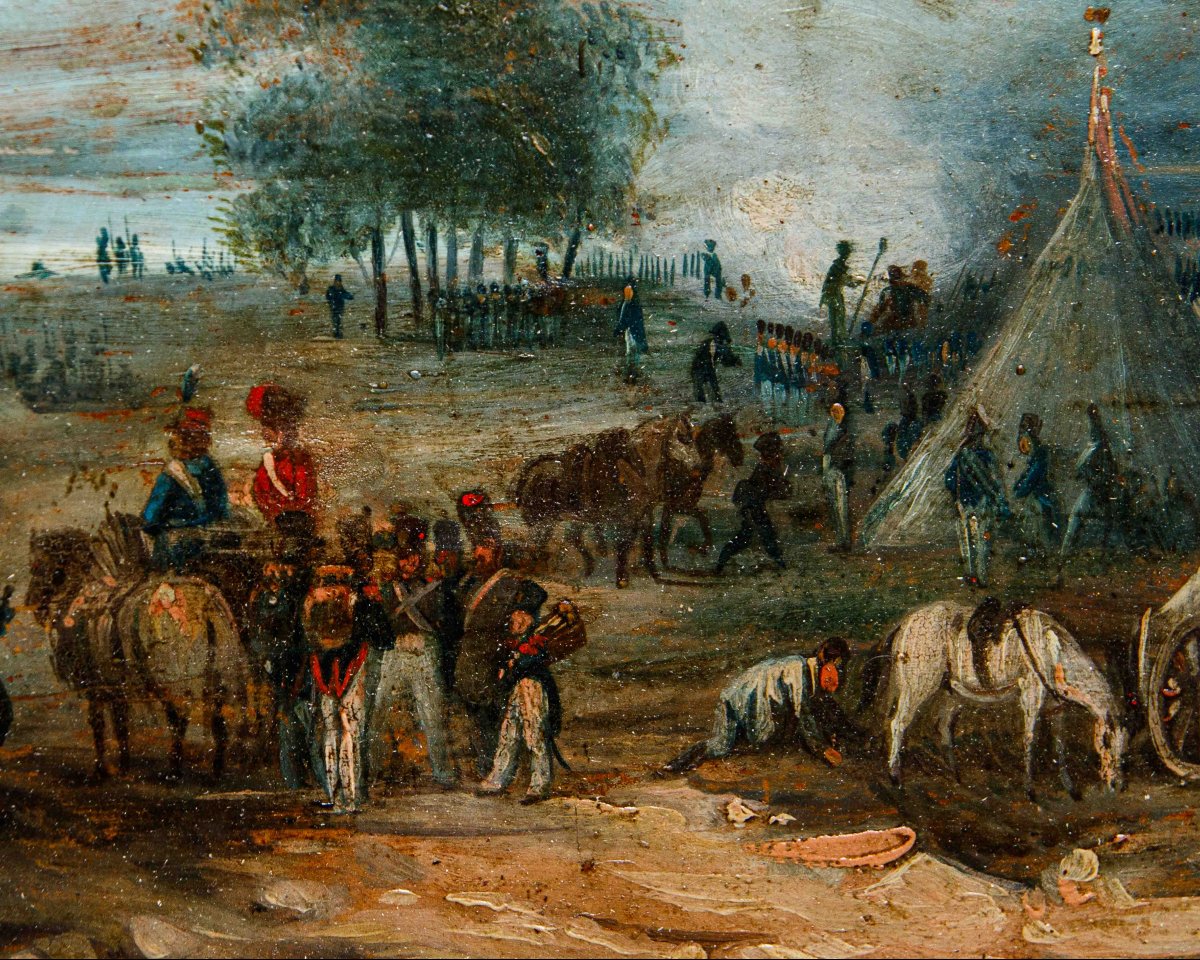
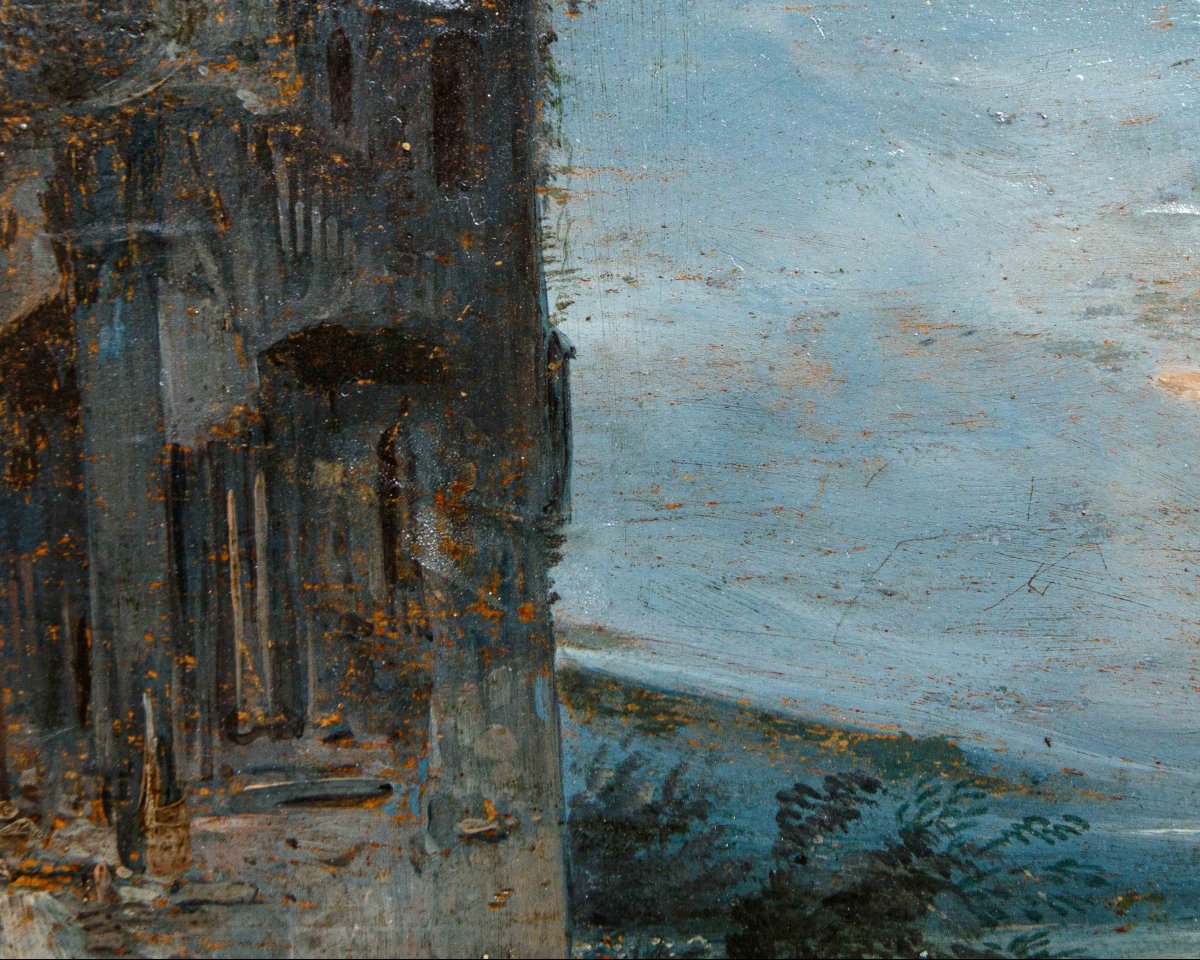
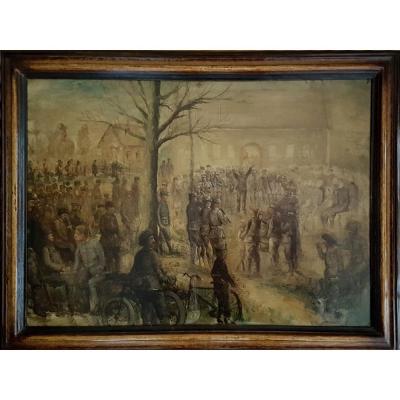
These two small plates represent camp scenes in which soldiers rest or prepare for battle during a war campaign. The settings appear distinct from both a landscape and climate point of view: the long coats worn by the troops gathered around the fire to warm themselves suggest the cold season, while the sunny sky, light uniforms, and verdant vegetation on the other table suggest a milder time of year. The tonal differences, colder on one side and clearer and more lukewarm on the other, seem to underline this distinction which also develops in the characters' actions: the static nature of the recruits gathered around the bonfire sheltered by the walls of a ruined building is contrasted by the industrious movement of the men-at-arms, stationed both in the foreground and in the distance, intent on setting up and preparing the bivouacs. One could think of two separate moments but part of the same campaign, to be placed chronologically at the beginning of the nineteenth century and to be identified with one of the campaigns of the French army: the tents, the blue and white of the uniforms, the hats and caps of the soldiers and the bayonets are configured with those used by Napoleon's armies in the wars fought in Europe between 1803 and 1815. Austerliz (1805), Jena (1806), Wagram (1809), the entire Russian campaign are just some of the possible war scenarios in which the camp scenes depicted here could be placed. The landscape is the undisputed protagonist although the human figures, sketched with rapid and dense strokes of colour, carve out a part that is not only an extra: the two soldiers lying in the first painter tell of an ephemeral lightheartedness despite the tragedy and hardships of war while the man with the bayonet turned away makes us pause to reflect on the future that awaits him and his companions. The colors are applied in broader, more material and fuller brushstrokes in the rendering of the sky and the landscape in general, managing to mix, blend and even out the general tone of the composition, in which one can still appreciate the changing colors depending on the degree of illumination, the clouds or fumes or the type of vegetation.











 Le Magazine de PROANTIC
 TRÉSORS Magazine
 Rivista Artiquariato