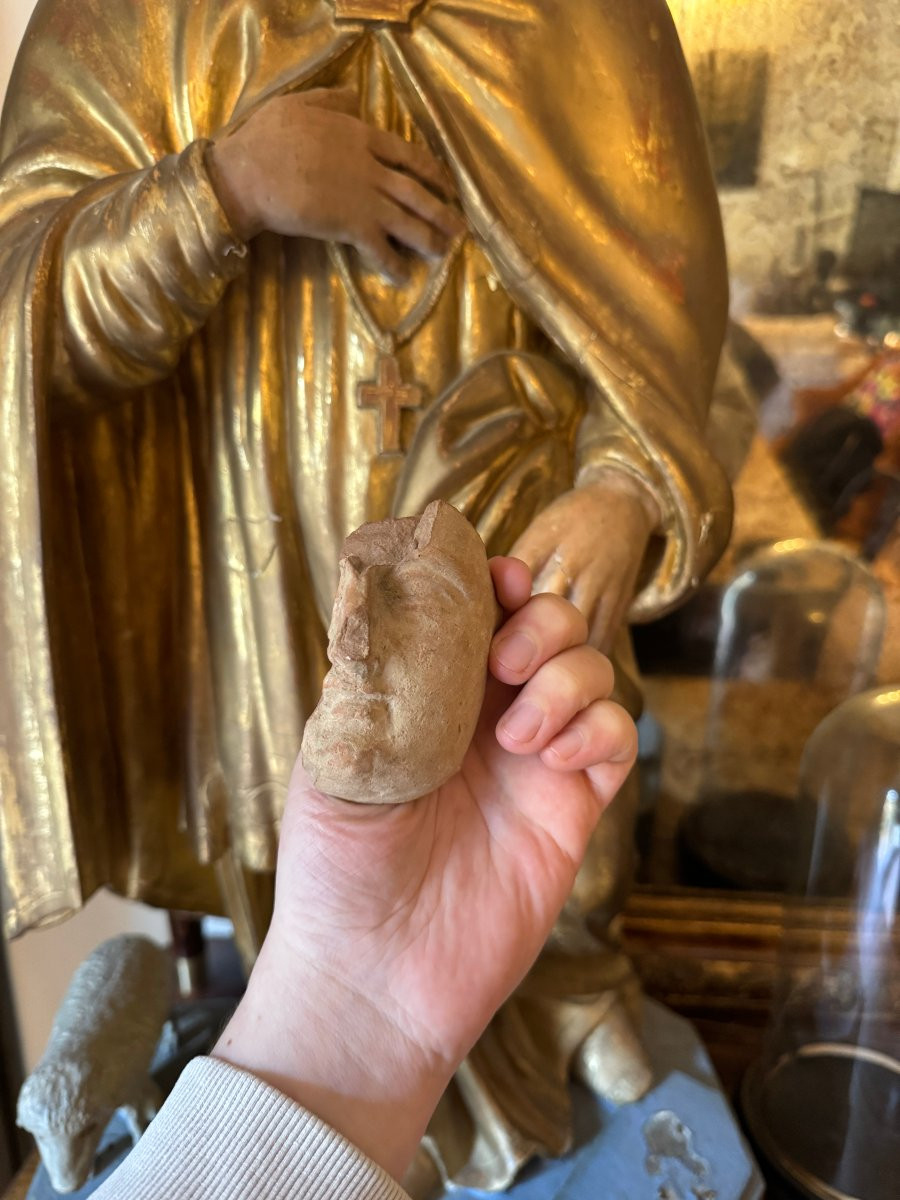
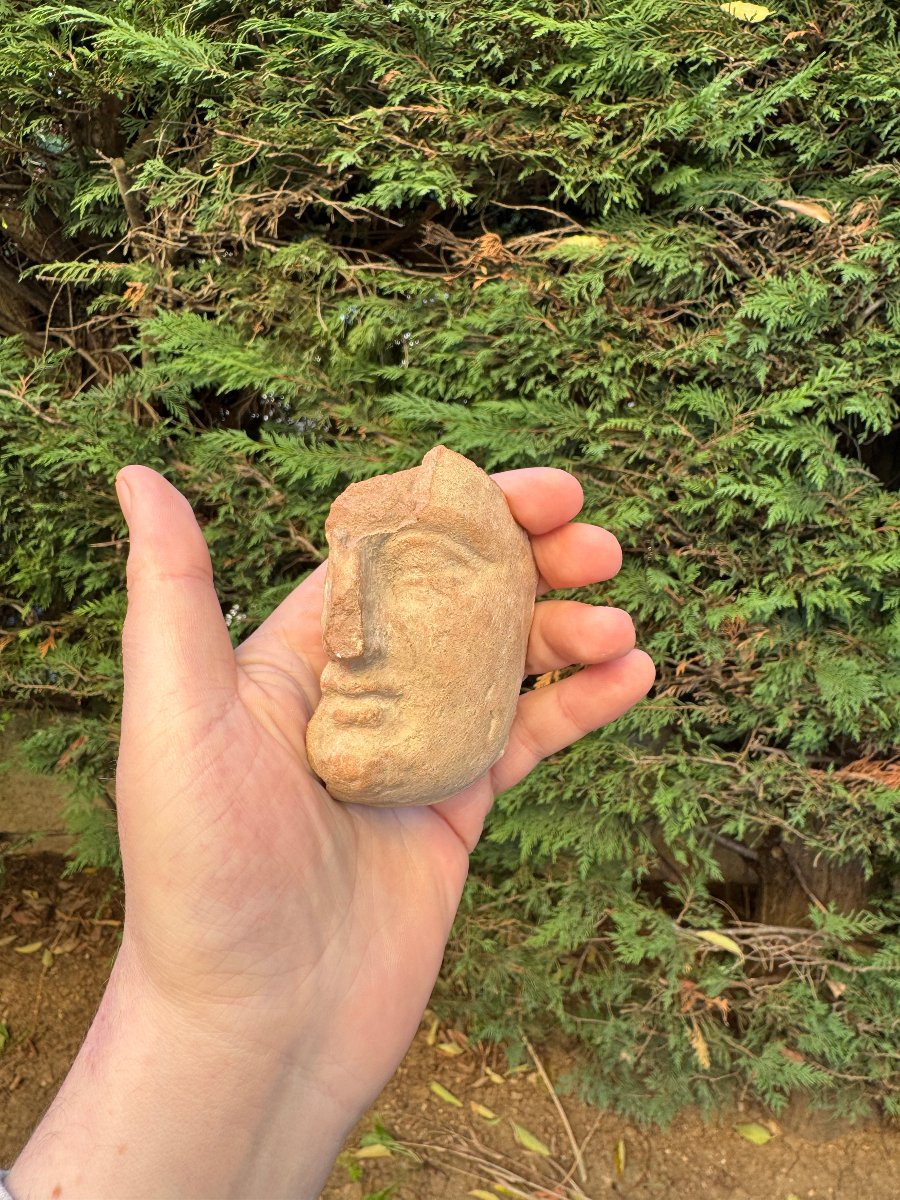

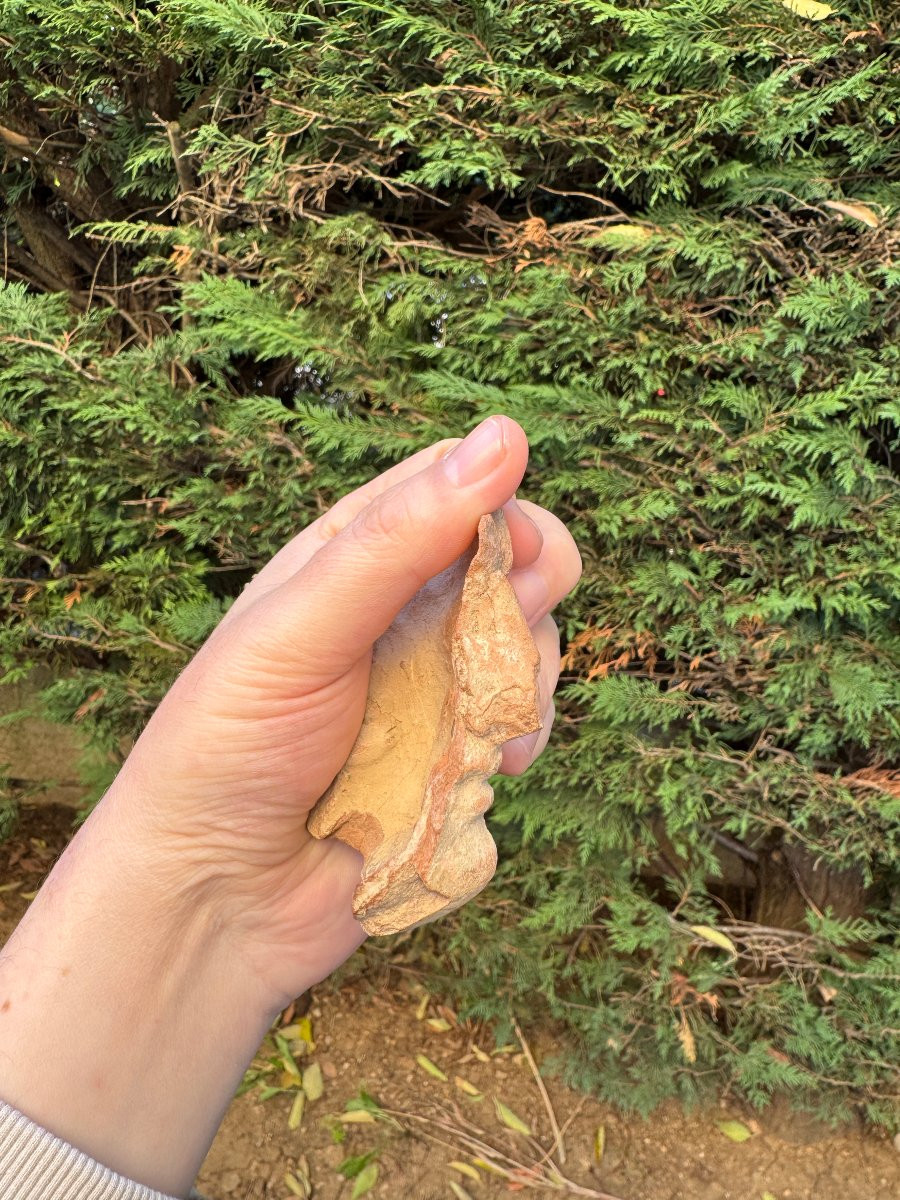

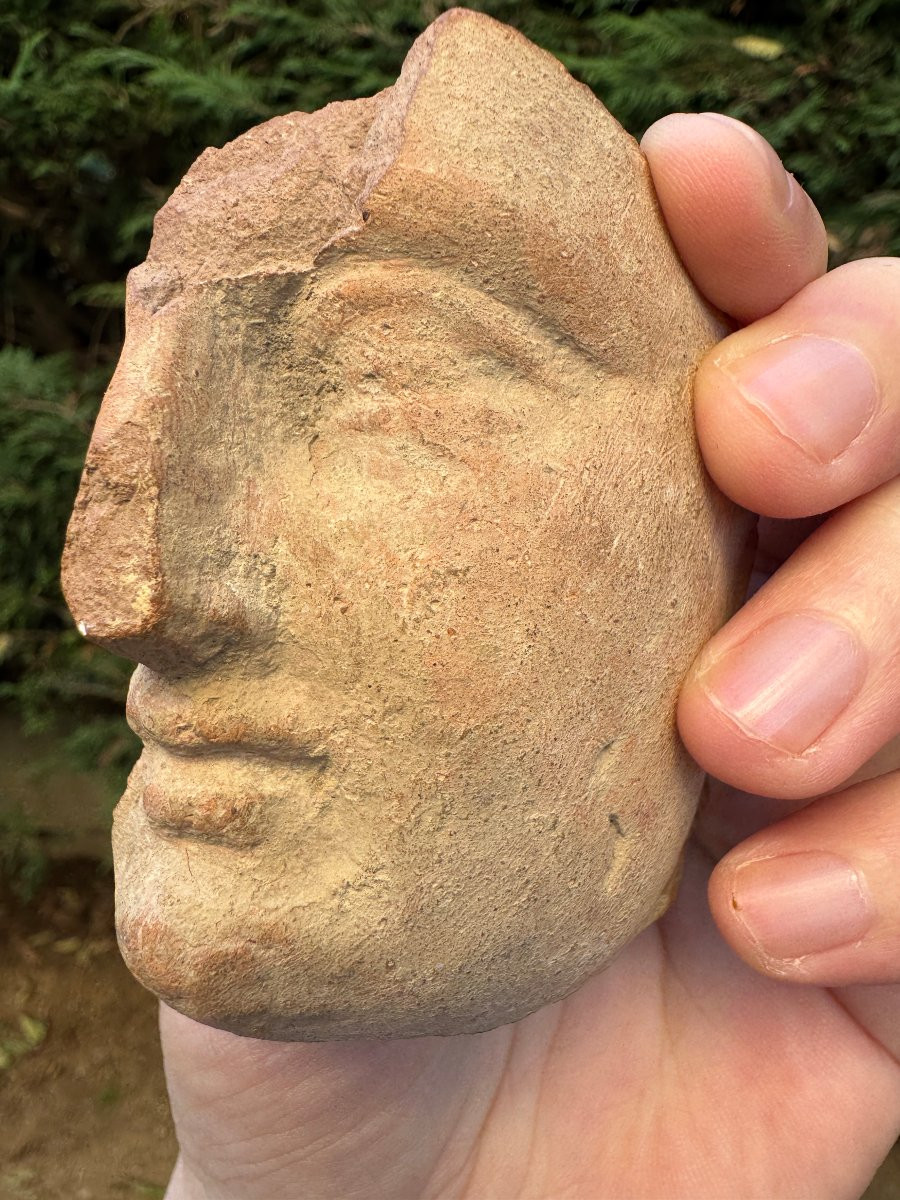
"Artifact – Antiquity – Terracotta Face Fragment – Magna Graecia – Archaeology"
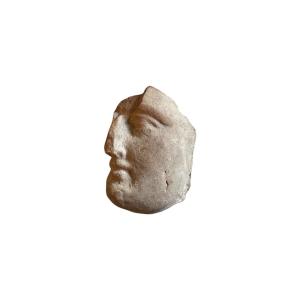
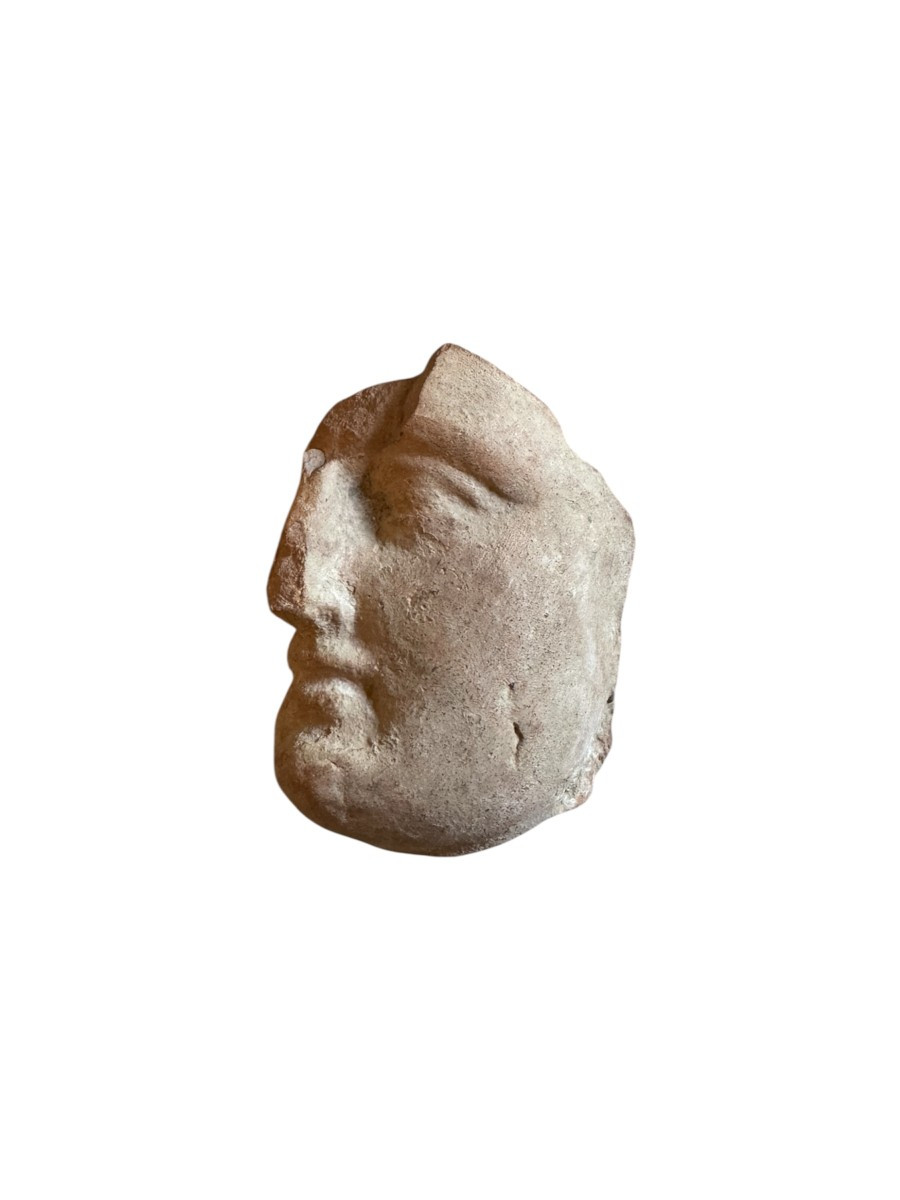
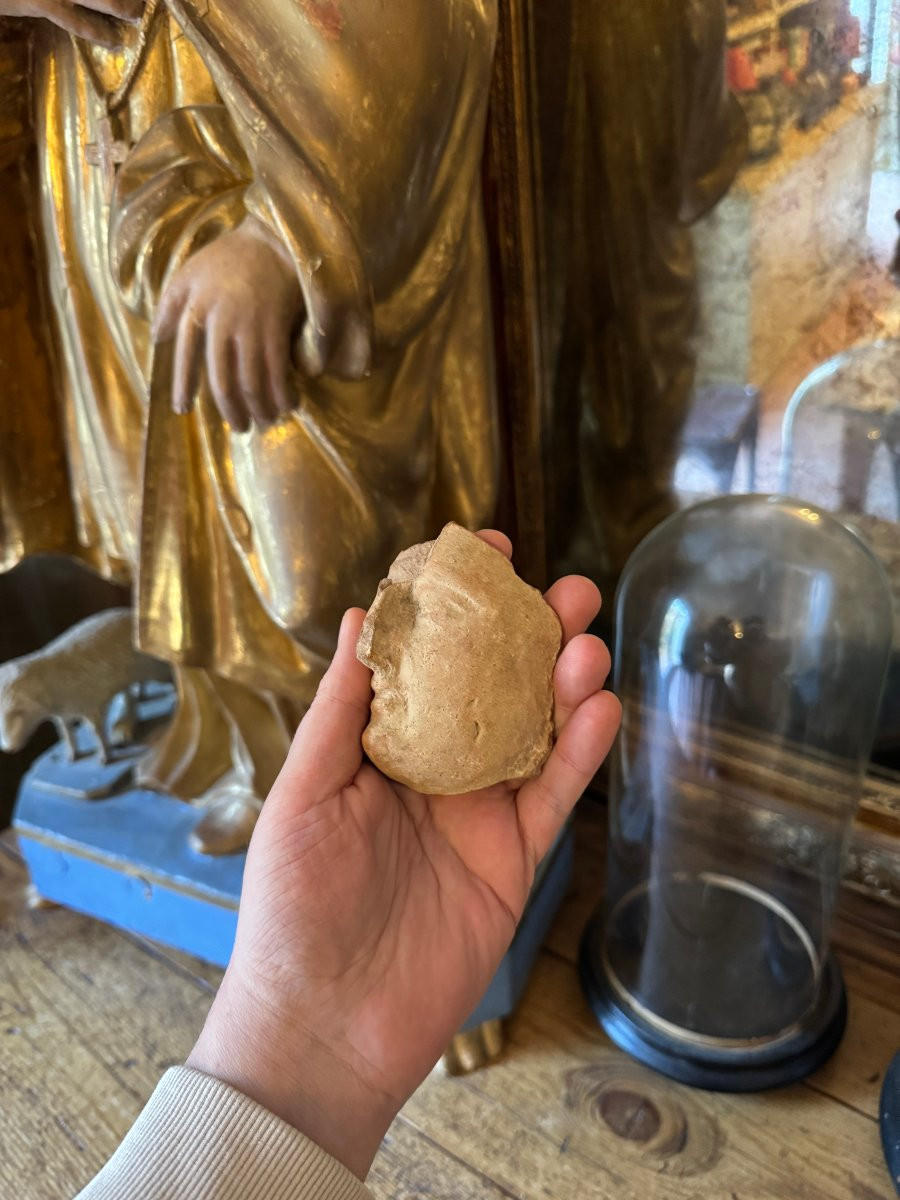
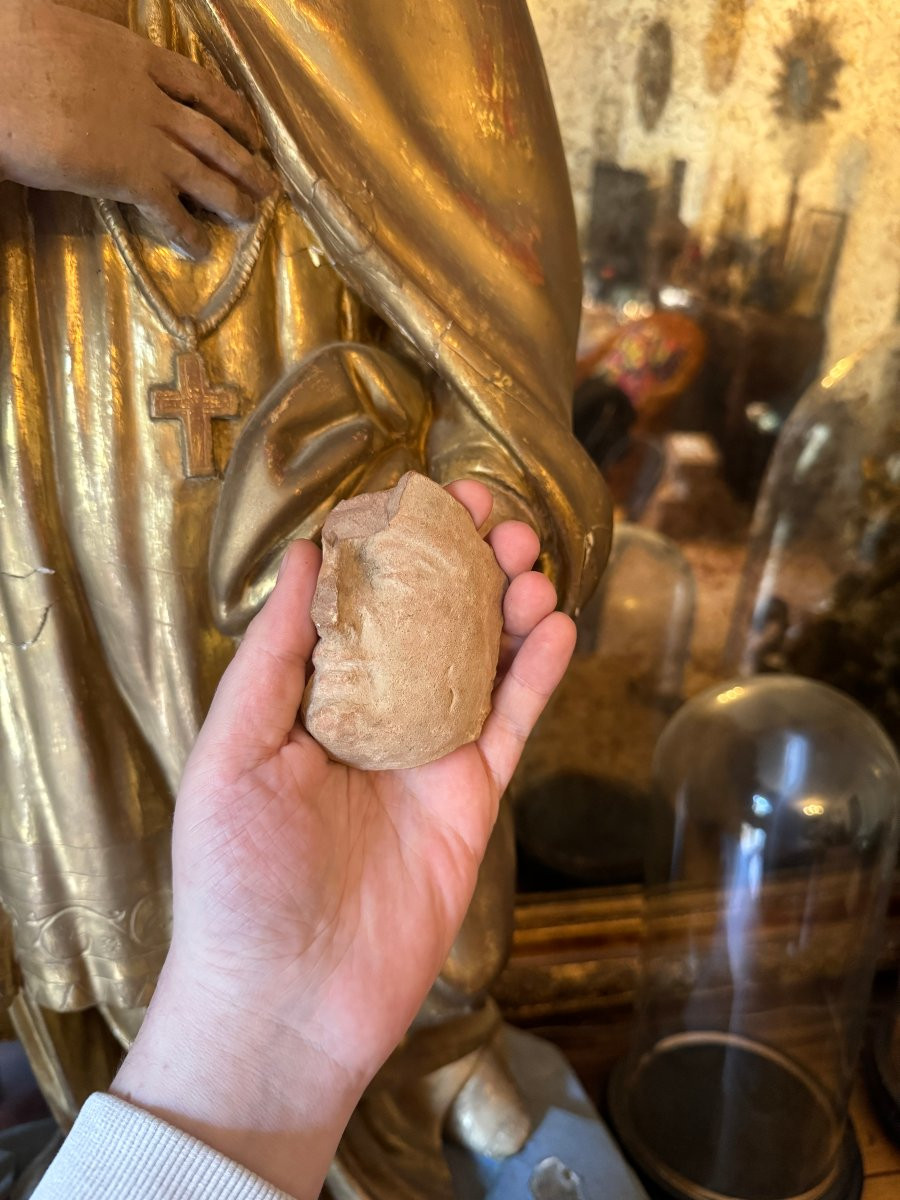
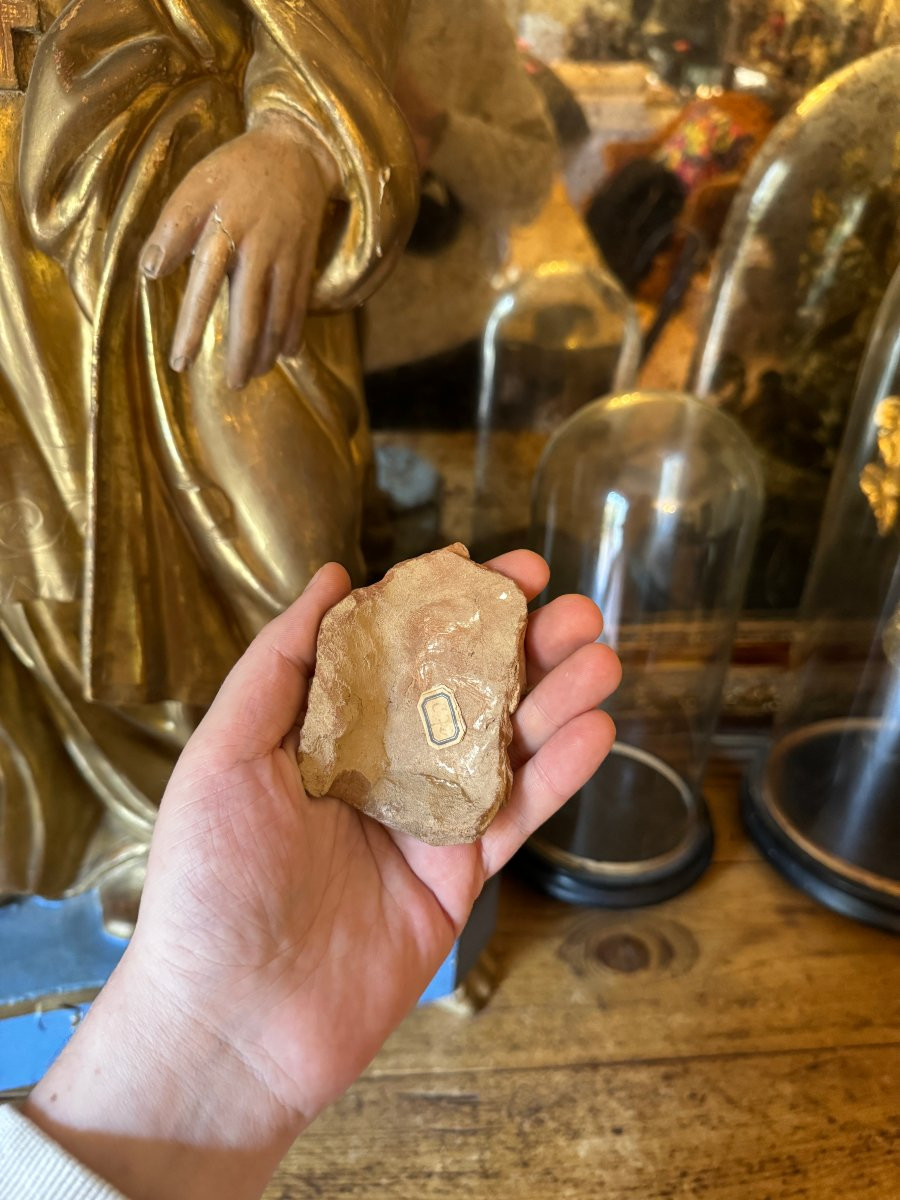
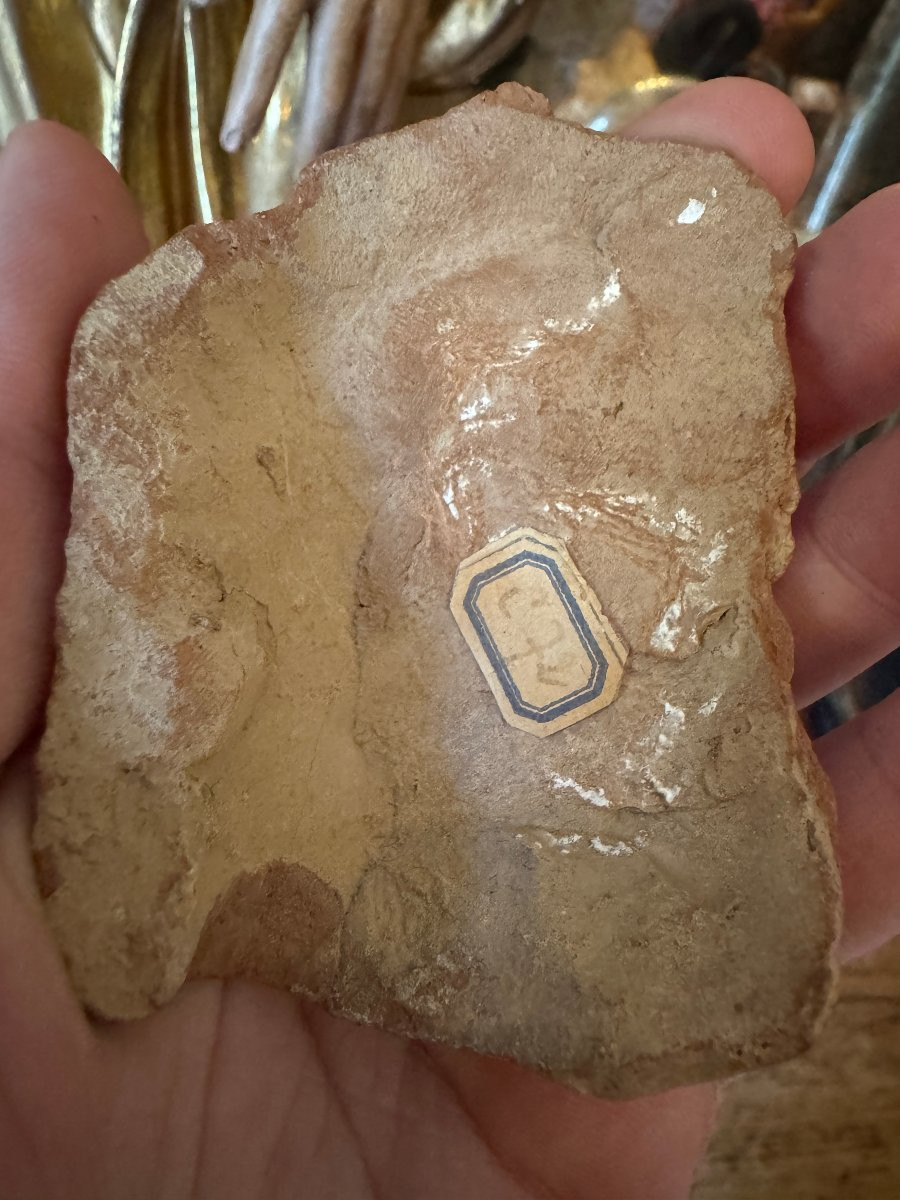
Period: 4th–3rd century BC. Origin: Magna Graecia (southern Italy). Provenance: Formerly in a private collection in southern France, acquired by inheritance before 1970. Fragment of a terracotta face from the head of an ancient statuette. The profile survives, including the nose, mouth, eye, and part of the cheek. The features are rendered with a naturalistic style characteristic of late Classical Greek art: straight nose, full lips, almond-shaped eye, and prominent brow ridge. The surface shows gentle and even wear, consistent with prolonged burial. Description: • Material: Fine, homogeneous beige-ochre terracotta • Shape: Fragment of a face in profile, from an antique head • Decoration: Naturalistic treatment of features, typical of Greek productions from Magna Graecia • Surface: Archaeological patina, ancient erosion, micro-impacts, areas of natural abrasion • Technical features: Careful modeling, ancient breaks, no restoration. Use: This type of fragment most likely comes from a votive statuette or a decorative element linked to a cultic or funerary context. Terracotta productions from Magna Graecia played a central role in the dissemination of Greek aesthetics in the western Mediterranean during the 4th and 3rd centuries BC. Condition: Fragment, in good condition with consistent ancient wear, no restoration. Dimensions: • Height: 8 cm. All deliveries are made via DHL Express only. 









 Le Magazine de PROANTIC
 TRÉSORS Magazine
 Rivista Artiquariato