THIS OBJECT WAS SOLD
Antique Universal Camera Lucida Or Camera Clara. Argentina, Circa 1920
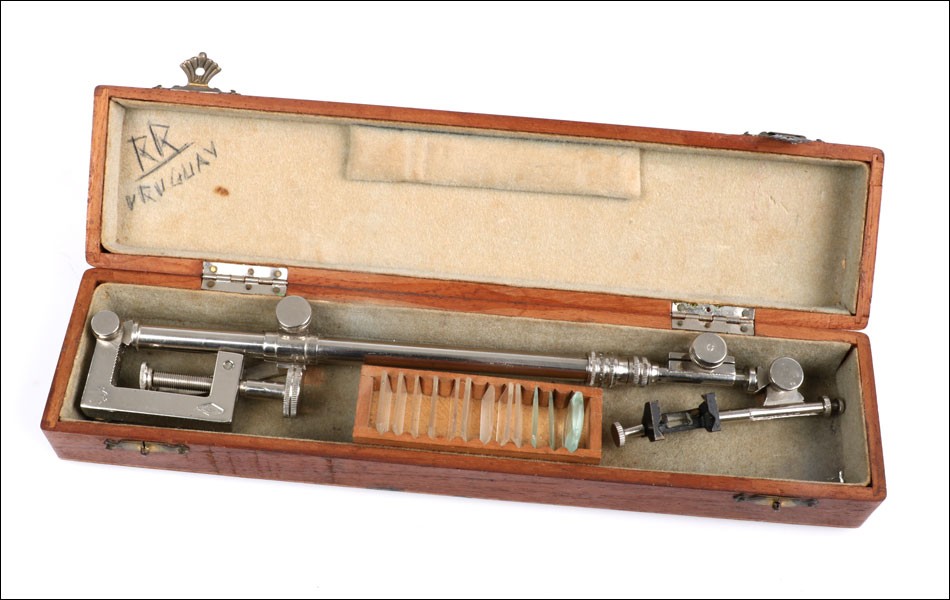


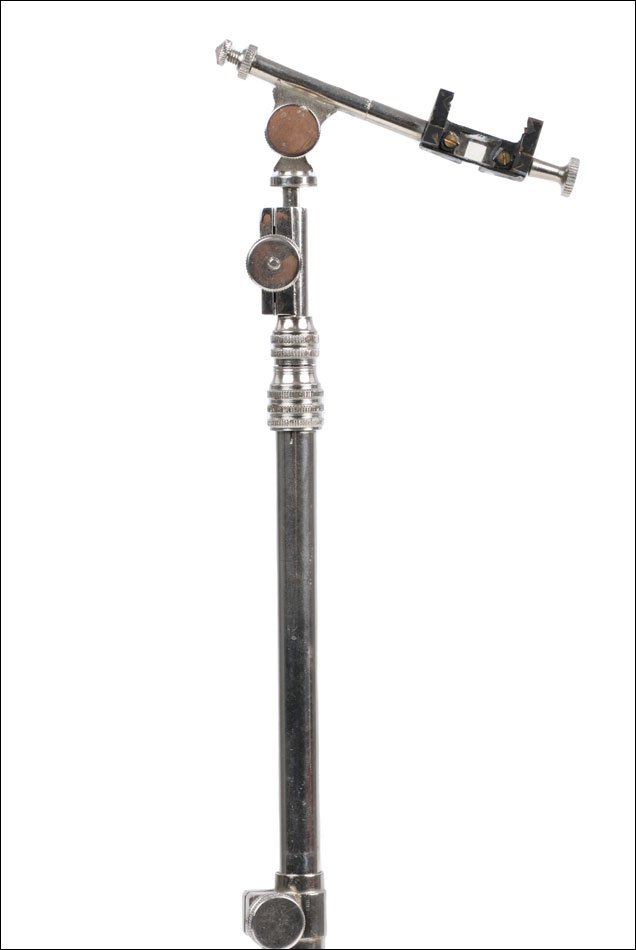

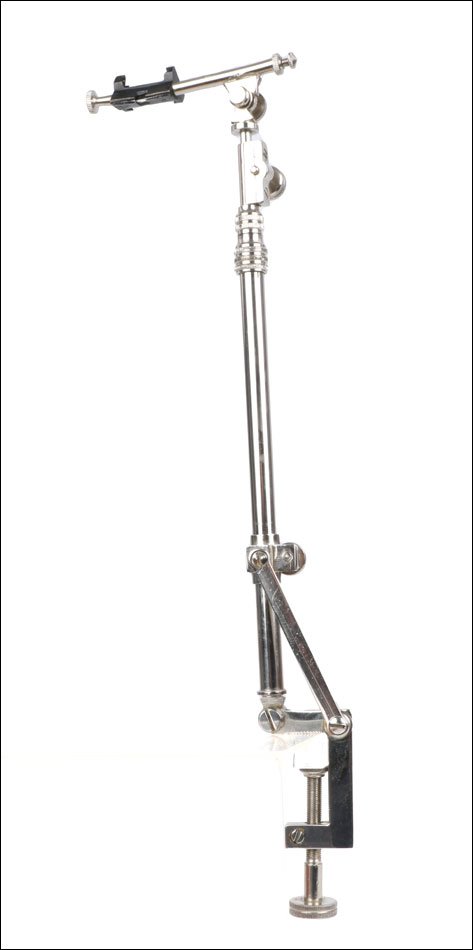
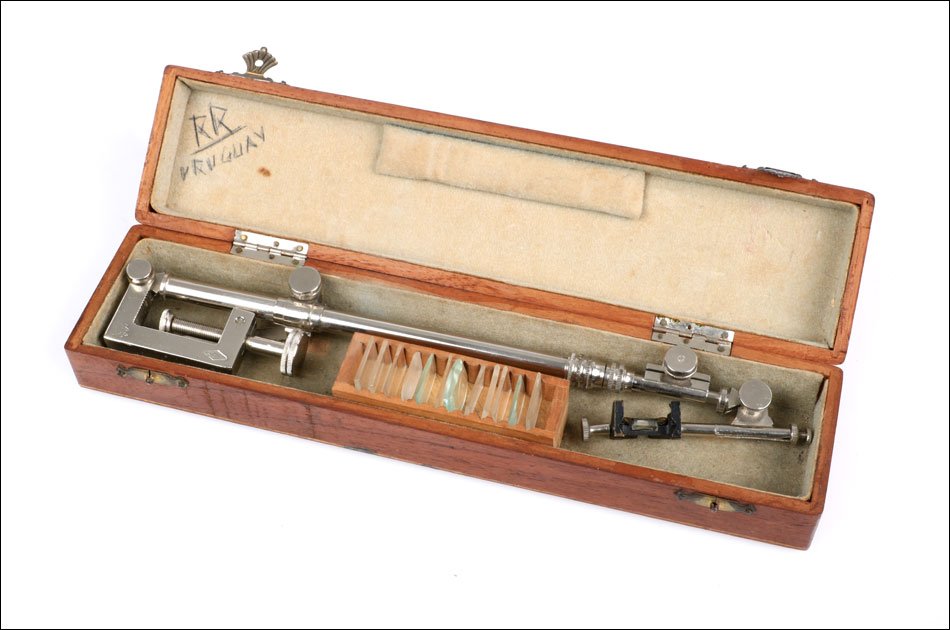
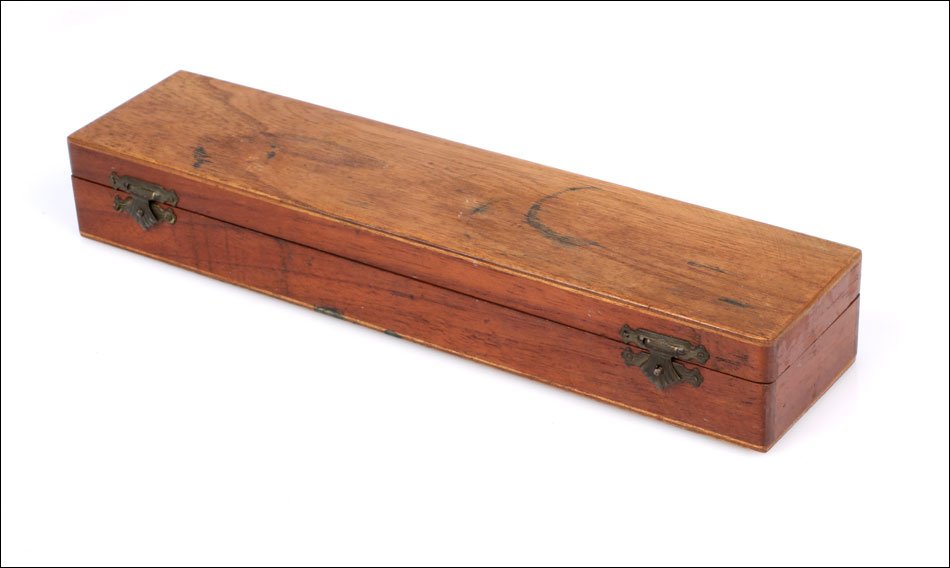


This antique universal camera lucida manufactured in Argentina circa 1920 is an extremely interesting piece due to its fidelity to the prestigious French models by Pierre Verbille, whose camera lucidas were highly appreciated by draftsmen, engravers, and naturalists during the late nineteenth century and the first third of the twentieth century. The example presented here maintains the classic structure of these devices: an extendable metal arm, a firm clamp for attaching to the edge of the table, and an articulated head that holds the original prism. Its design, elegant and functional, clearly reflects the tradition of the French workshops, which is why its formal similarity is immediate and recognizable. The entire piece is made of silvered metal with well preserved finishes, except for small signs of use consistent with its age.
The prism has a small chip on one end that does not affect vision or the correct formation of the virtual image in any way, since it is located outside the optical zone. Through the prism the image remains sharp, demonstrating that the system preserves its functional capacity even after more than a century. The set of lenses is particularly noteworthy: it includes twelve lenses numbered from 1 to 12, except for numbers 5 and 8, probably replaced at the time by equivalents. The lenses are stored in a wooden holder that fits perfectly inside the case, keeping the ensemble tidy and visually attractive.
When the device is fully extended it reaches approximately 50 cm in length, which allows it to be used comfortably for direct drawing on the working surface. The clamp keeps its thread firm and can be attached without difficulty to tables of various thicknesses. Despite its age, all joints maintain good mobility and show no looseness.
Due to its rarity, its fidelity to the French designs, and its excellent overall presence, this camera lucida is perfect for a collector of scientific instruments, for an illustrator who wishes to experiment with historical methods, or for anyone looking for a singular piece for a showcase or studio. It is a beautiful and striking object full of historical character, capable of enriching both a scientific collection and a decorative space thanks to its elegant mechanics and the beauty of its original case.
Measurements: 28.5 cm (11.22 in). Maximum extension = approx. 50 cm (19.68 in)
History of Camera Lucidas
The camera lucida is an optical instrument invented in 1807 by William Hyde Wollaston, whose purpose was to allow the draftsman to see simultaneously the real subject and the surface on which he was drawing, superimposing both images by means of a special prism. Its optical principle is based on the refraction and internal reflection of the prism, which projects a transparent virtual image onto the paper, facilitating the faithful reproduction of perspectives, proportions, and details. Throughout the nineteenth century the device quickly became popular among scientists, naturalists, archaeologists, and artists, since it allowed highly precise sketches to be obtained without the need for complex projection devices or photographic cameras, which were still under development. For decades it was an essential tool in scientific illustration, especially in botany, zoology, and anatomy, where drawings needed to represent morphological characteristics accurately.
In Europe numerous manufacturers specializing in optical instruments emerged, particularly in France, Germany, and England. Among them stood out the French workshops of Pierre Verbille, known for producing camera lucidas of exceptional mechanical and optical quality, highly appreciated by professional draftsmen. These models included articulated arms, interchangeable lenses, and high quality wooden cases. Outside Europe, several countries began producing copies or adaptations of these designs to meet growing local demand. In South America workshops appeared that faithfully replicated European models, using similar materials and techniques. Although the camera lucida lost popularity with the appearance of portable photography and drawing assisted by new technologies, its historical relevance remains intact. Today it is a valued instrument among collectors, museums, and artists who wish to recover classic methods of observation and representation. Its mechanical elegance and its role in the history of scientific drawing make it an emblematic piece in the development of the visual arts and sciences.
We are professional antique dealers.
The prism has a small chip on one end that does not affect vision or the correct formation of the virtual image in any way, since it is located outside the optical zone. Through the prism the image remains sharp, demonstrating that the system preserves its functional capacity even after more than a century. The set of lenses is particularly noteworthy: it includes twelve lenses numbered from 1 to 12, except for numbers 5 and 8, probably replaced at the time by equivalents. The lenses are stored in a wooden holder that fits perfectly inside the case, keeping the ensemble tidy and visually attractive.
When the device is fully extended it reaches approximately 50 cm in length, which allows it to be used comfortably for direct drawing on the working surface. The clamp keeps its thread firm and can be attached without difficulty to tables of various thicknesses. Despite its age, all joints maintain good mobility and show no looseness.
Due to its rarity, its fidelity to the French designs, and its excellent overall presence, this camera lucida is perfect for a collector of scientific instruments, for an illustrator who wishes to experiment with historical methods, or for anyone looking for a singular piece for a showcase or studio. It is a beautiful and striking object full of historical character, capable of enriching both a scientific collection and a decorative space thanks to its elegant mechanics and the beauty of its original case.
Measurements: 28.5 cm (11.22 in). Maximum extension = approx. 50 cm (19.68 in)
History of Camera Lucidas
The camera lucida is an optical instrument invented in 1807 by William Hyde Wollaston, whose purpose was to allow the draftsman to see simultaneously the real subject and the surface on which he was drawing, superimposing both images by means of a special prism. Its optical principle is based on the refraction and internal reflection of the prism, which projects a transparent virtual image onto the paper, facilitating the faithful reproduction of perspectives, proportions, and details. Throughout the nineteenth century the device quickly became popular among scientists, naturalists, archaeologists, and artists, since it allowed highly precise sketches to be obtained without the need for complex projection devices or photographic cameras, which were still under development. For decades it was an essential tool in scientific illustration, especially in botany, zoology, and anatomy, where drawings needed to represent morphological characteristics accurately.
In Europe numerous manufacturers specializing in optical instruments emerged, particularly in France, Germany, and England. Among them stood out the French workshops of Pierre Verbille, known for producing camera lucidas of exceptional mechanical and optical quality, highly appreciated by professional draftsmen. These models included articulated arms, interchangeable lenses, and high quality wooden cases. Outside Europe, several countries began producing copies or adaptations of these designs to meet growing local demand. In South America workshops appeared that faithfully replicated European models, using similar materials and techniques. Although the camera lucida lost popularity with the appearance of portable photography and drawing assisted by new technologies, its historical relevance remains intact. Today it is a valued instrument among collectors, museums, and artists who wish to recover classic methods of observation and representation. Its mechanical elegance and its role in the history of scientific drawing make it an emblematic piece in the development of the visual arts and sciences.
We are professional antique dealers.
Explore similar pieces and discover your ideal find:
Photographs