THIS OBJECT WAS SOLD
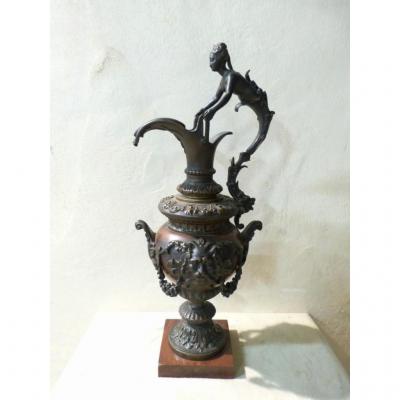
Barbedienne Large Bronze Amphora Vase (h: 67 Cm)
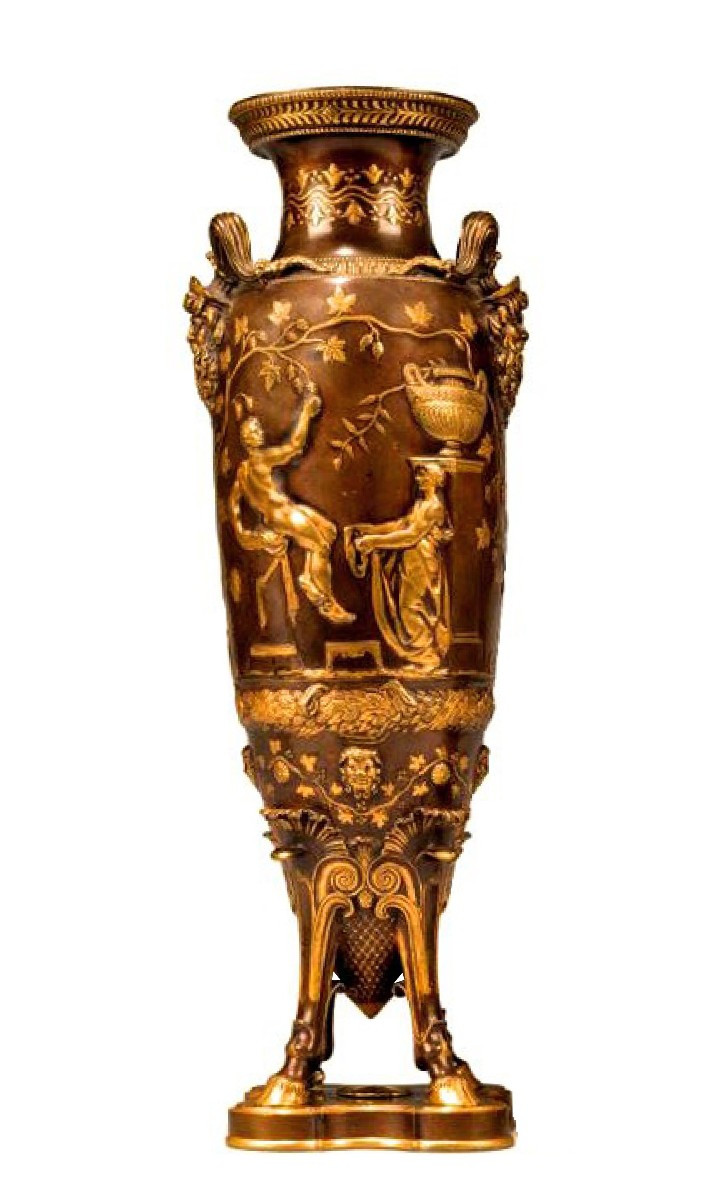
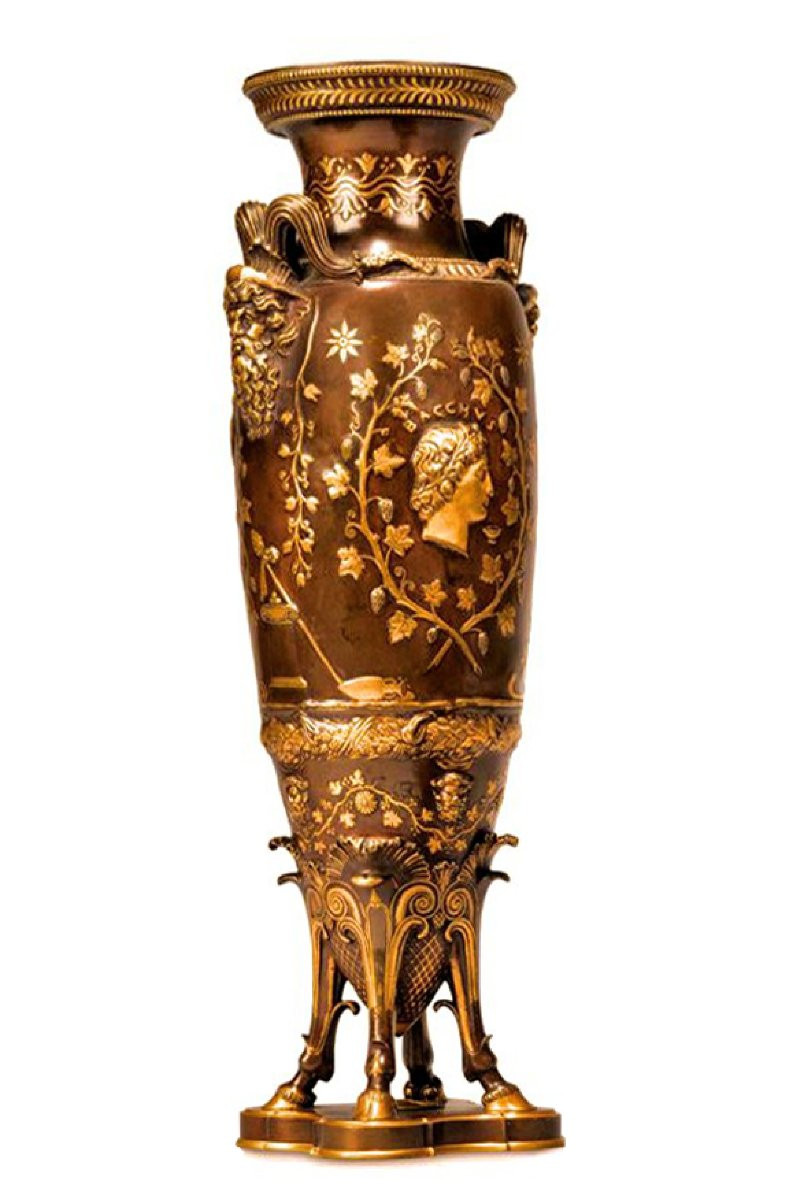
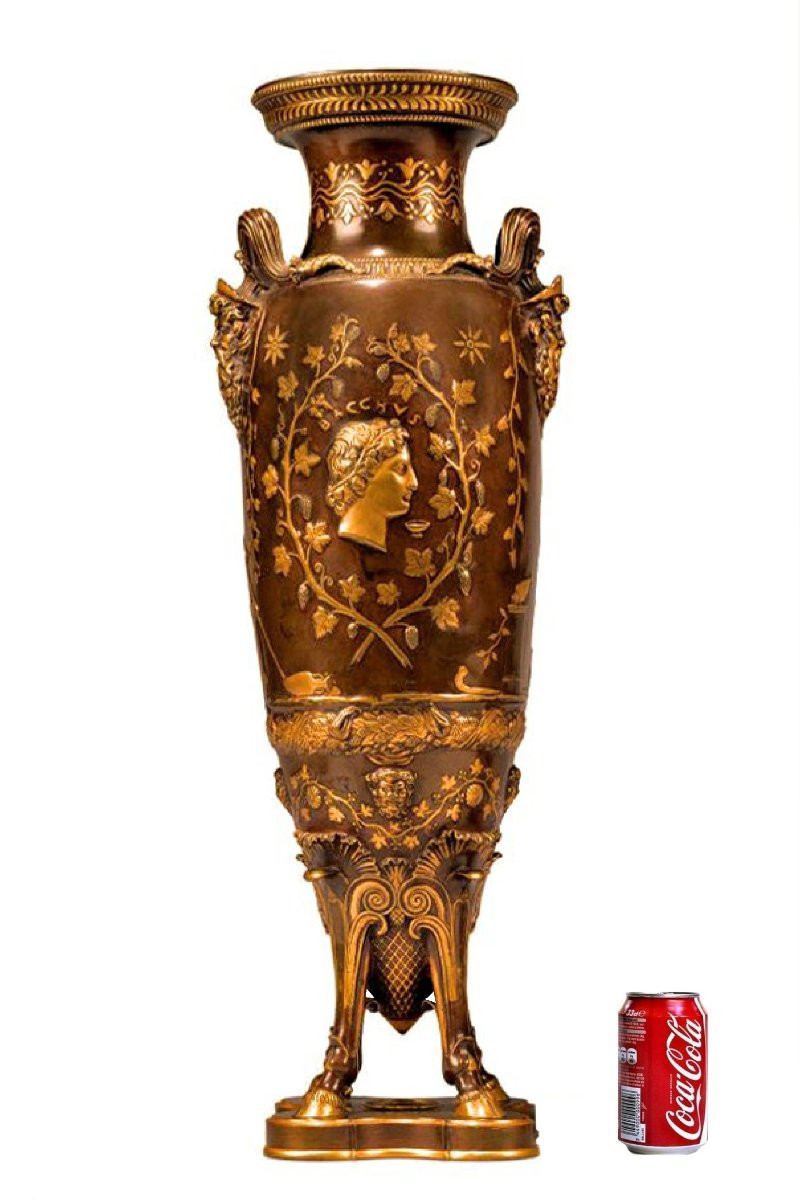
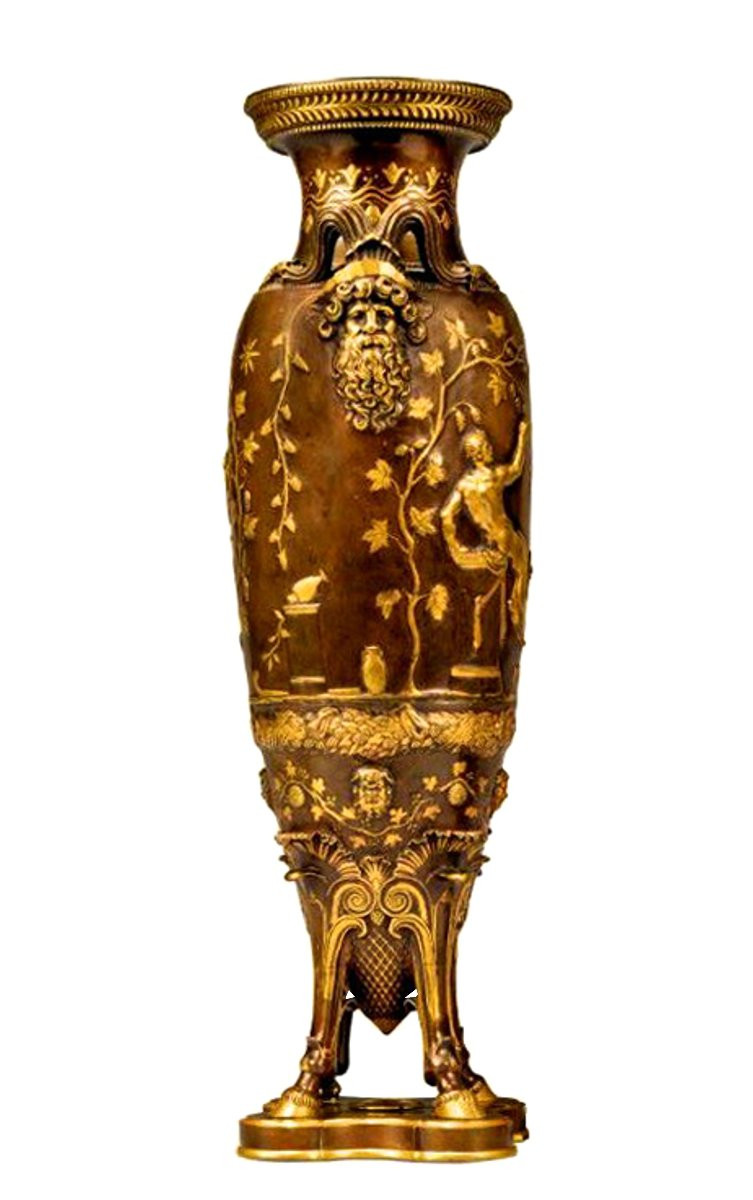


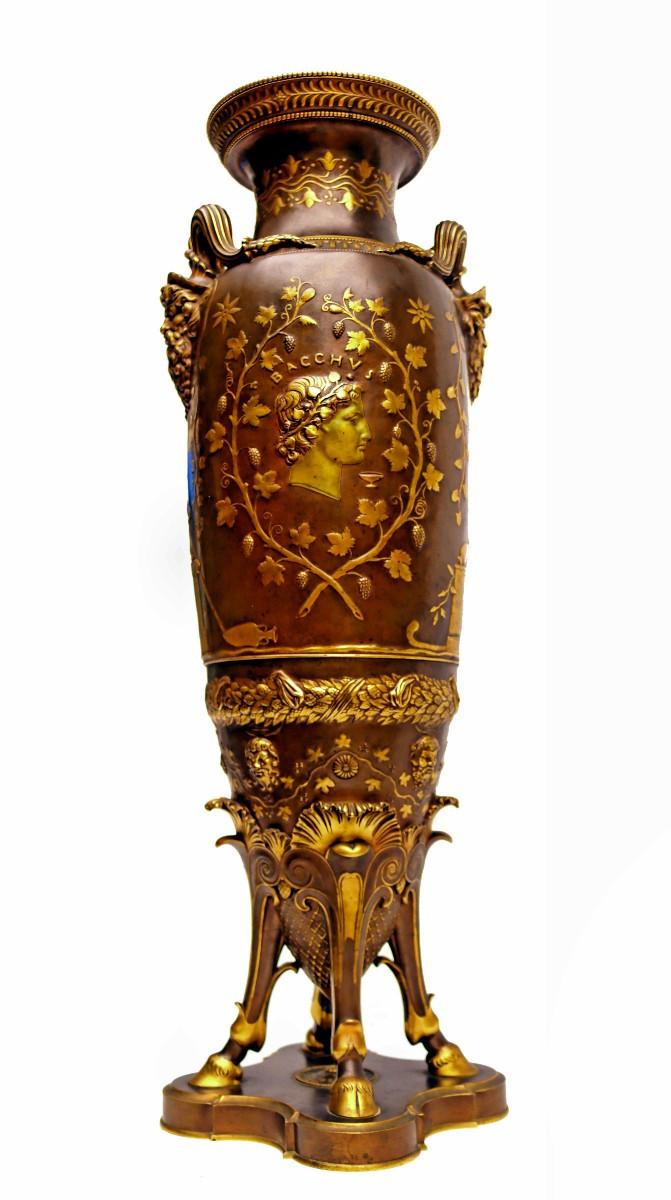
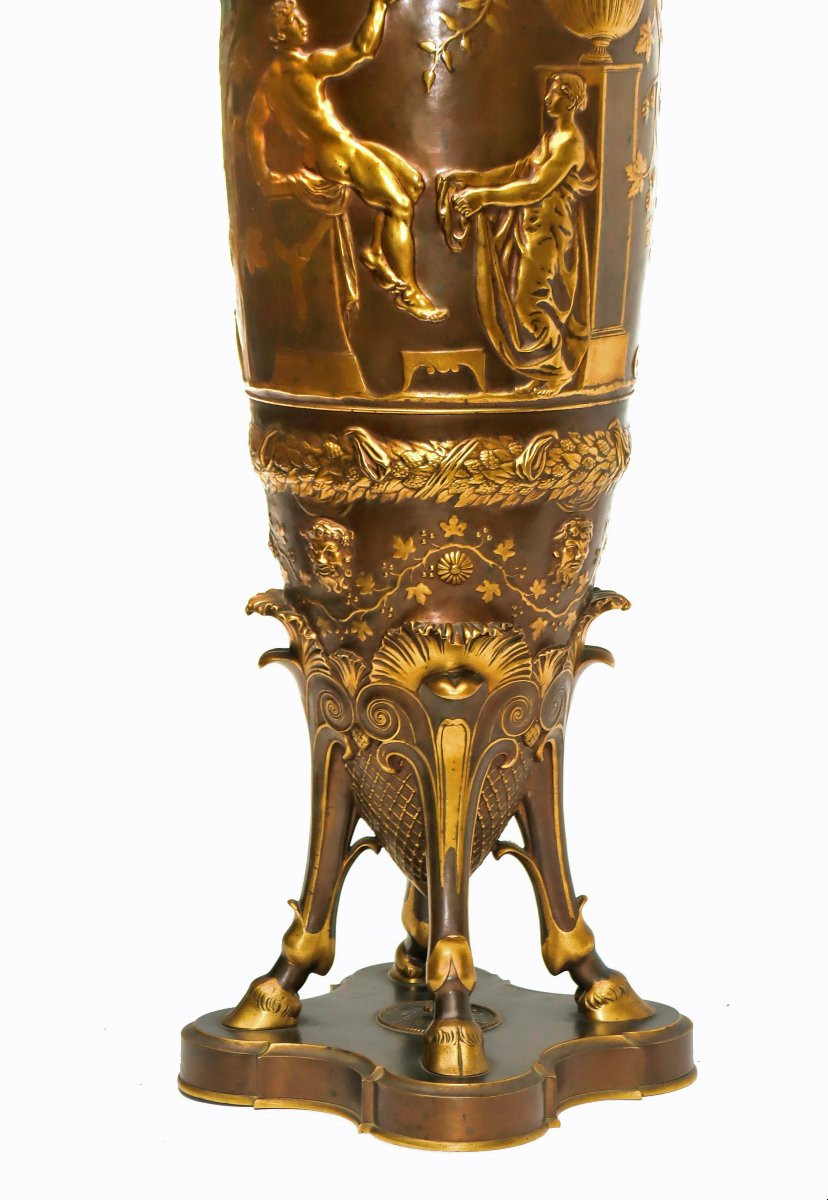


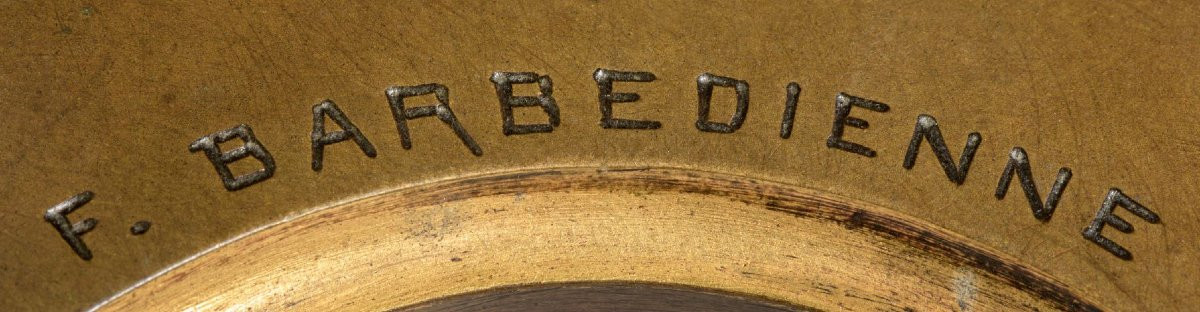
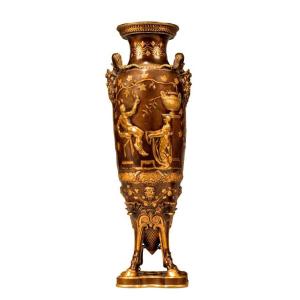


Ferdinand Barbedienne (1810-1892) & Ferdinand Levillain (1837-1905) Important sculpture in the Antique style depicting an architectural amphora vase with a large, finely chiseled bronze structure, adorned with a beautiful medal and gilded patina offering a rich decoration with the effigy of Bacchus, animated by a grape harvest scene and a profile of the god of the vine surrounded by vine branches and horns of plenty. The handles are formed by mascarons in high relief, the lower part rests on hock feet with acanthus leaves ending in hooves on a quadrilobed base. Signed F. BARBEDIENNE in the decoration. Good condition, beautiful patina, dimensions: 67 cm high X 23 cm - Model exhibited at the Salon of 1877 -
Ferdinand Barbedienne moved to Paris in 1822, his meeting with Achille Collas (1795-1859) dates from these years. Collas and Barbedienne went into partnership and opened a foundry in 1838. Barbedienne, very interested in the innovative techniques favored by the government of Louis-Philippe, actively participated in the Romantic movement. The taste for history and Gallo-Roman archaeology spread at the same time as that of ancient bronzes. Achille Collas had also invented a mechanical process which made it possible to mathematically reproduce, by means of a reducer, or pantograph, sculptures in the round. This invention was considered from the start as important as that of the daguerreotype. For a time, Collas et Barbedienne sold plaster reductions of the Venus de Milo, then specialized in the production of bronzes based on the antique. At the International Exhibition in London in 1851, and then at the Paris Exhibition in 1855, the company, registered under the name Barbedienne, won numerous medals.
Ferdinand Barbedienne moved to Paris in 1822, his meeting with Achille Collas (1795-1859) dates from these years. Collas and Barbedienne went into partnership and opened a foundry in 1838. Barbedienne, very interested in the innovative techniques favored by the government of Louis-Philippe, actively participated in the Romantic movement. The taste for history and Gallo-Roman archaeology spread at the same time as that of ancient bronzes. Achille Collas had also invented a mechanical process which made it possible to mathematically reproduce, by means of a reducer, or pantograph, sculptures in the round. This invention was considered from the start as important as that of the daguerreotype. For a time, Collas et Barbedienne sold plaster reductions of the Venus de Milo, then specialized in the production of bronzes based on the antique. At the International Exhibition in London in 1851, and then at the Paris Exhibition in 1855, the company, registered under the name Barbedienne, won numerous medals.
Explore similar pieces and discover your ideal find:
Footed Bowls, Urns, Cassolettes