THIS OBJECT WAS SOLD
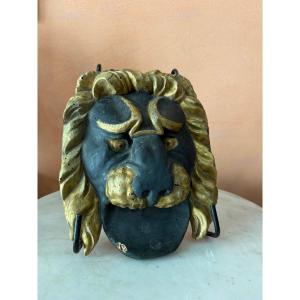
Hardwood Fumigator With A Skull And Lion. English Or Dutch, 16th - 17th Century.


An extraordinary hardwood fumigator carved with a skull and a lion.
English or Dutch, 16th - 17th century.
Measures 20 x 9 x 7 cm.
A remarkable survival, this intricately carved hardwood fumigator takes the form of a roaring lion, boldly rendered with exceptional character. Its eyes are set with lead inlays (one now lost), and traces of original red pigment remain visible within the open jaws, adding vivid life to the beast. Most arresting is the subtle and macabre detail: the lion’s forepaws clutch a human skull, concealed from view and only revealed when the piece is turned over.
The bowl is richly ornamented with floral carving and a fine dog-tooth border at the lip, evoking the appearance of contemporary precious metal mounts. The interior would once have been lined—secured by four lead pins, of which only one survives. The liner itself is now missing.
Though the precise function of the object is uncertain, it is pierced with a hole beneath the lion’s body and through the top of the skull, connecting to the bowl—suggesting the form of a pipe. However, given the prohibitive cost of tobacco in England during the 16th and early 17th centuries, it is unlikely to have served for smoking. It may instead have been used to burn aromatic substances, the carved design underscoring themes of memento mori and the ephemeral nature of life.
English or Dutch, 16th - 17th century.
Measures 20 x 9 x 7 cm.
A remarkable survival, this intricately carved hardwood fumigator takes the form of a roaring lion, boldly rendered with exceptional character. Its eyes are set with lead inlays (one now lost), and traces of original red pigment remain visible within the open jaws, adding vivid life to the beast. Most arresting is the subtle and macabre detail: the lion’s forepaws clutch a human skull, concealed from view and only revealed when the piece is turned over.
The bowl is richly ornamented with floral carving and a fine dog-tooth border at the lip, evoking the appearance of contemporary precious metal mounts. The interior would once have been lined—secured by four lead pins, of which only one survives. The liner itself is now missing.
Though the precise function of the object is uncertain, it is pierced with a hole beneath the lion’s body and through the top of the skull, connecting to the bowl—suggesting the form of a pipe. However, given the prohibitive cost of tobacco in England during the 16th and early 17th centuries, it is unlikely to have served for smoking. It may instead have been used to burn aromatic substances, the carved design underscoring themes of memento mori and the ephemeral nature of life.
Explore similar pieces and discover your ideal find:
Wood Sculptures