THIS OBJECT WAS SOLD
Archaeological Piece: Gallo-roman Marble Fountain Spout


SALE AT COST PRICE:
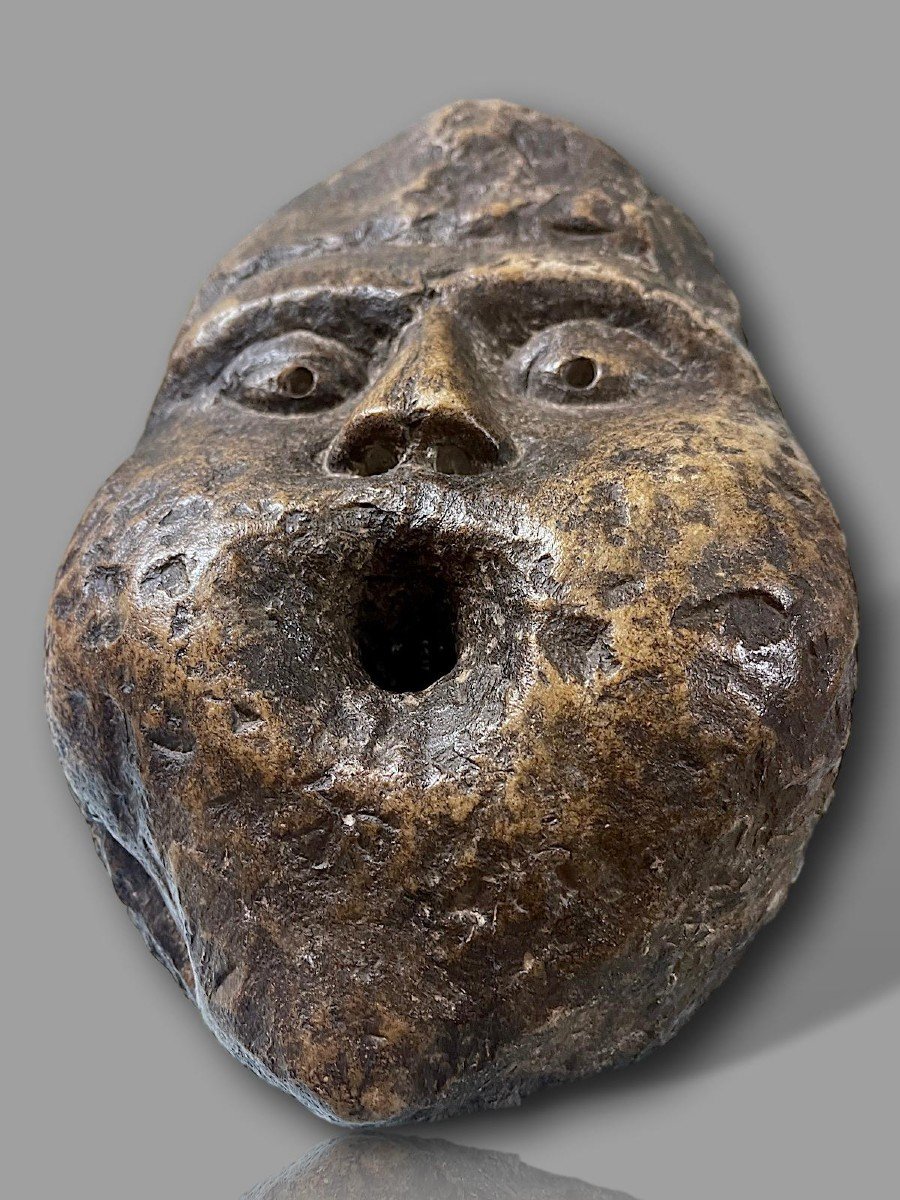
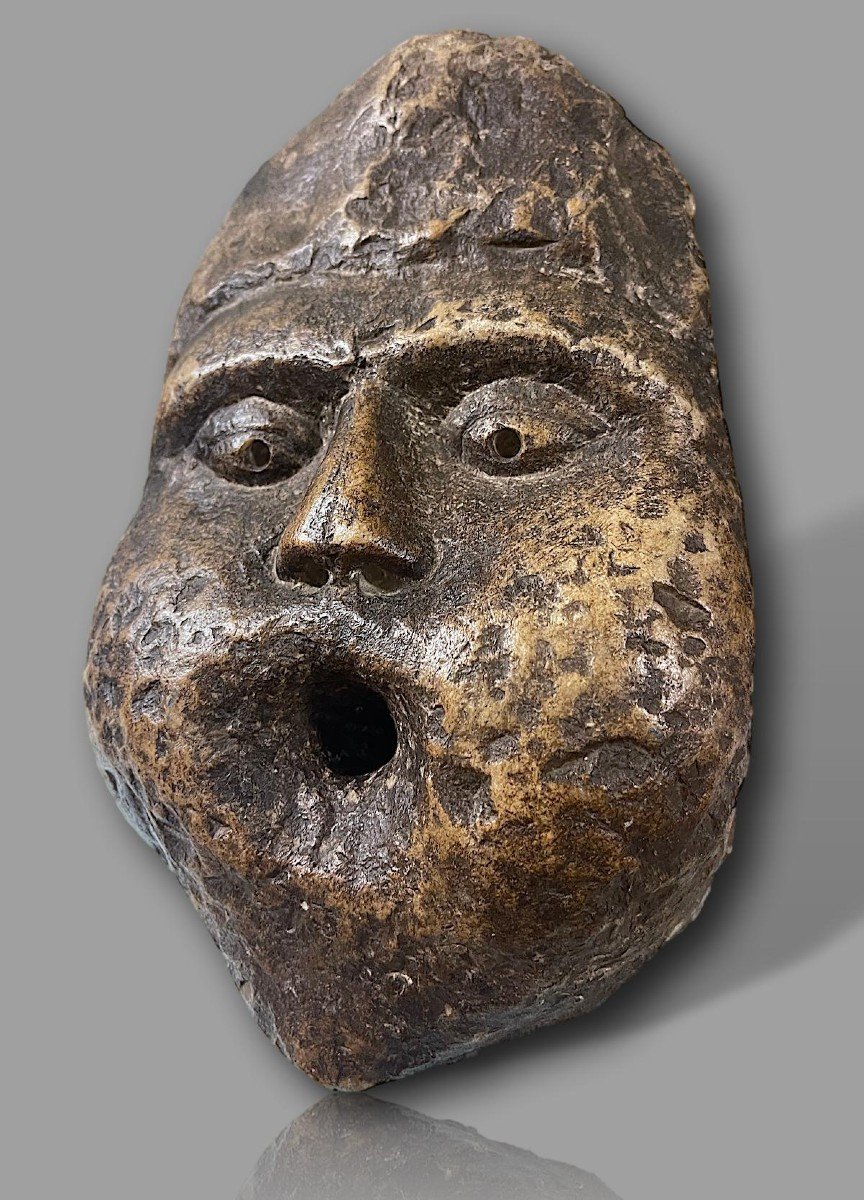
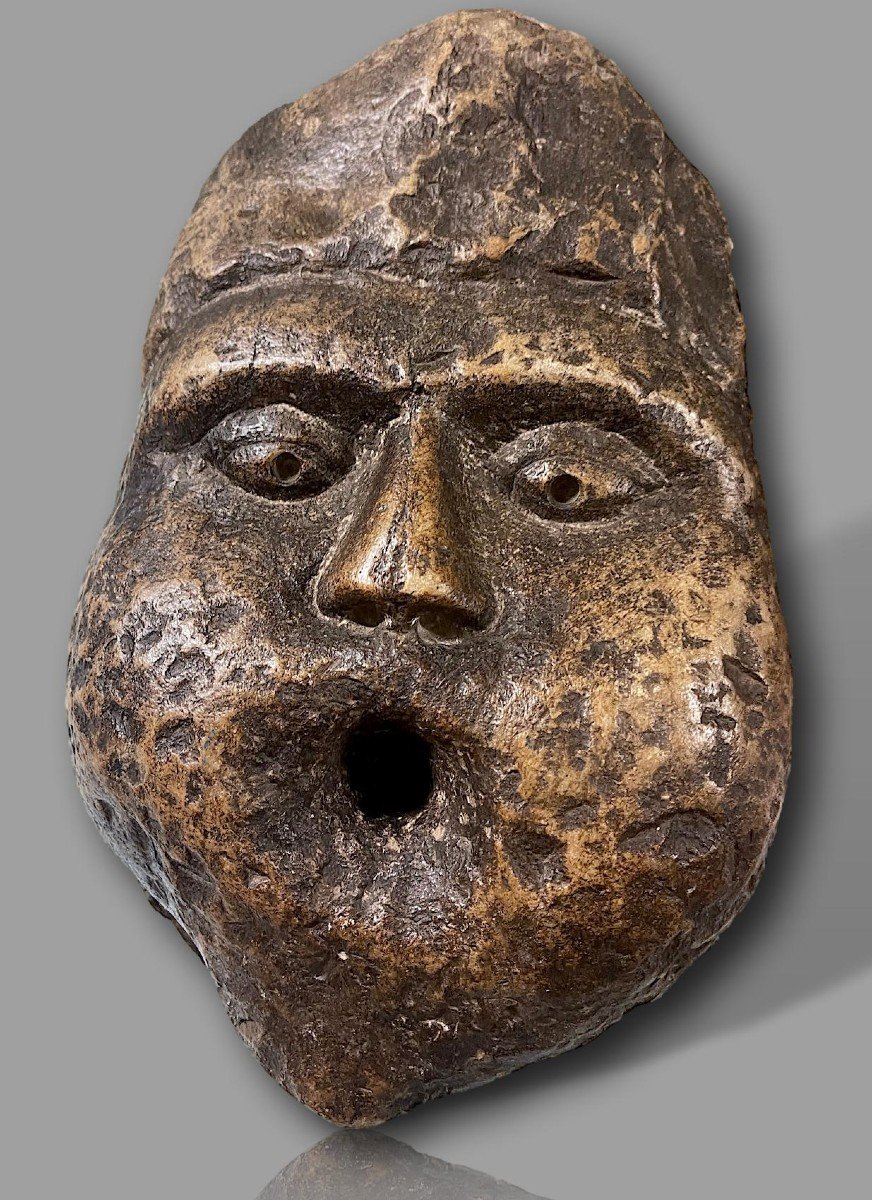
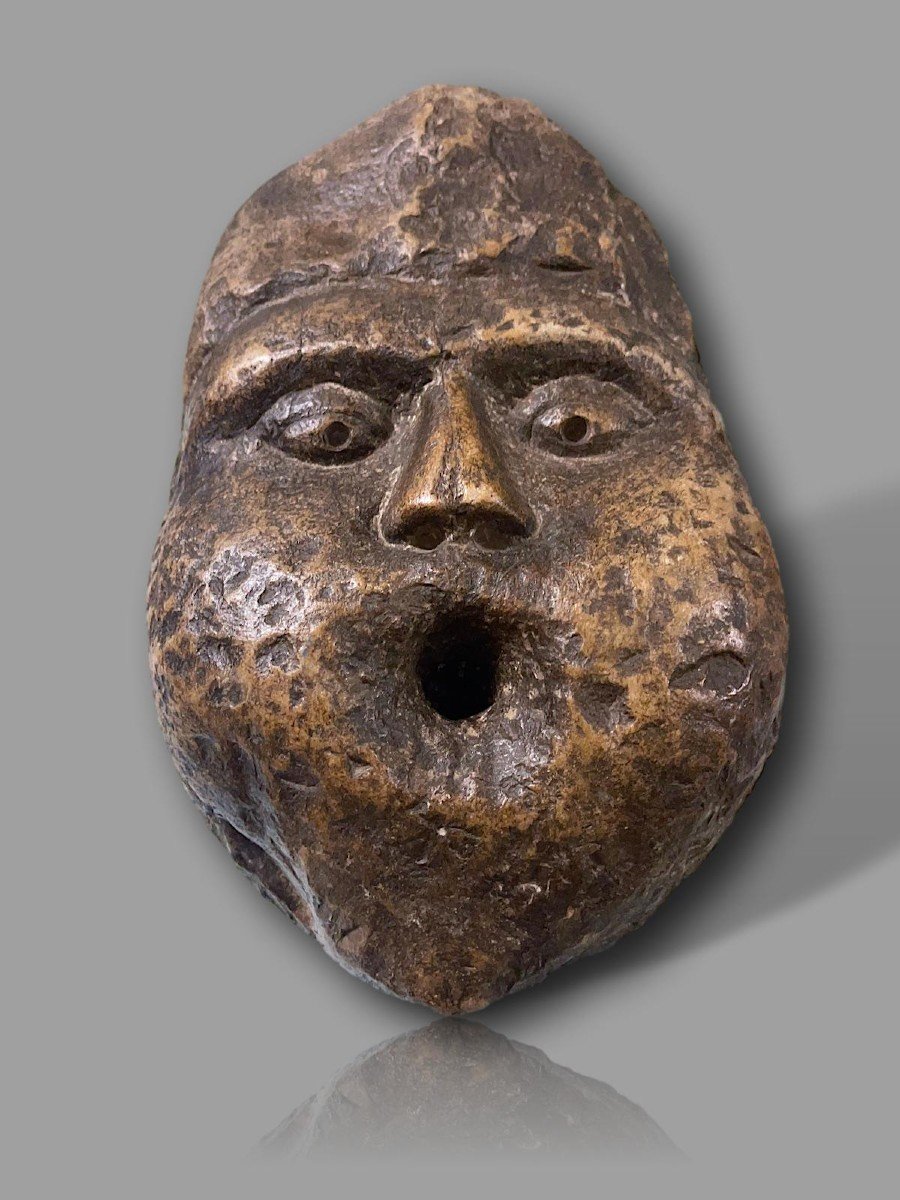
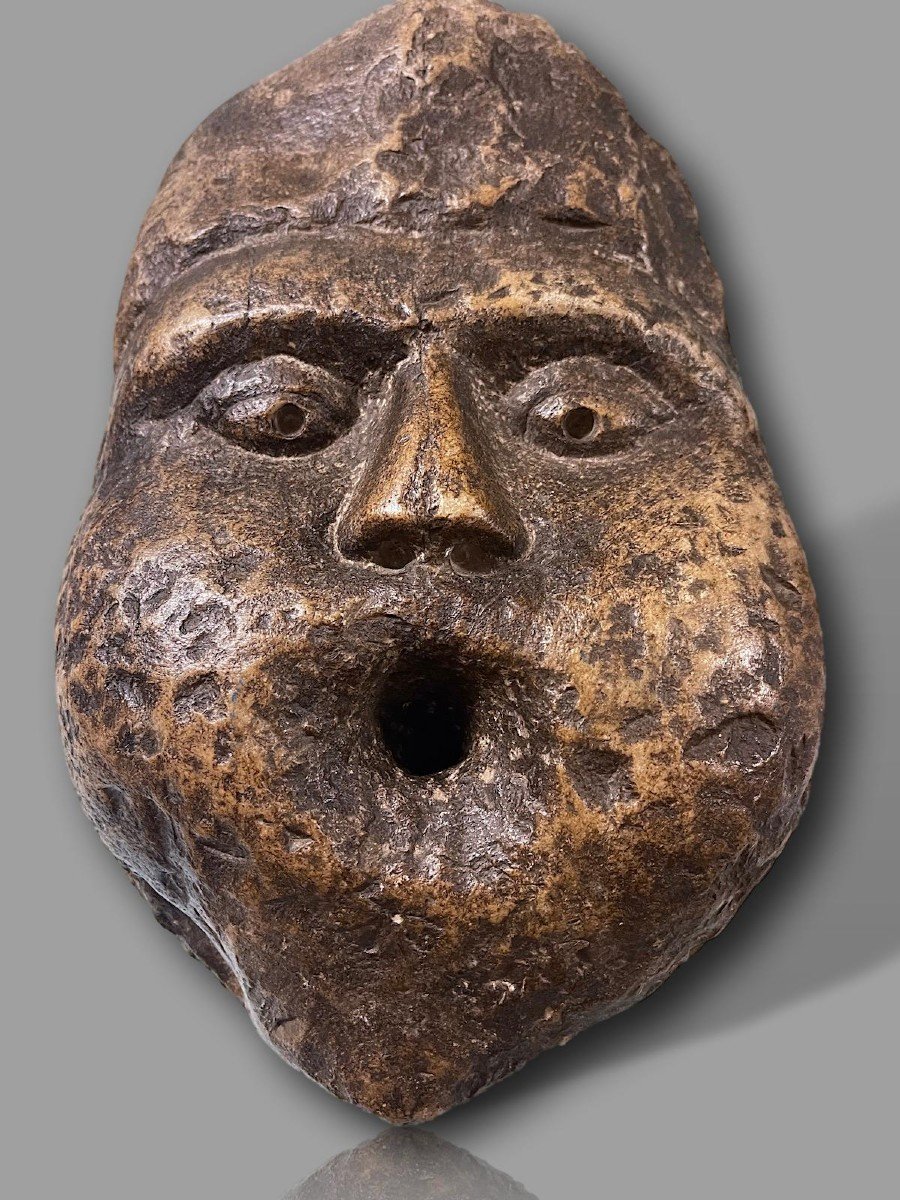
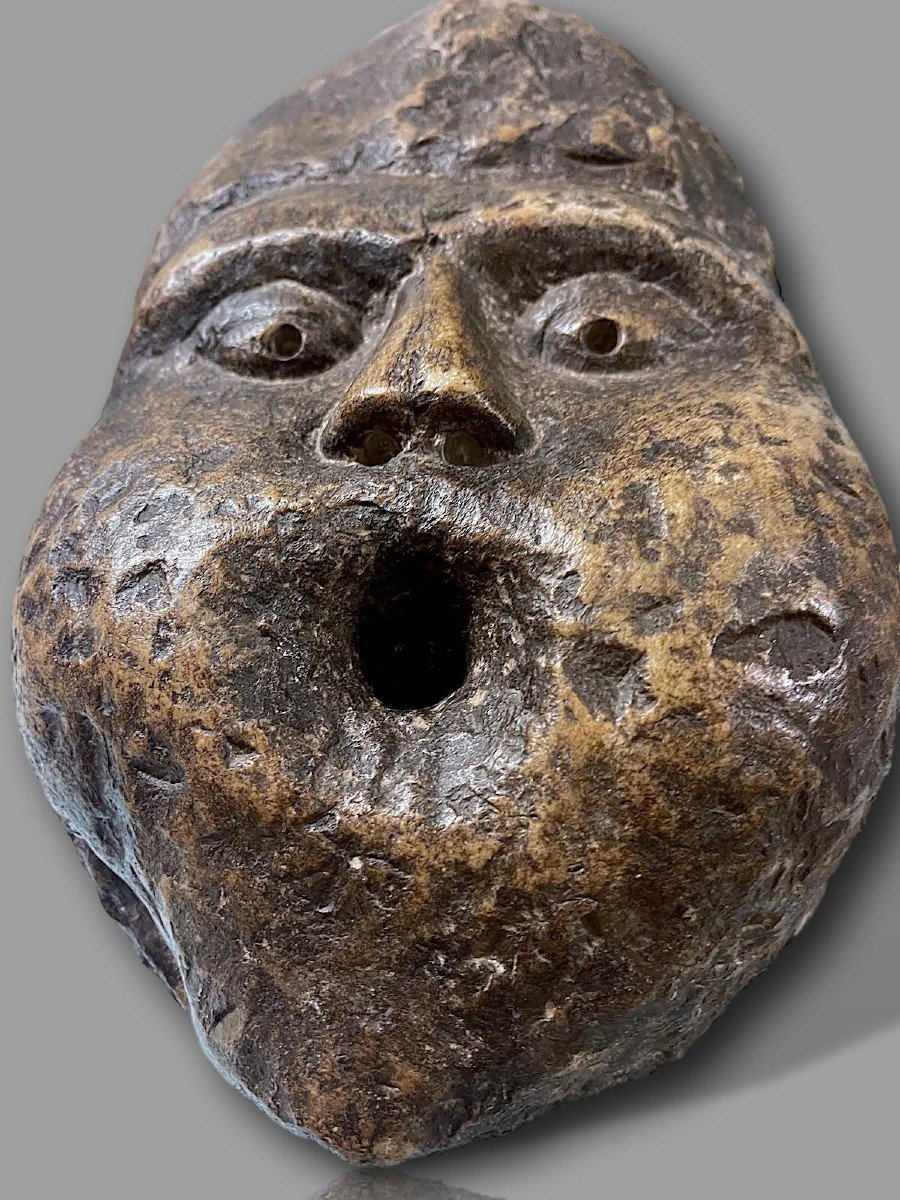
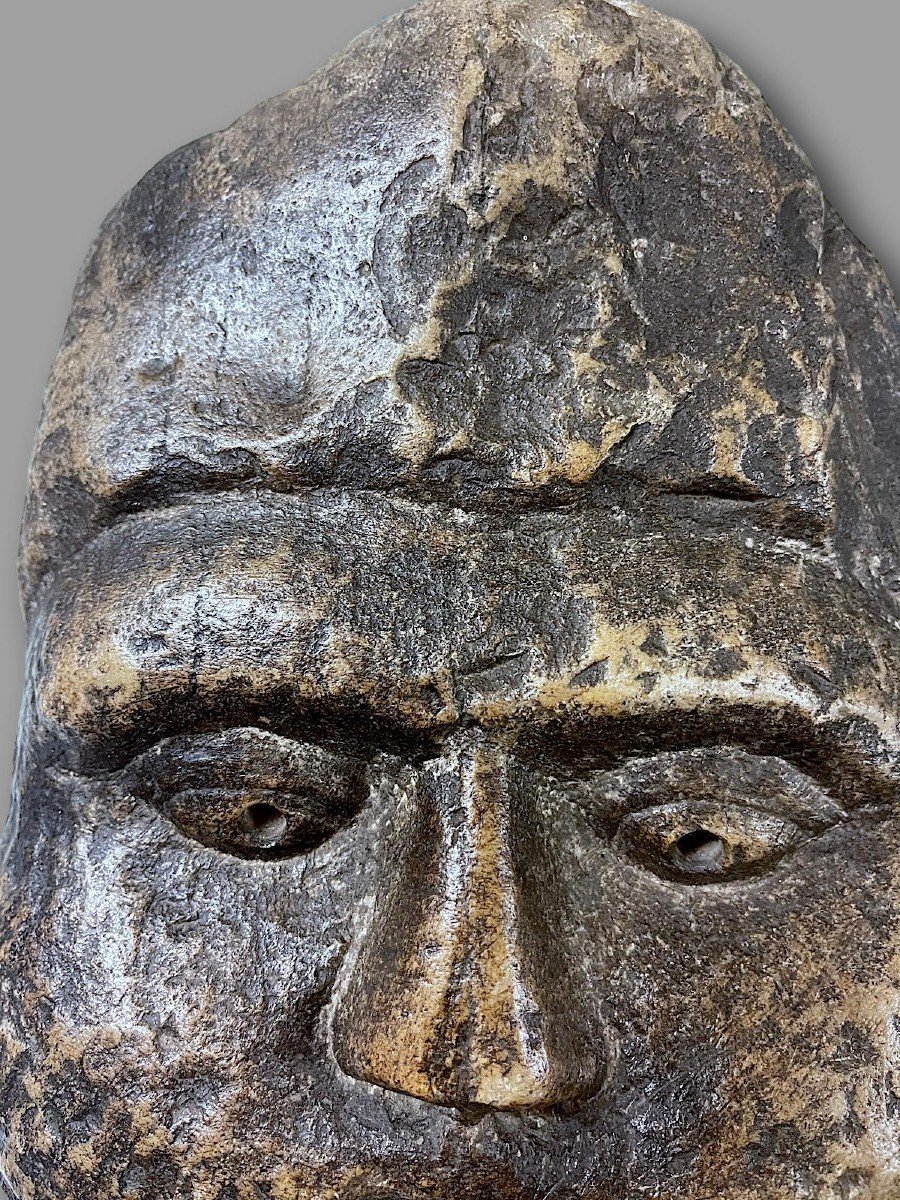
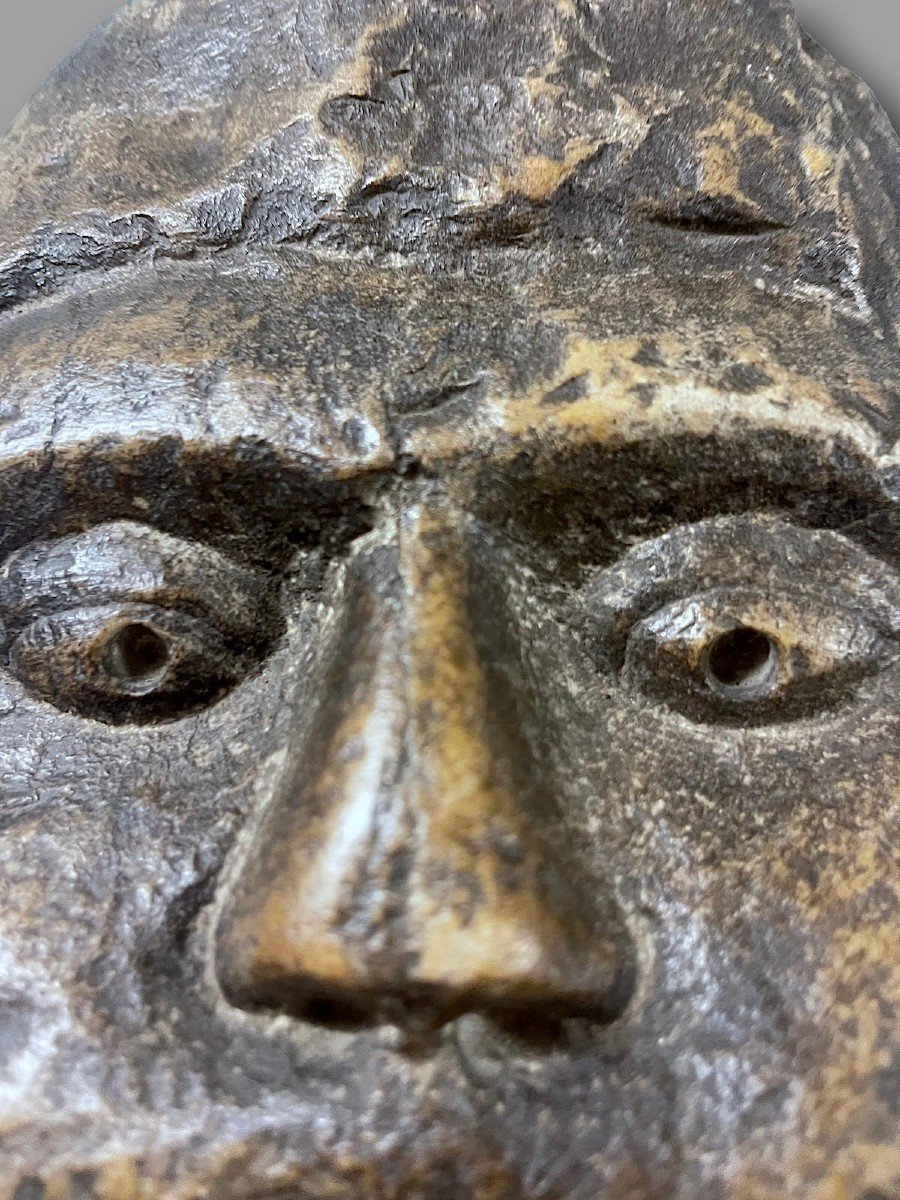
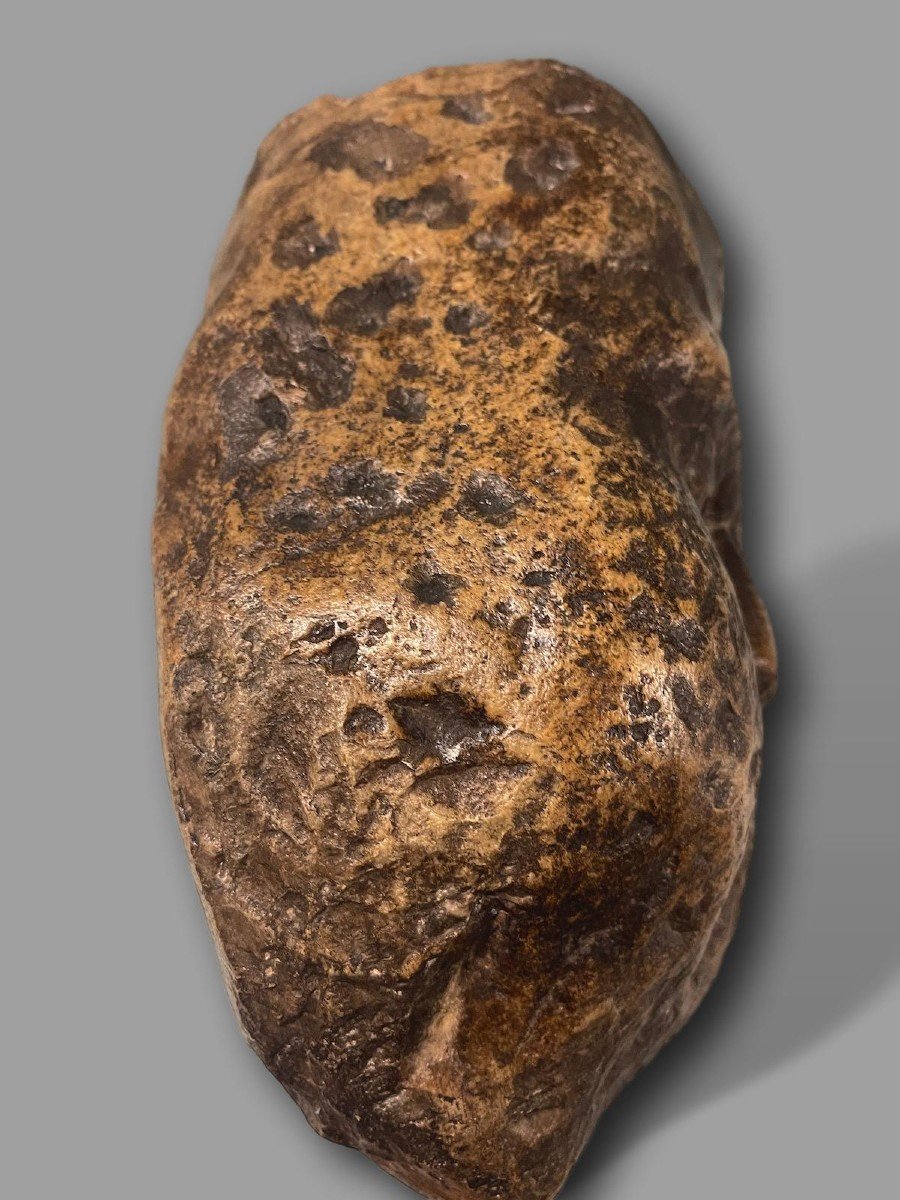
This marble fountain spout, dating from the Gallo-Roman period (1st to 3rd century AD), is a work of remarkable rarity and quality. It represents a human face sculpted with striking naturalism and a touch of grotesque, typical of the symbolic motifs associated with the divinities of springs and water in Antiquity.
Designed for a utilitarian function, the hole located at the mouth was used for the flow of water, giving the face a lively and spectacular effect when it was in operation. This type of element was often integrated into monumental hydraulic structures, testifying to the technical and artistic ingenuity of Gallo-Roman culture.
Graphic and aesthetic details
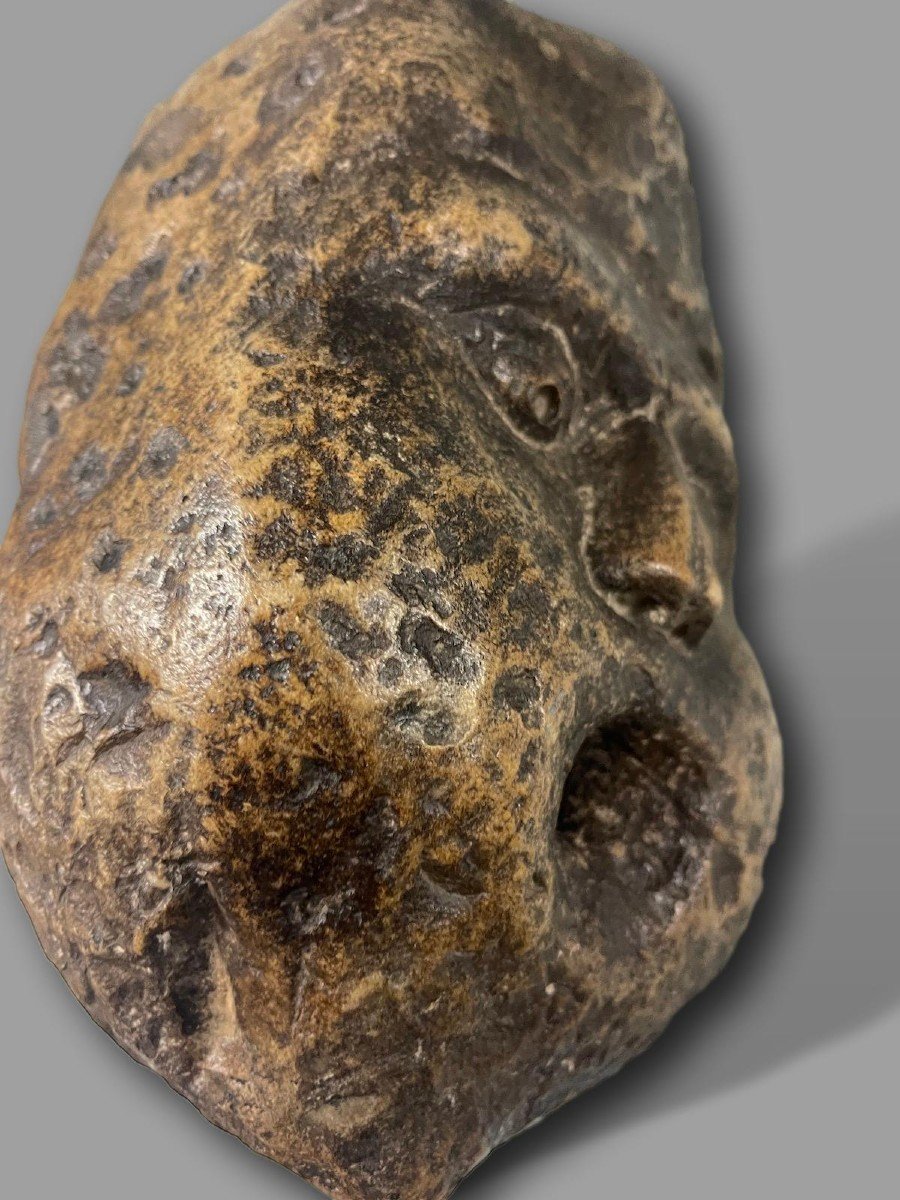
Material: Marble, offering a smooth and elegant texture, reinforced by traces of natural wear that attest to its authenticity and antiquity.
Style: A subtle blend of Roman naturalism and Gallic symbolic expression, with accentuated features for an effect that is both realistic and stylized.
Dimensions: 38 cm high, 16 cm wide, and 13 cm deep. An imposing size that adds to the visual presence of the piece.
Colors: The marble has a natural patina resulting from its prolonged exposure to the elements, accentuating its historical character.
History and scenography
Originating from Gallo-Roman culture, this piece bears witness to the adoption of Roman techniques in a local context. It was probably part of a fountain or public hydraulic system, intended to adorn thermal baths, villas or public squares. The symbolism of water and the divinities of the springs was essential in Antiquity, reflecting both the spirituality and technical advances of the time.
Place in the history of art
This work is a rare testimony to ancient utilitarian art, illustrating the harmony between practical function and artistic expression. It embodies the fusion of local traditions and Roman influences, typical of Gallo-Roman culture, and occupies an important place in the history of ancient art.
Main characteristics
Era: Gallo-Roman (1st to 3rd century AD)
Material: Marble
Dimensions: 38 x 16 x 13 cm
Provenance: Private collection, acquired in the 1970s
Why acquire this piece?
Ideal for collectors passionate about ancient art or historical restoration projects, this sculpture offers a rare opportunity to acquire an object that is both aesthetically captivating and historically valuable.
Delivery and services
Packaging: Secure delivery with suitable professional packaging.
#Antiques #GalloRoman #Archaeology #AncientArt #PumpFountain #Heritage #History #Marble #UtilityArt #RareCollection #UniquePiece
This marble fountain spout, dating from the Gallo-Roman period (1st to 3rd century AD), is a work of remarkable rarity and quality. It represents a human face sculpted with striking naturalism and a touch of grotesque, typical of the symbolic motifs associated with the divinities of springs and water in Antiquity.
Designed for a utilitarian function, the hole located at the mouth was used for the flow of water, giving the face a lively and spectacular effect when it was in operation. This type of element was often integrated into monumental hydraulic structures, testifying to the technical and artistic ingenuity of Gallo-Roman culture.
Graphic and aesthetic details
Material: Marble, offering a smooth and elegant texture, reinforced by traces of natural wear that attest to its authenticity and antiquity.
Style: A subtle blend of Roman naturalism and Gallic symbolic expression, with accentuated features for an effect that is both realistic and stylized.
Dimensions: 38 cm high, 16 cm wide, and 13 cm deep. An imposing size that adds to the visual presence of the piece.
Colors: The marble has a natural patina resulting from its prolonged exposure to the elements, accentuating its historical character.
History and scenography
Originating from Gallo-Roman culture, this piece bears witness to the adoption of Roman techniques in a local context. It was probably part of a fountain or public hydraulic system, intended to adorn thermal baths, villas or public squares. The symbolism of water and the divinities of the springs was essential in Antiquity, reflecting both the spirituality and technical advances of the time.
Place in the history of art
This work is a rare testimony to ancient utilitarian art, illustrating the harmony between practical function and artistic expression. It embodies the fusion of local traditions and Roman influences, typical of Gallo-Roman culture, and occupies an important place in the history of ancient art.
Main characteristics
Era: Gallo-Roman (1st to 3rd century AD)
Material: Marble
Dimensions: 38 x 16 x 13 cm
Provenance: Private collection, acquired in the 1970s
Why acquire this piece?
Ideal for collectors passionate about ancient art or historical restoration projects, this sculpture offers a rare opportunity to acquire an object that is both aesthetically captivating and historically valuable.
Delivery and services
Packaging: Secure delivery with suitable professional packaging.
#Antiques #GalloRoman #Archaeology #AncientArt #PumpFountain #Heritage #History #Marble #UtilityArt #RareCollection #UniquePiece
Explore similar pieces and discover your ideal find:
archeology