



Auguste De Wever (1836-1910) - Terracotta Sculpture Of A Satyr
Artist: Auguste De Wever (1836-1910)
Description of the piece
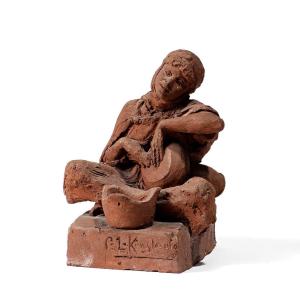
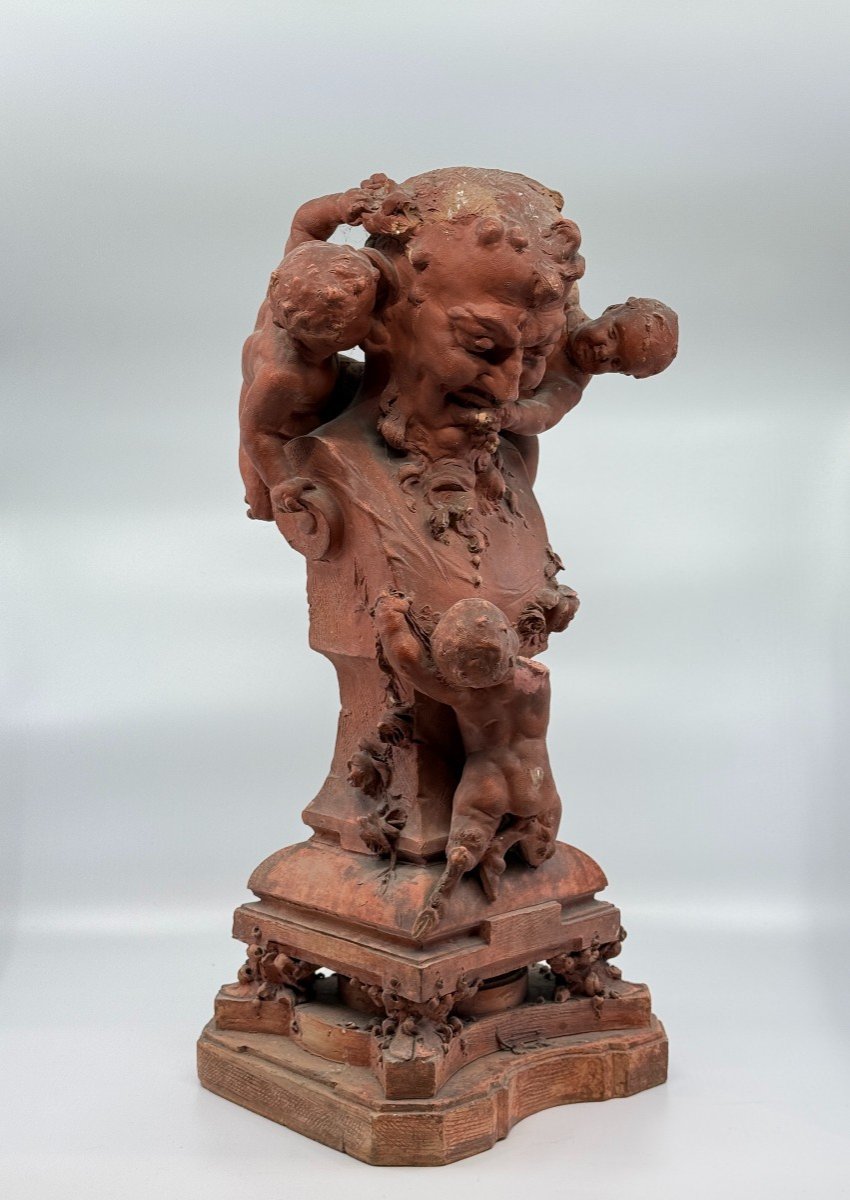
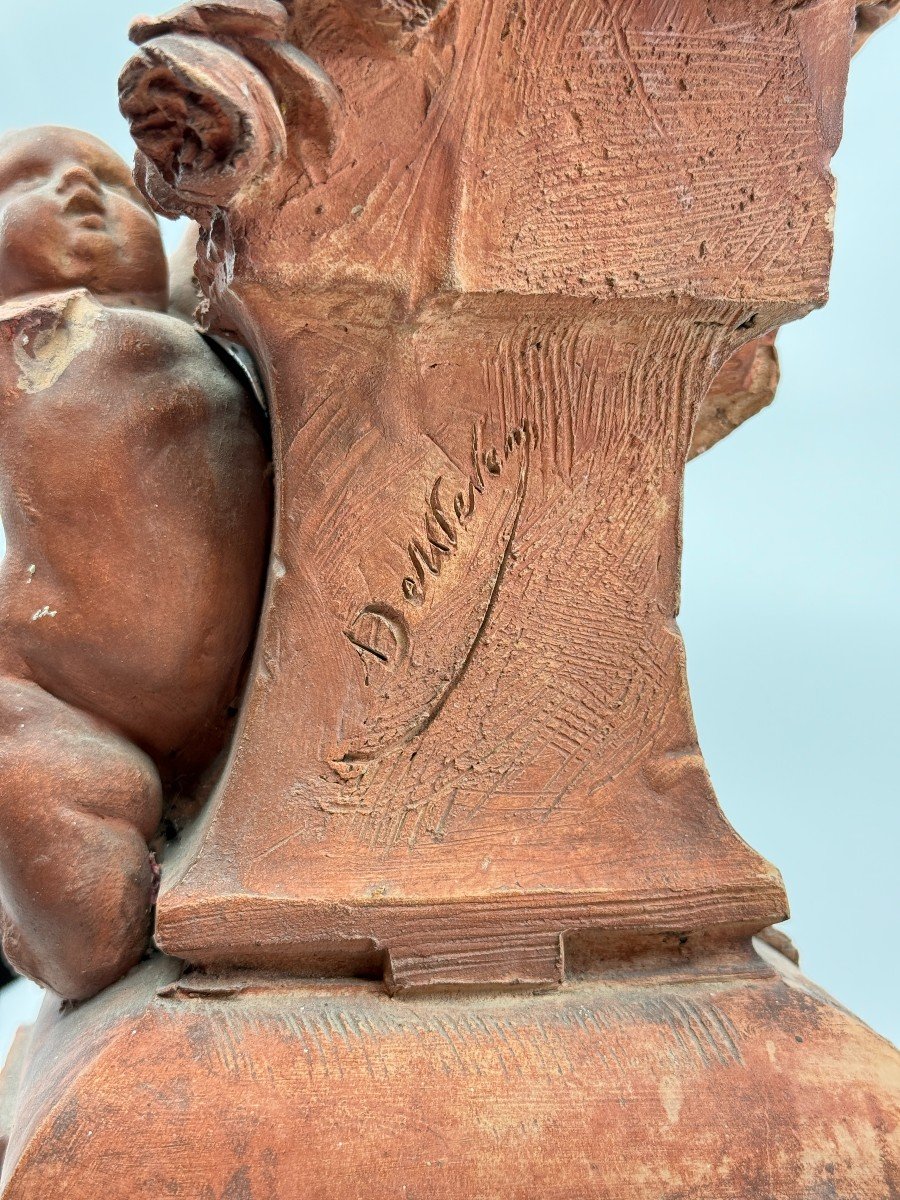
This terracotta sculpture by Auguste De Wever depicts a mythological scene rich in detail and movement. The work features a central figure—probably a satyr or faun—surrounded by several putti (cherubs), in a dynamic and lively composition. The satyr, with his expressive face and detailed beard, appears to interact directly with the putti surrounding him in an atmosphere that is both fantastical and playful.
Stylistic characteristics
Material: Terracotta, a material often used for decorative sketches or sculptures intended for refined interiors.
Style: - De Wever's style is marked by a mixture of Rococo and naturalist influences, with particular attention paid to the fluidity of forms and the expressiveness of figures. - Cherubs, characteristic figures of 19th-century decorative art, reflect an interest in mythological themes and a touch of lightness specific to the revisited Rococo style.
Composition: - The interaction between the figures creates a narrative dynamic. The cherubs cling to the satyr, giving an impression of movement and effervescence. - The details of the base, richly decorated with floral motifs and scrolls, reinforce the ornamental aspect of the sculpture.
About Auguste De Wever
Auguste De Wever (active in the 19th century) is a Belgian sculptor known for his mythological and decorative works. His terracotta and bronze sculptures were particularly prized by a bourgeois and aristocratic clientele. He excelled in allegorical representations, fantastic scenes and compositions imbued with poetry. His technical mastery and his attention to detail made him a recognized artist of his time.
Conclusion
This work perfectly reflects the style of Auguste De Wever, with its mixture of elegance, meticulous details and fantastic themes. It is a testimony to the decorative art of the 19th century and is part of the tradition of sculptors seeking to reconcile classicism and romanticism.
This terracotta sculpture by Auguste De Wever depicts a mythological scene rich in detail and movement. The work features a central figure—probably a satyr or faun—surrounded by several putti (cherubs), in a dynamic and lively composition. The satyr, with his expressive face and detailed beard, appears to interact directly with the putti surrounding him in an atmosphere that is both fantastical and playful.
Stylistic characteristics
Material: Terracotta, a material often used for decorative sketches or sculptures intended for refined interiors.
Style: - De Wever's style is marked by a mixture of Rococo and naturalist influences, with particular attention paid to the fluidity of forms and the expressiveness of figures. - Cherubs, characteristic figures of 19th-century decorative art, reflect an interest in mythological themes and a touch of lightness specific to the revisited Rococo style.
Composition: - The interaction between the figures creates a narrative dynamic. The cherubs cling to the satyr, giving an impression of movement and effervescence. - The details of the base, richly decorated with floral motifs and scrolls, reinforce the ornamental aspect of the sculpture.
About Auguste De Wever
Auguste De Wever (active in the 19th century) is a Belgian sculptor known for his mythological and decorative works. His terracotta and bronze sculptures were particularly prized by a bourgeois and aristocratic clientele. He excelled in allegorical representations, fantastic scenes and compositions imbued with poetry. His technical mastery and his attention to detail made him a recognized artist of his time.
Conclusion
This work perfectly reflects the style of Auguste De Wever, with its mixture of elegance, meticulous details and fantastic themes. It is a testimony to the decorative art of the 19th century and is part of the tradition of sculptors seeking to reconcile classicism and romanticism.
750 €
Period: 19th century
Style: Other Style
Condition: Some scratches and chips
Material: Terracotta
Length: 21
Width: 18.5
Height: 47
Reference (ID): 1446661
Availability: In stock
Print