THIS OBJECT WAS SOLD
Old Sari From South Asia Veil And Gilding


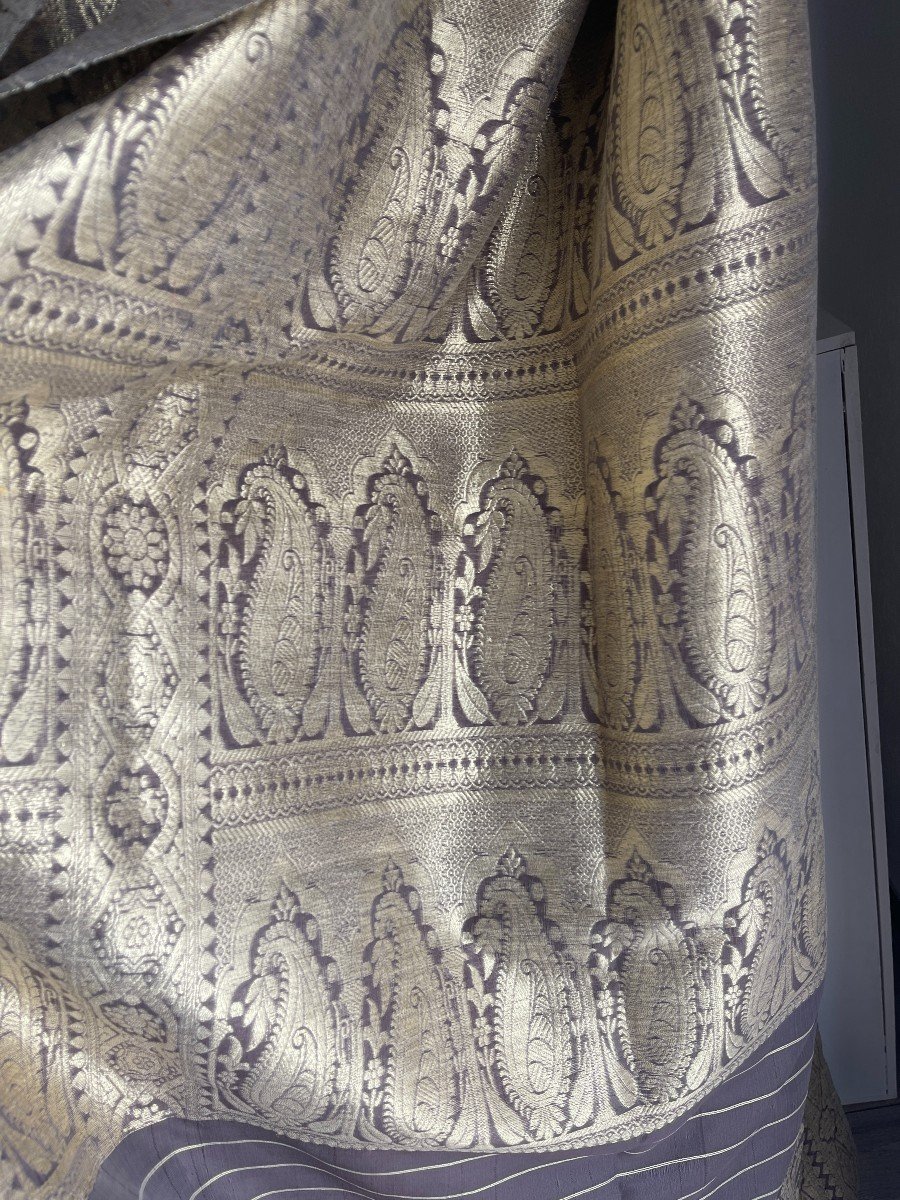
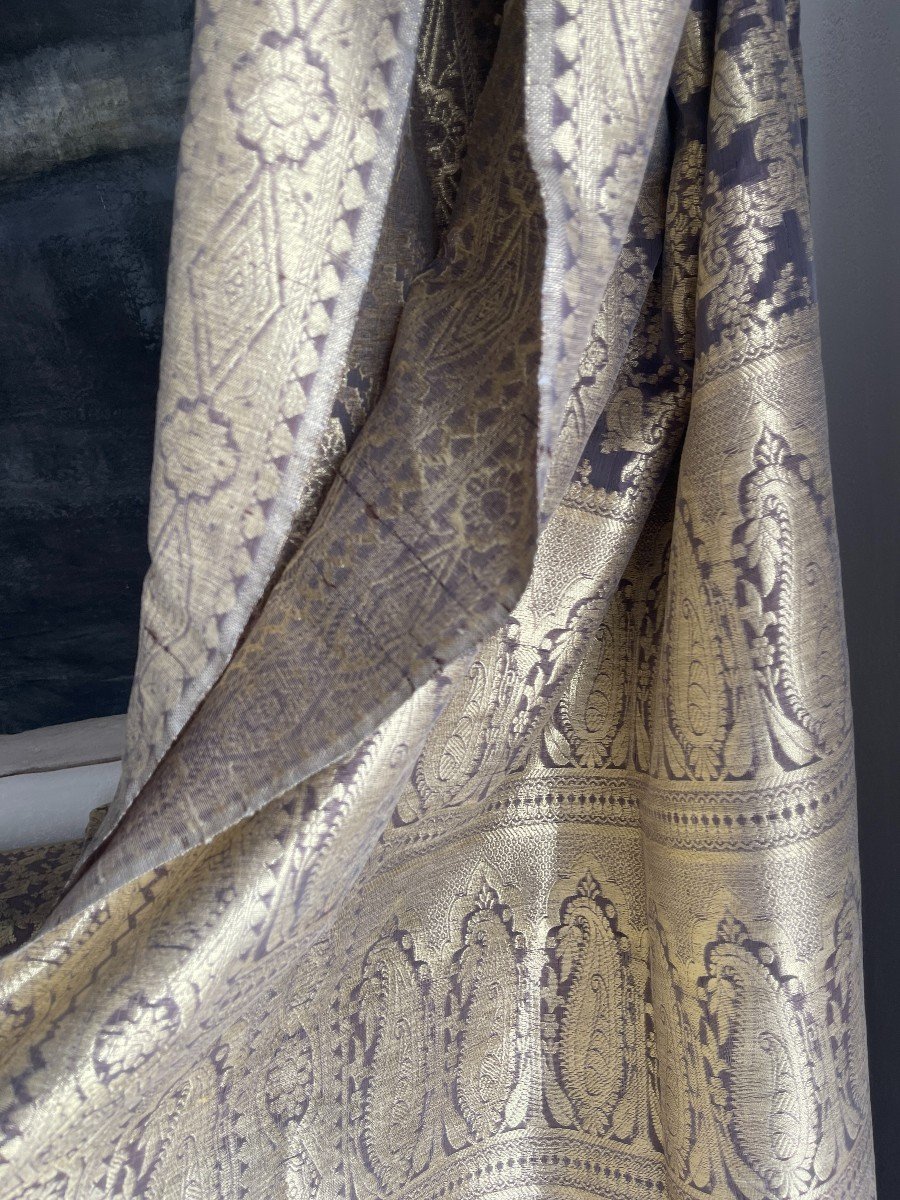
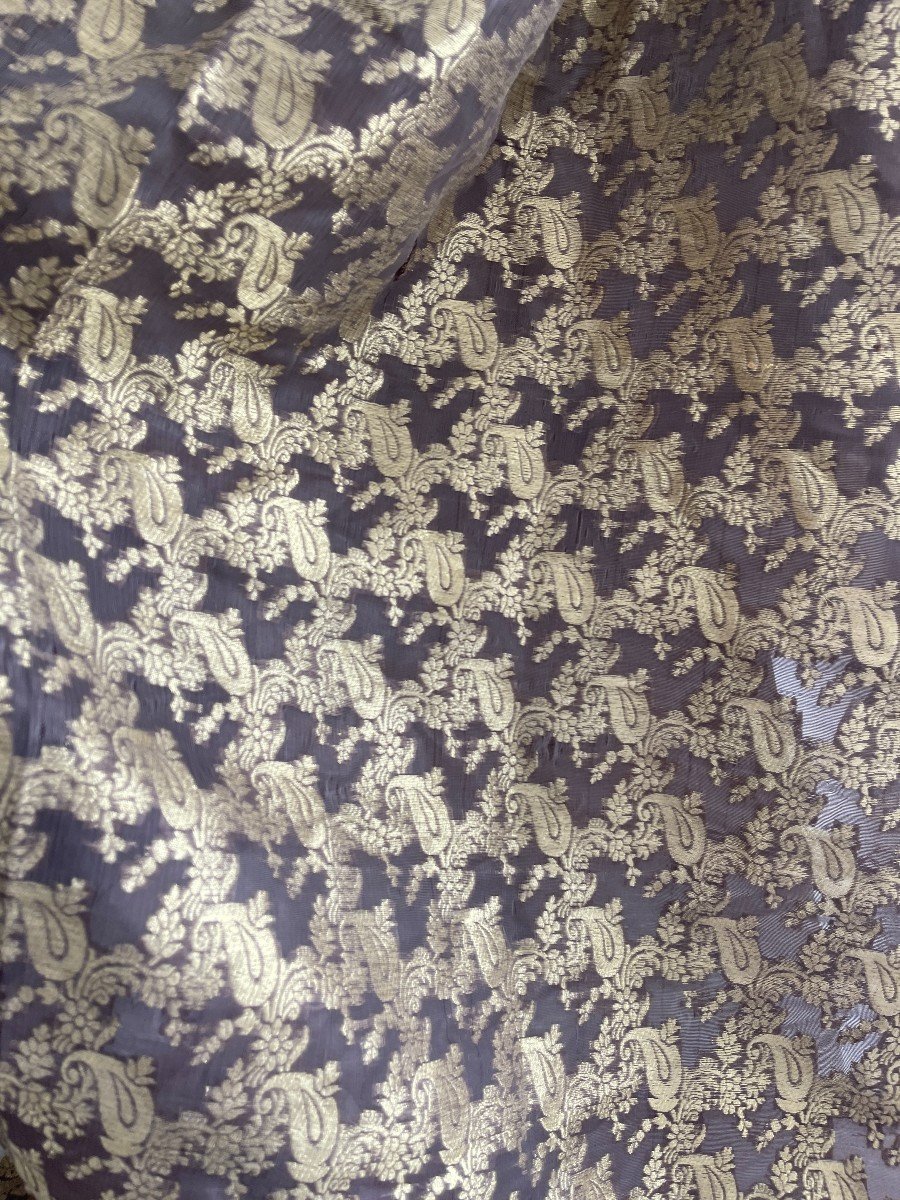


Very beautiful golden fabric for this early 20th century sari, in excellent condition.
Dimensions: 543 cm x 101 cm
WIKIPEDIA information:
The sari (Hindi: साड़ी, Urdu: ساڑی), long piece of fabric, is a traditional garment worn by millions of women in South Asia (mainly in India, in Nepal and Bangladesh, more rarely in Sri Lanka and Pakistan) whose origin dates back to around 100 BC. 1 BC, in India. It is one of the rare clothing habits to have been preserved over time. The sari is a wide strip of fabric approximately 1.20 m wide by 5 to 6 m long. Its draping technique varies according to regions, castes, activities, religions, etc. The sari is worn over a petticoat and a tight bodice leaving the stomach bare. It is made of one piece, and it was usually only worn by married women. History[edit | edit code] Some versions of the history of Indian clothing trace the origin of the sari to the Indus Valley Civilization, which flourished between 2800 and 1800 BC. Although the sari had its beginnings in the early Indian civilization around 3,000 years BC, its origin is still unclear today. Due to the lack of written records, we do not know how the ancient Indians came to make clothing with fabric ranging from 5 to 9 yards. However, we know that their specialty, weaving sophisticated patterns and bright colors, has long appealed to generations. The word sari is a loanword from the Hindi sari (साड़ी), from the Sanskrit śāṭī (शाटी) which means “strip of fabric”2.
Dimensions: 543 cm x 101 cm
WIKIPEDIA information:
The sari (Hindi: साड़ी, Urdu: ساڑی), long piece of fabric, is a traditional garment worn by millions of women in South Asia (mainly in India, in Nepal and Bangladesh, more rarely in Sri Lanka and Pakistan) whose origin dates back to around 100 BC. 1 BC, in India. It is one of the rare clothing habits to have been preserved over time. The sari is a wide strip of fabric approximately 1.20 m wide by 5 to 6 m long. Its draping technique varies according to regions, castes, activities, religions, etc. The sari is worn over a petticoat and a tight bodice leaving the stomach bare. It is made of one piece, and it was usually only worn by married women. History[edit | edit code] Some versions of the history of Indian clothing trace the origin of the sari to the Indus Valley Civilization, which flourished between 2800 and 1800 BC. Although the sari had its beginnings in the early Indian civilization around 3,000 years BC, its origin is still unclear today. Due to the lack of written records, we do not know how the ancient Indians came to make clothing with fabric ranging from 5 to 9 yards. However, we know that their specialty, weaving sophisticated patterns and bright colors, has long appealed to generations. The word sari is a loanword from the Hindi sari (साड़ी), from the Sanskrit śāṭī (शाटी) which means “strip of fabric”2.
Explore similar pieces and discover your ideal find:
embroidery and lace