THIS OBJECT WAS SOLD
Pair Of Shibayama Reliefs, Japan, Meiji Era (1868-1912).
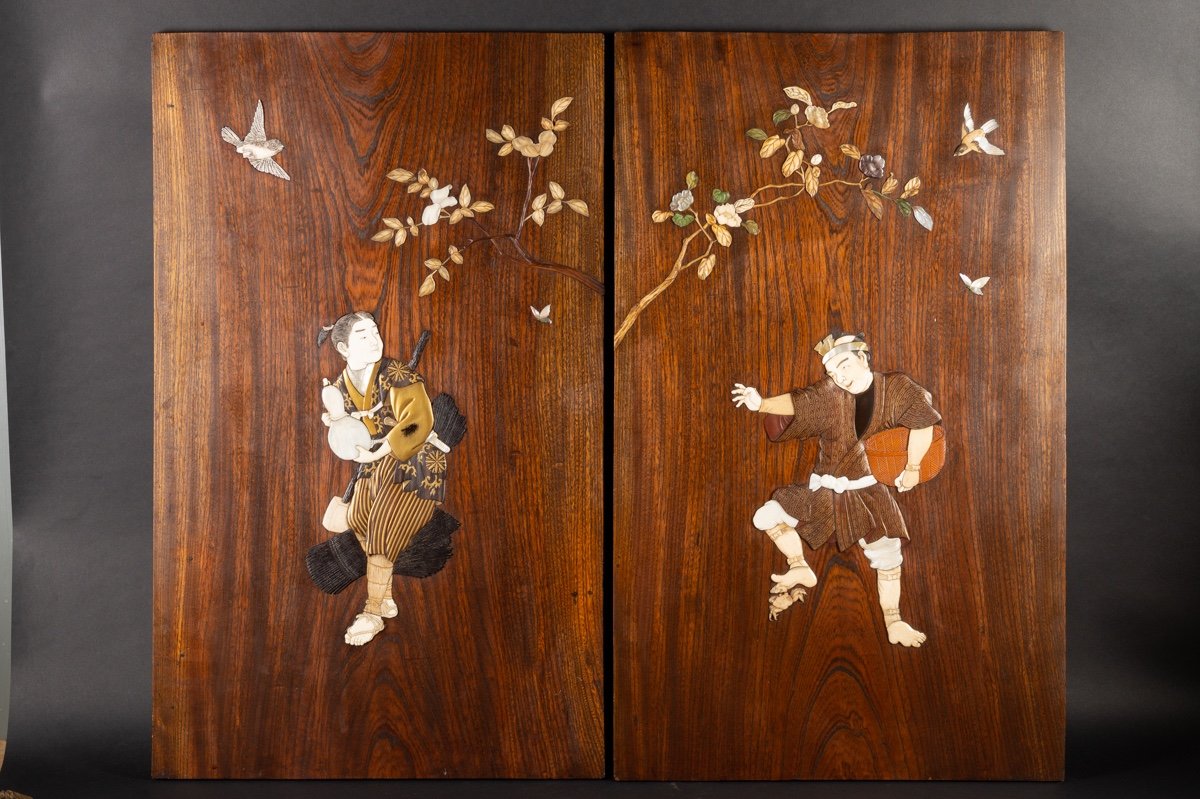
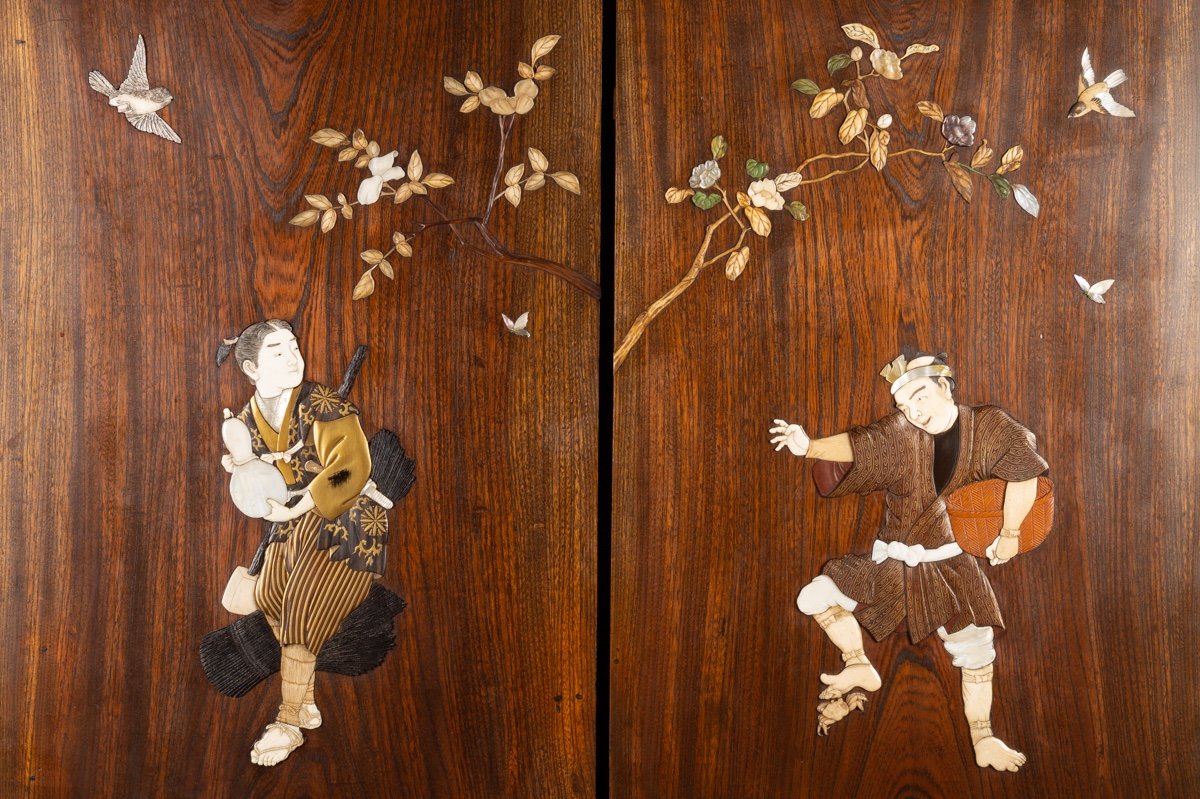
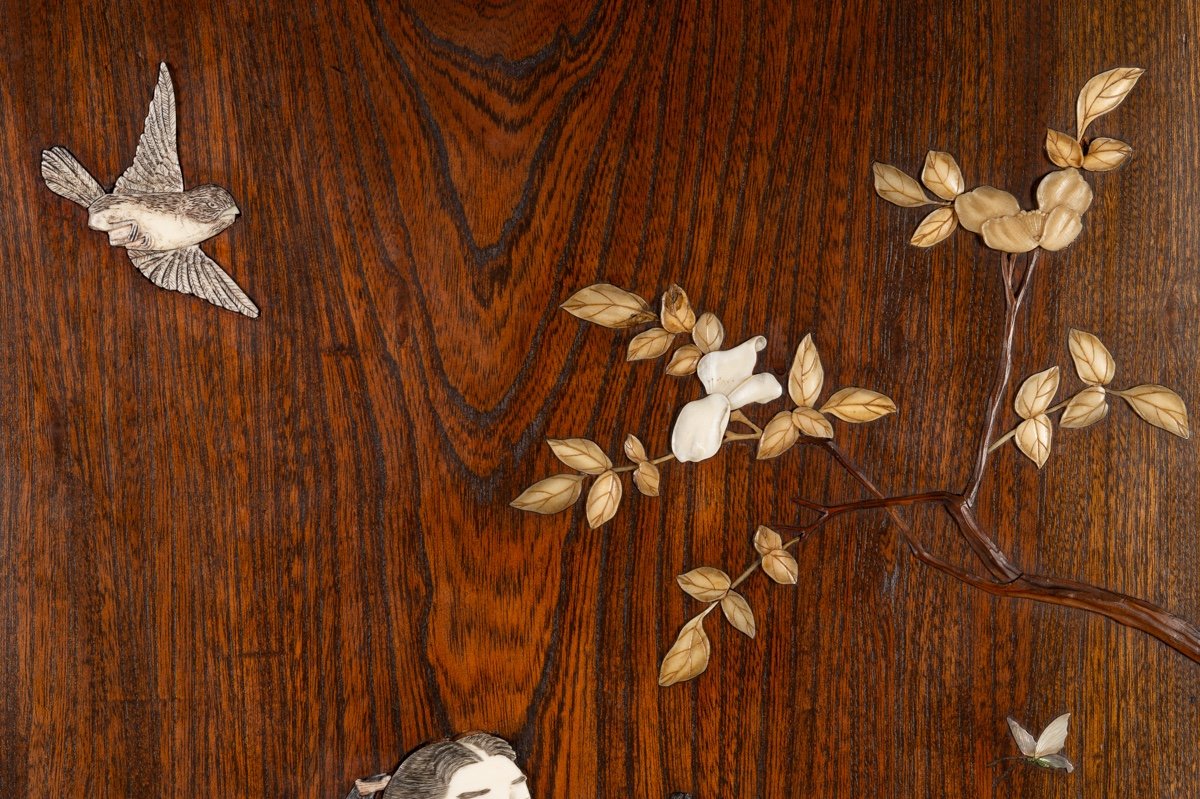
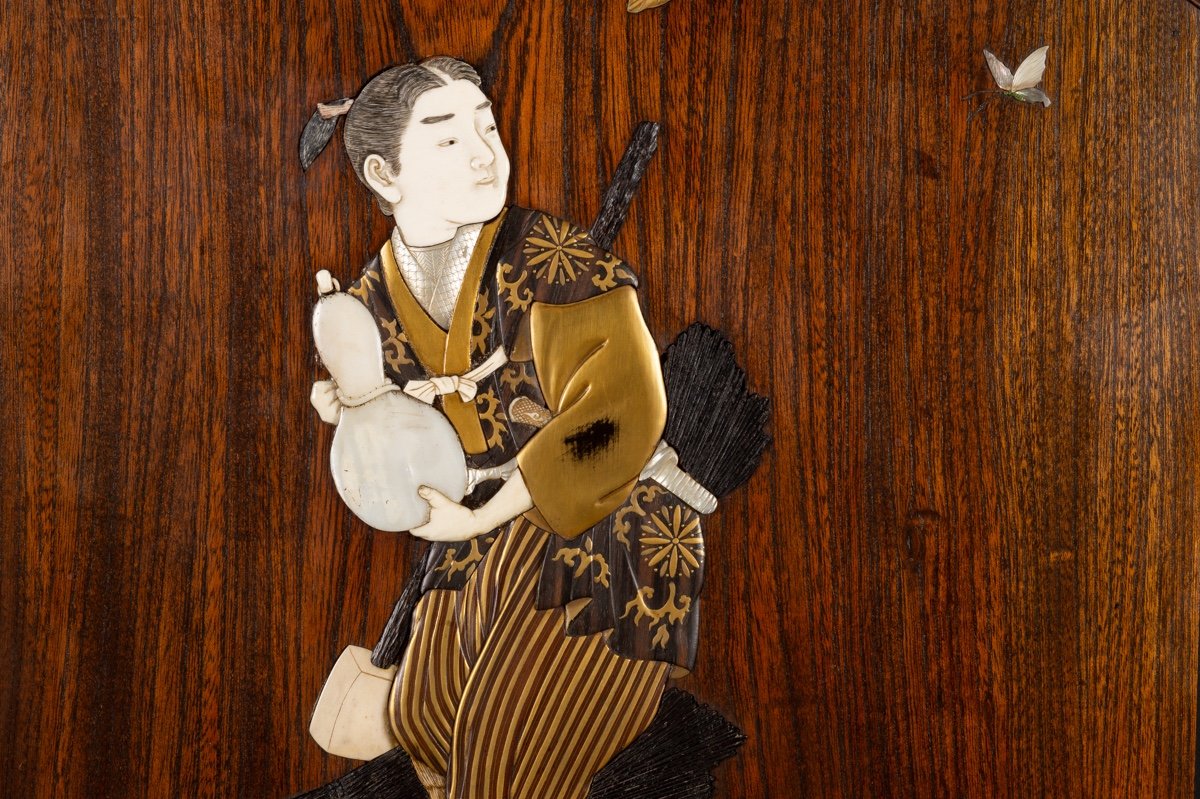
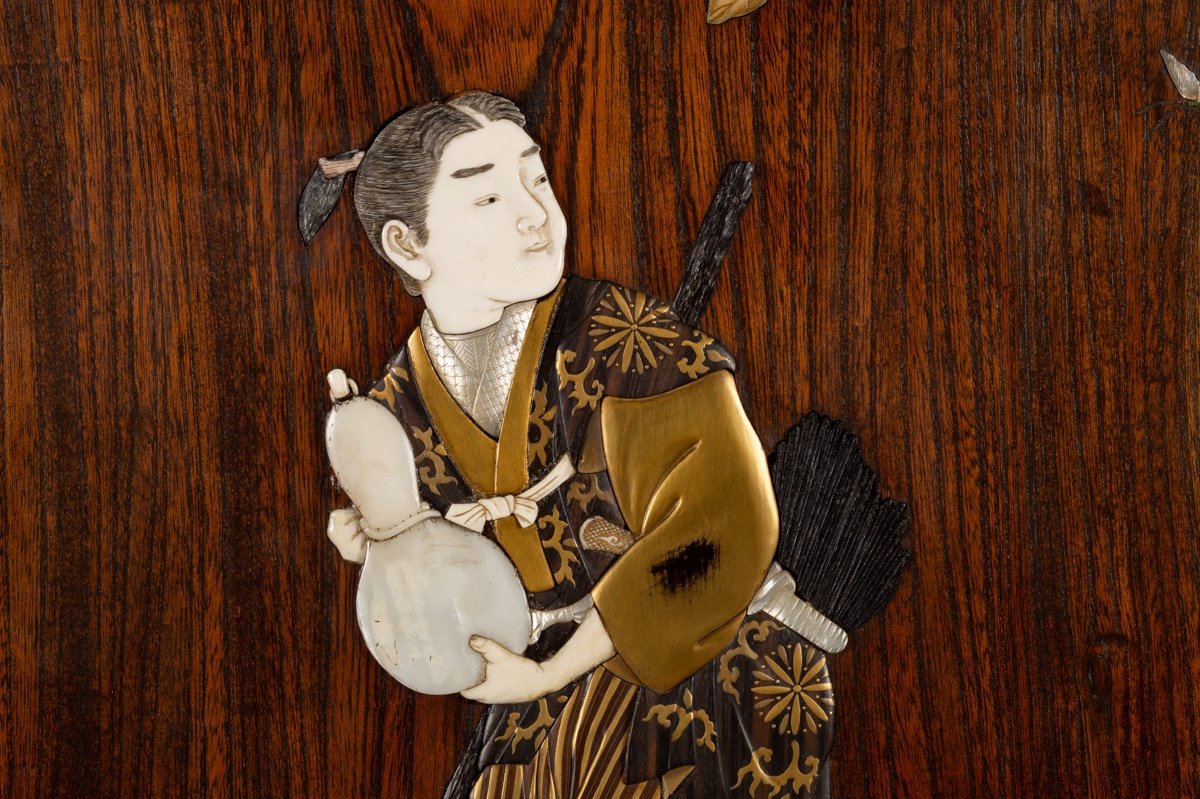
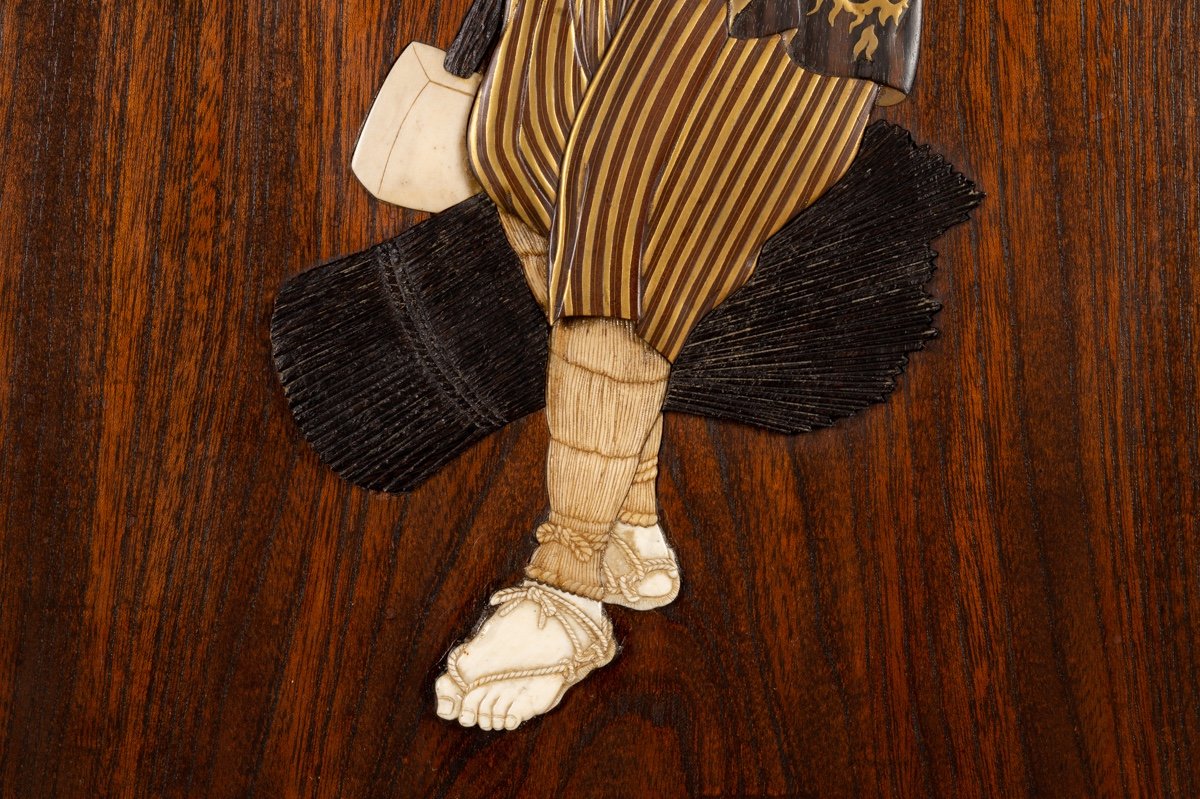
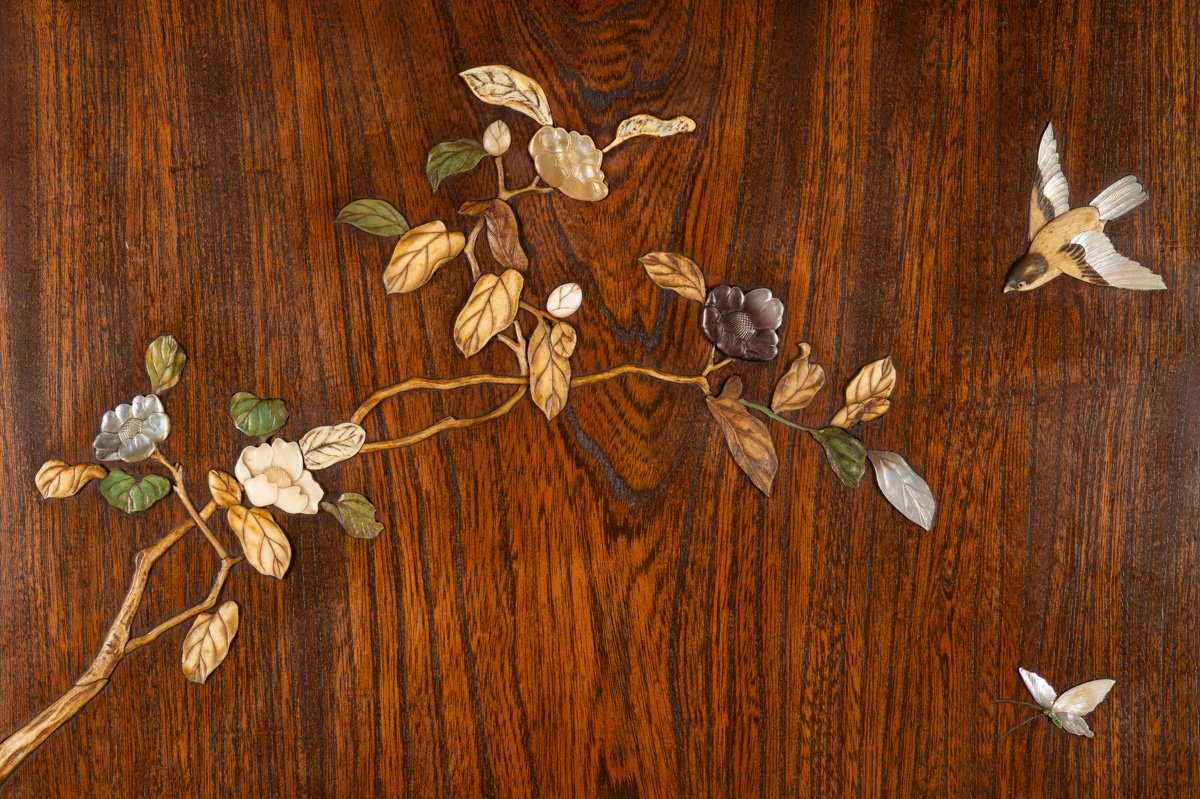
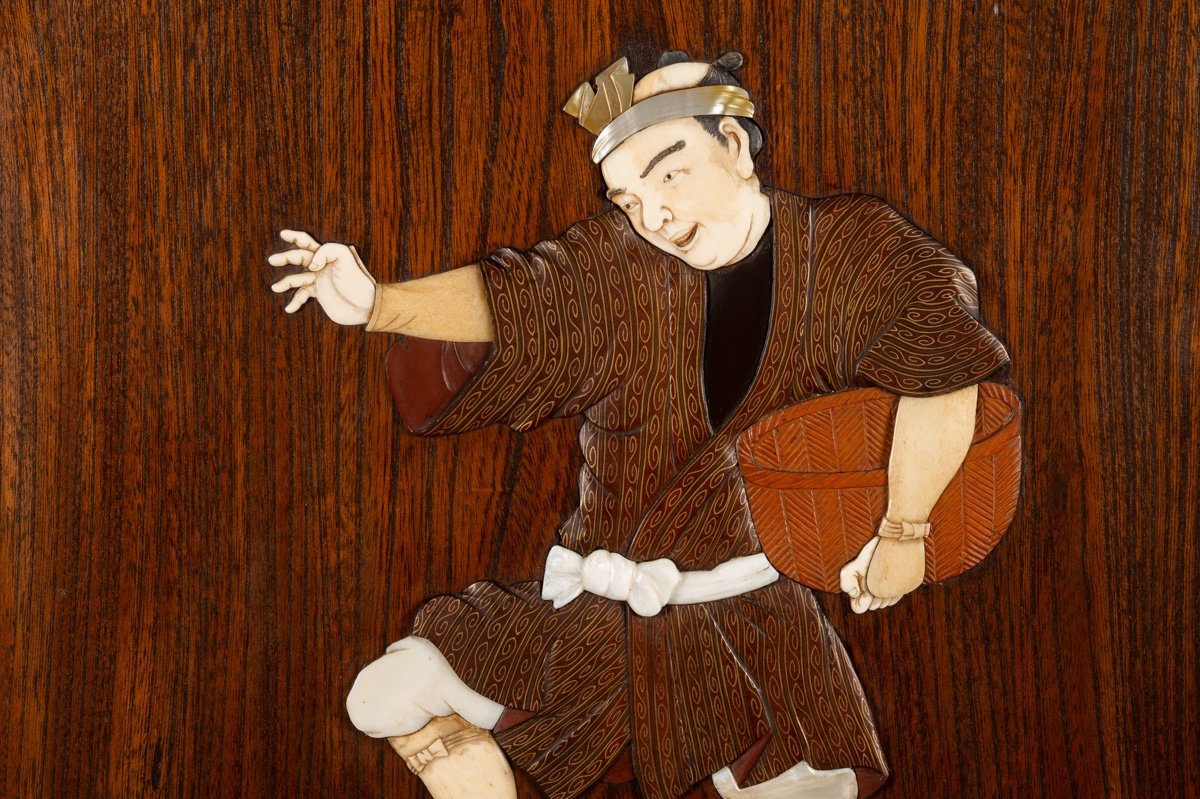
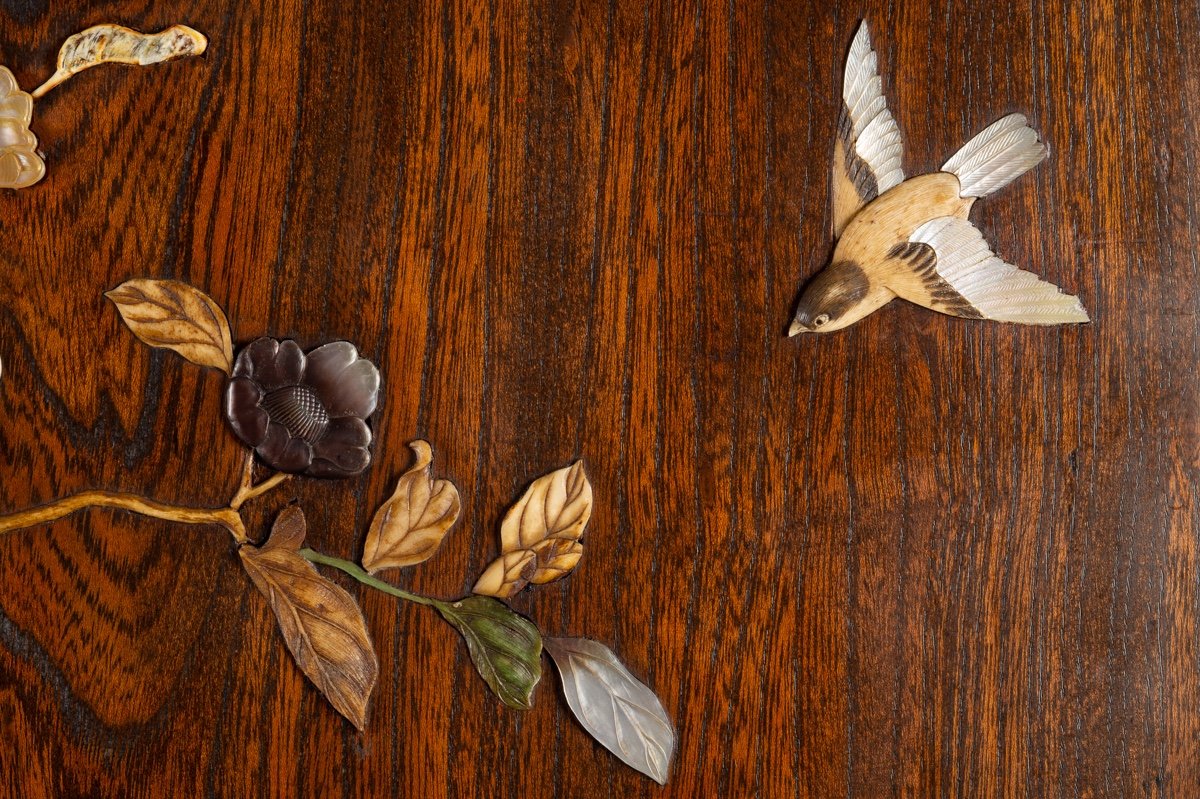
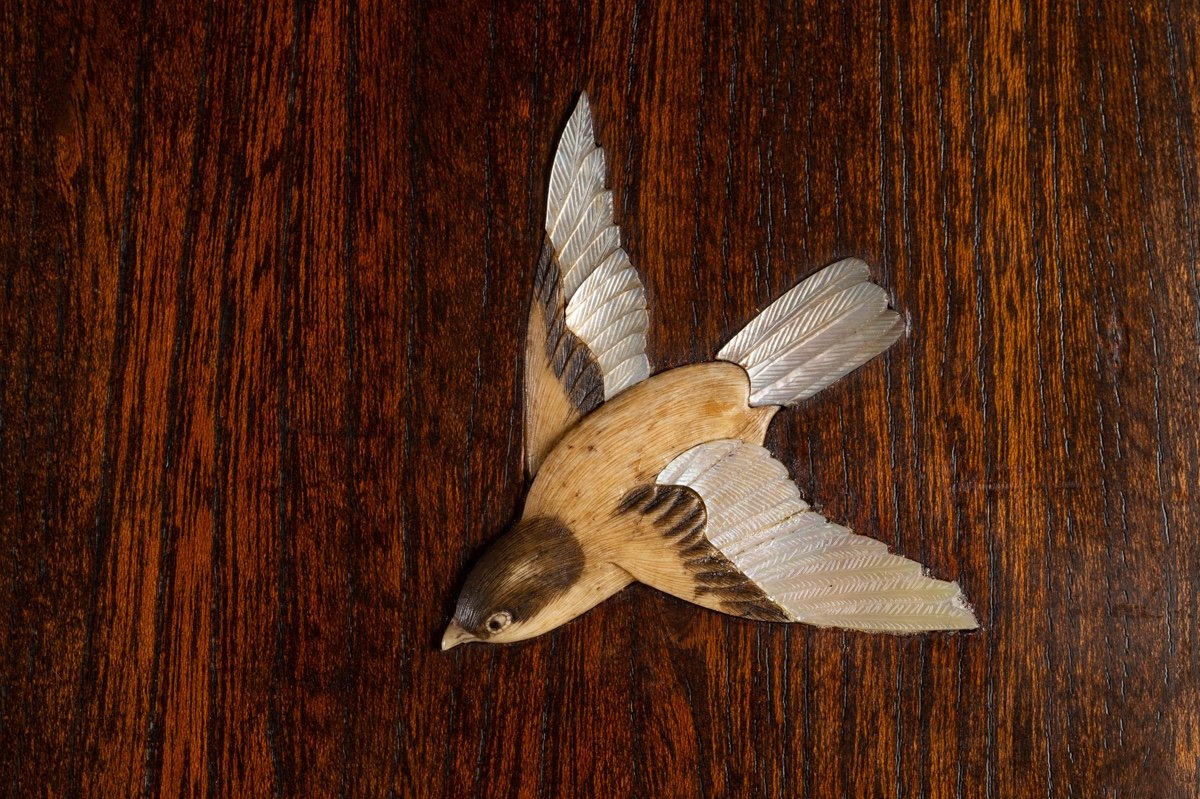
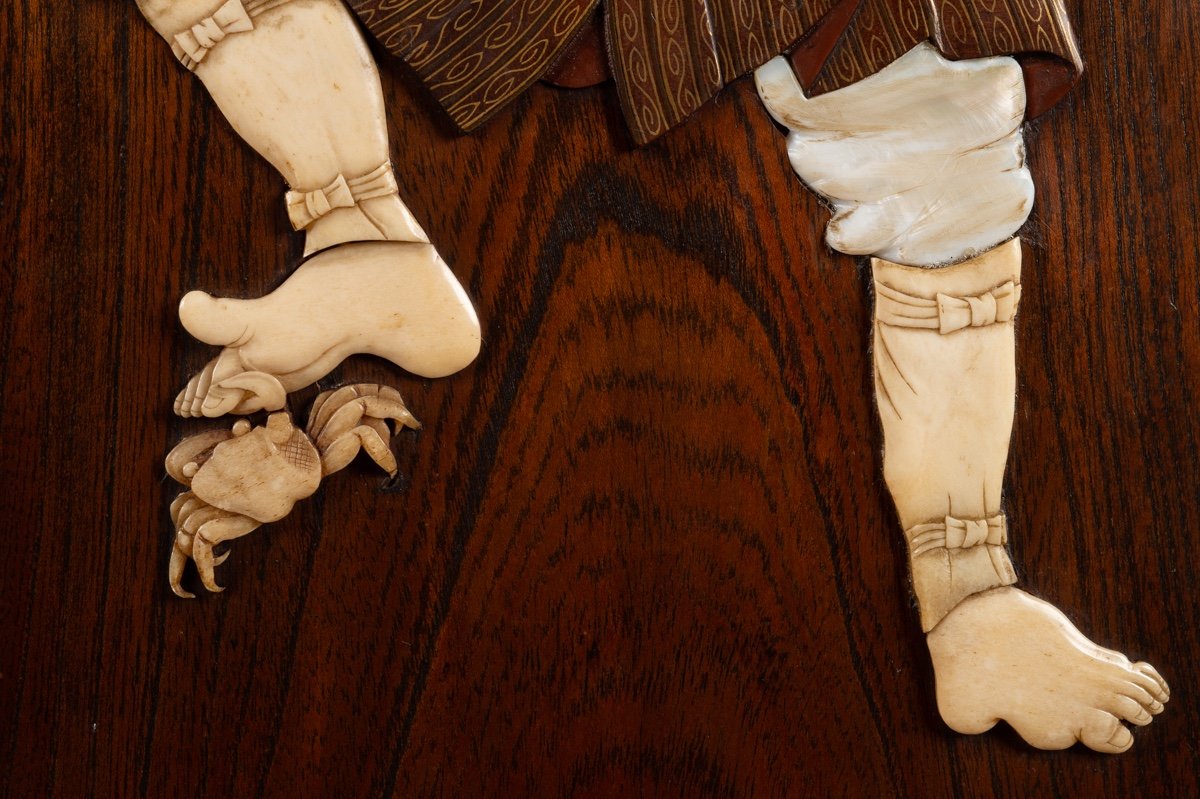
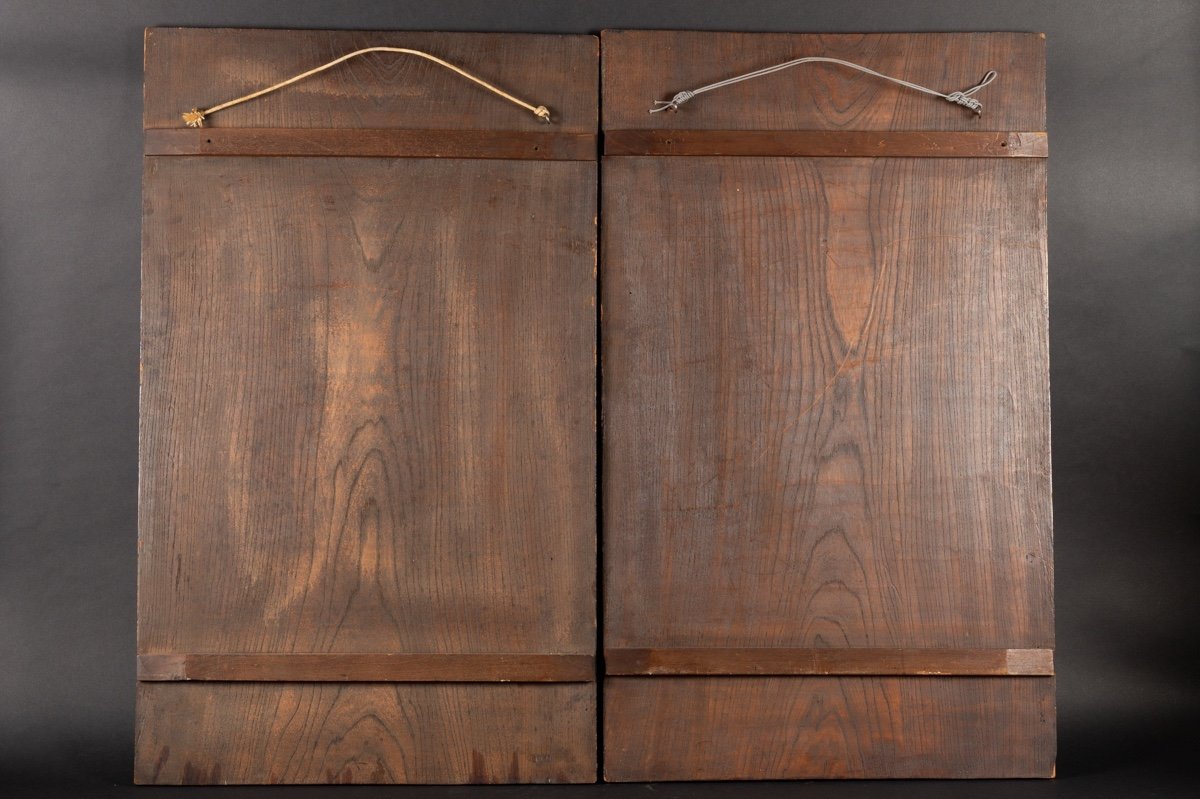


Pair of reliefs made using the Shibayama technique. It is a sculptural art in which the artist combines different materials. Precious materials are used as inlays or appliques on the carved surface of lacquered wood. In this case, the appliques are made of colored bone as well as mother-of-pearl and wood painted. The compositions depict a woman with a bottle in her hands, a small Tanto dagger in her belt and a man holding a wicker basket who has his toe bitten by a crab. Above the figures are finely crafted Japanese Ume plum branches, birds and butterflies.
Japan, Meiji era (1868-1912.)
Length 79 cm, width 47.5 cm, depth 3 cm.
Good state of conservation, no loss, traces of repairs.
The Shibayama technique was pioneered in 1772-1781 by Onoki Senzo, whose hometown of Shibayama became the name of the technique invented by the Japanese artist.
Free delivery in EU. ! I send packages by insured mail (DPD or DHL). All items are packaged very carefully. Payment by international bank transfer.
Japan, Meiji era (1868-1912.)
Length 79 cm, width 47.5 cm, depth 3 cm.
Good state of conservation, no loss, traces of repairs.
The Shibayama technique was pioneered in 1772-1781 by Onoki Senzo, whose hometown of Shibayama became the name of the technique invented by the Japanese artist.
Free delivery in EU. ! I send packages by insured mail (DPD or DHL). All items are packaged very carefully. Payment by international bank transfer.
Explore similar pieces and discover your ideal find:
Carved Ivory & Bone