THIS OBJECT WAS SOLD
Amida Buddha, Japan, Edo Period (1603-1868), Lacquered And Gilded Wood.


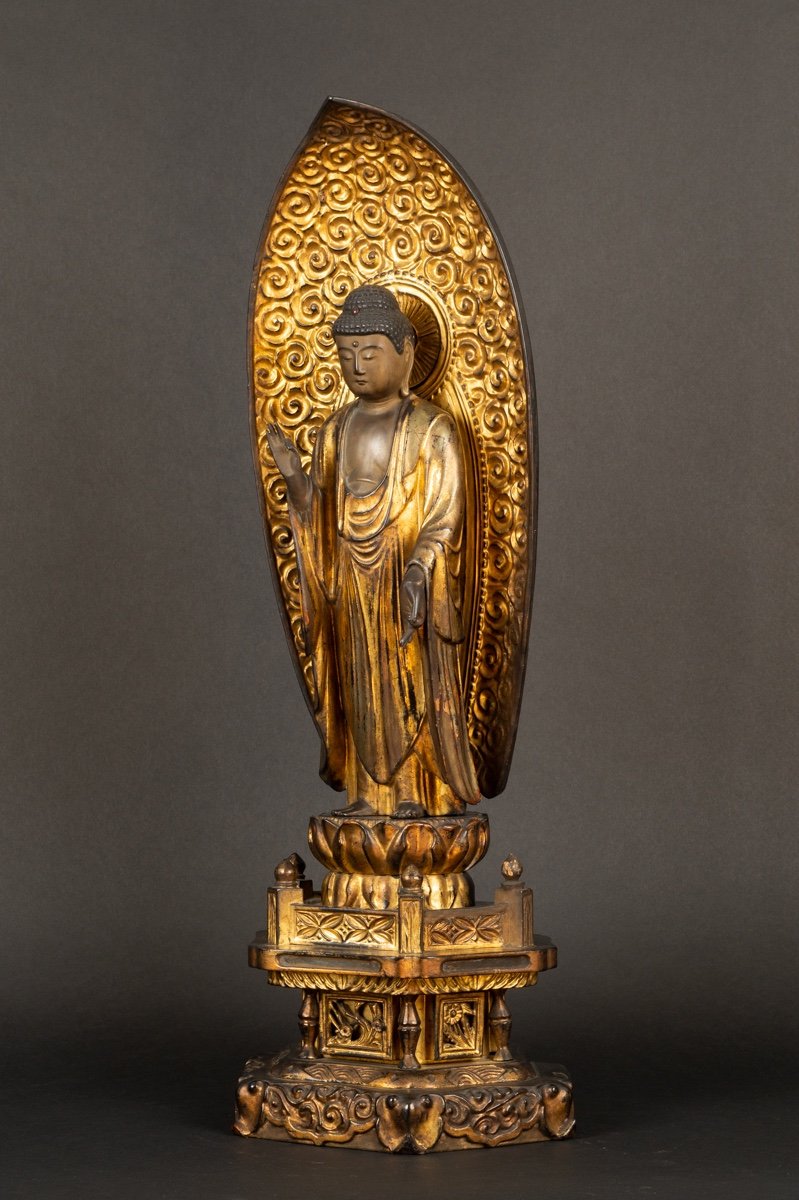
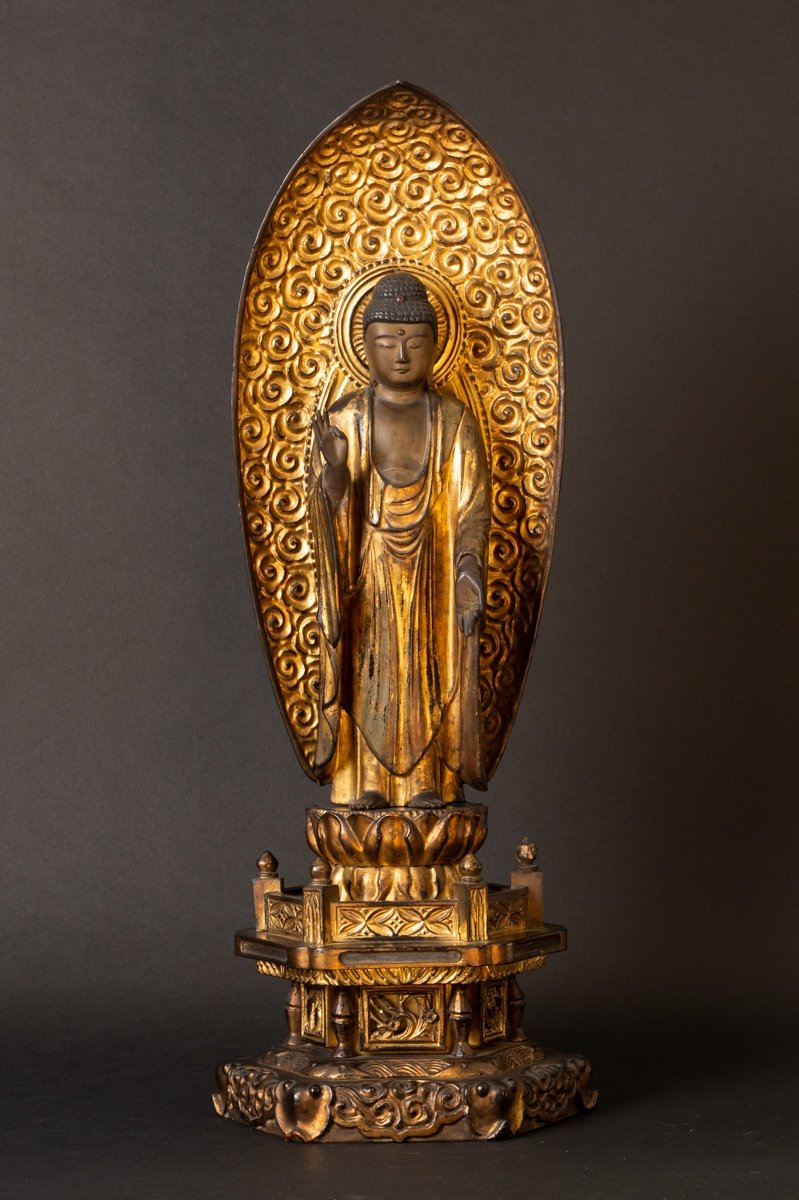


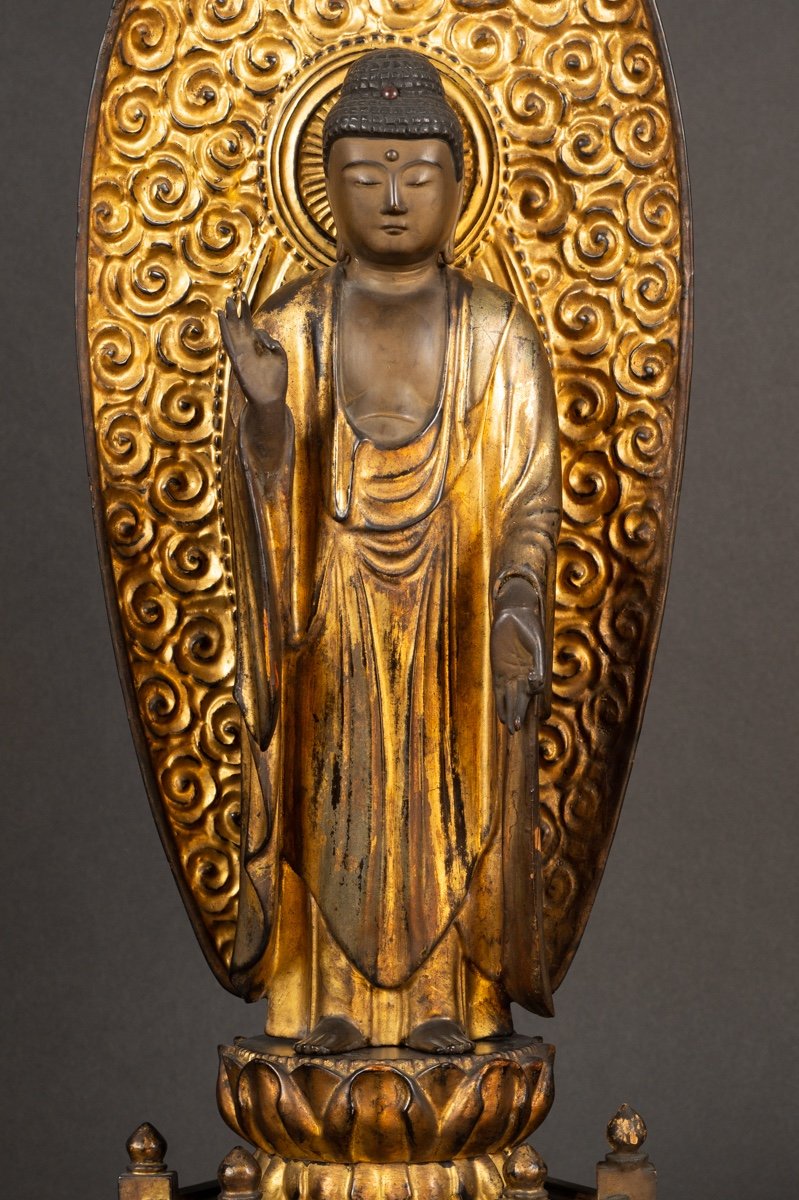


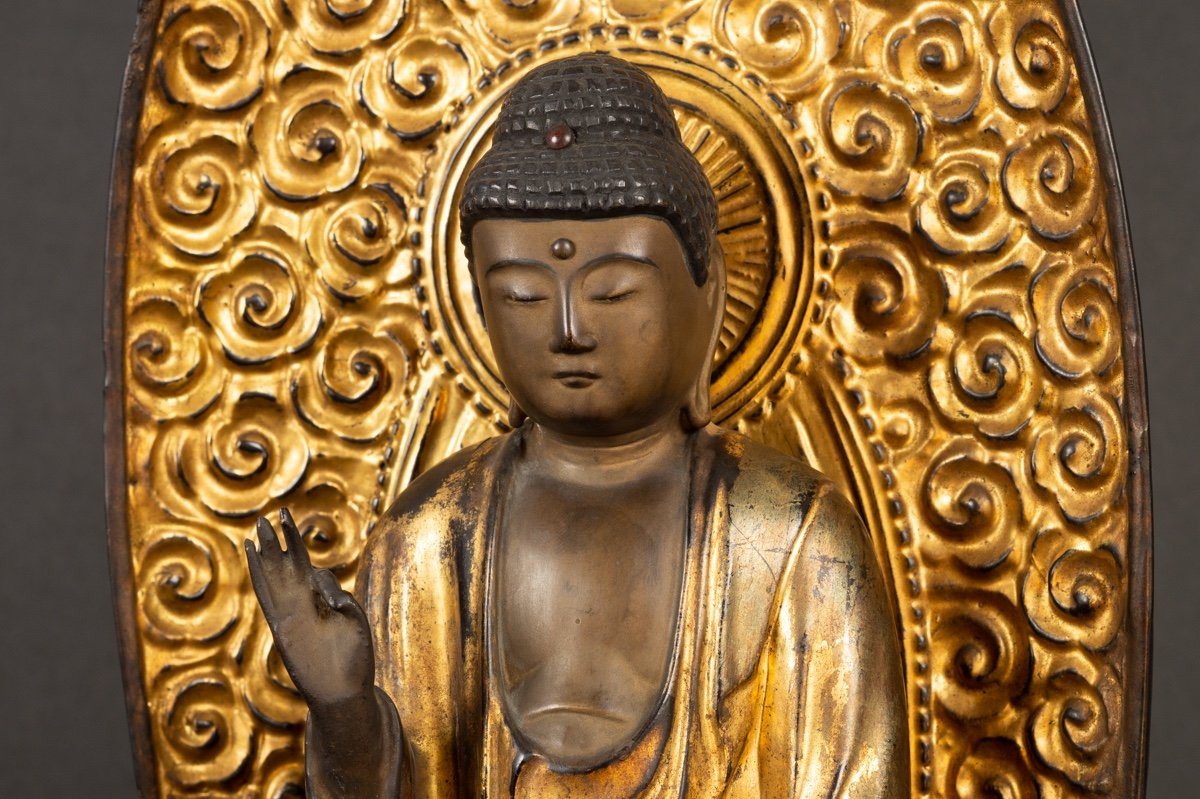

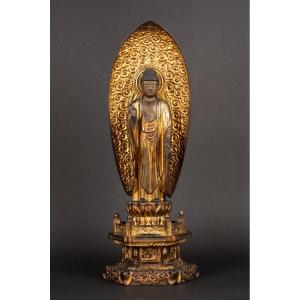


Sculpture depicting Amida Buddha (Japanese: Amida Nyorai). The Buddha places his hands in the "vitarka mudra" or teaching gesture, with the index finger and thumb coming together to form a circle, representing the Buddhist wheel of law. The sculpture of the Buddha was made with care and finesse, which is visible on the face, hands or shoulders of the character. He stands against a mandorla, on a tiered base with carved decorations such as lotus flowers, openwork flowers and a cloud motif underneath.
Amitabha Buddha has been worshiped in Japan since the 7th century. The Buddha of the Future, also called "Immeasurable Light" (which may be the origin of the custom of gilding statues), is associated with Mahayana Buddhism and the Pure Land of Supreme Wisdom. His attribute is the lotus, and he was sometimes represented as a trinity - with his bodhisattva appendages - Kannon (sc. Avalotiteśvara) and Seishi (sc. Mahasthamaprata).
Japan, Edo era (1603-1868),
lacquered and gilded wood.
Height 51.5 cm, the figure itself 26.5 cm.
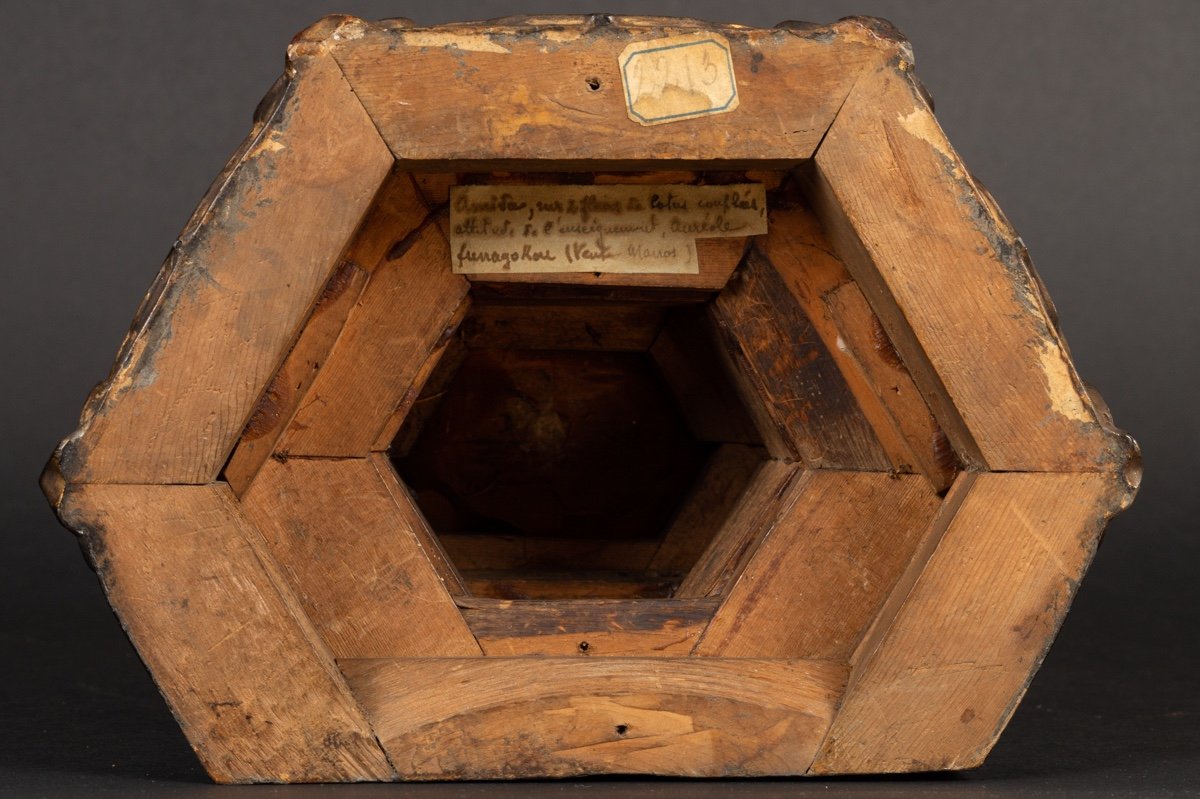
Good state of conservation, no loss, slight friction and traces of old repairs.
Free delivery in EU. ! I send packages by insured mail (DPD or DHL). All items are packaged very carefully. Payment by international bank transfer.
Amitabha Buddha has been worshiped in Japan since the 7th century. The Buddha of the Future, also called "Immeasurable Light" (which may be the origin of the custom of gilding statues), is associated with Mahayana Buddhism and the Pure Land of Supreme Wisdom. His attribute is the lotus, and he was sometimes represented as a trinity - with his bodhisattva appendages - Kannon (sc. Avalotiteśvara) and Seishi (sc. Mahasthamaprata).
Japan, Edo era (1603-1868),
lacquered and gilded wood.
Height 51.5 cm, the figure itself 26.5 cm.
Good state of conservation, no loss, slight friction and traces of old repairs.
Free delivery in EU. ! I send packages by insured mail (DPD or DHL). All items are packaged very carefully. Payment by international bank transfer.
Explore similar pieces and discover your ideal find:
Wood Sculptures