THIS OBJECT WAS SOLD
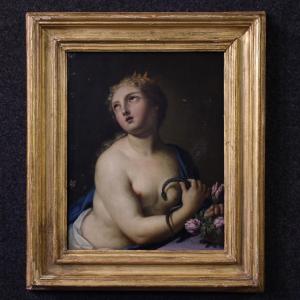
Portrait, Comtesse Tessain
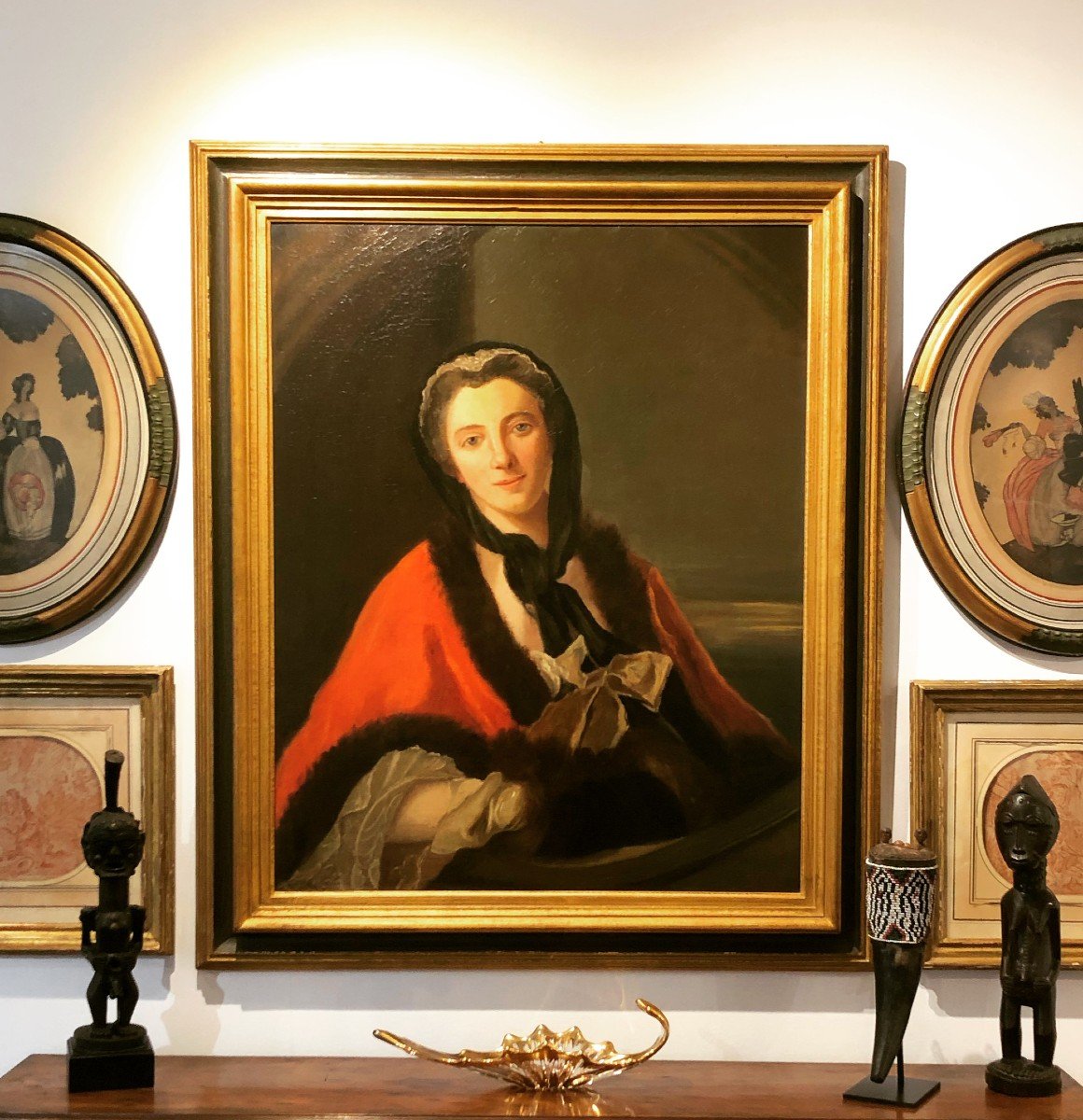




Portrait of countess Tessin
Follower of Nattier
Oil on canvas
19th century
This portrait, inspired by the work of Jean-Marc Nattier, gracefully illustrates the elegance and refinement of the 18th century. It particularly highlights the softness of the fabrics and the richness of the fur that envelops the countess, subtly emphasizing her noble status. True to the elegant and delicate style of the period, the portrait employs harmonious colors and a meticulous rendering of textures. The serene expression and careful treatment enhance the impression of softness and nobility. This work is a remarkable example of aristocratic portraiture art from the Age of Enlightenment.
Countess Tessin, often referred to as Ulrika “Ulla” Eleonora von Fersen, was a Swedish noblewoman and the wife of Carl Gustaf Tessin, a Swedish diplomat and ambassador to France in the 18th century. She spent some time at the court of Louis XV, notably during her husband’s stay in Paris between 1739 and 1742, when he was ambassador to Sweden. Ulrika held a high social position and played an unofficial diplomatic role at the court of Louis XV. Thanks to her refinement, education and elegant manners, she was well received in Versailles, where she became friends with several influential ladies. Attentive observer of French mores, she sometimes expressed fine and ironic criticism in her private correspondence. Her letters with her husband, Carl Gustaf Tessin, are today a valuable and cultivated testimony to life at the court of France in the 18th century.
The Portrait of the Countess, painted in 1741 by the French painter Jean-Marc Nattier, is a remarkable work preserved at the Louvre Museum in Paris. In this portrait, the Countess is depicted with sober elegance, dressed in a red coat lined with fur and a golden ribbon, symbolizing her status and refinement. Nattier’s style highlights the grace and dignity of the countess.
Follower of Nattier
Oil on canvas
19th century
This portrait, inspired by the work of Jean-Marc Nattier, gracefully illustrates the elegance and refinement of the 18th century. It particularly highlights the softness of the fabrics and the richness of the fur that envelops the countess, subtly emphasizing her noble status. True to the elegant and delicate style of the period, the portrait employs harmonious colors and a meticulous rendering of textures. The serene expression and careful treatment enhance the impression of softness and nobility. This work is a remarkable example of aristocratic portraiture art from the Age of Enlightenment.
Countess Tessin, often referred to as Ulrika “Ulla” Eleonora von Fersen, was a Swedish noblewoman and the wife of Carl Gustaf Tessin, a Swedish diplomat and ambassador to France in the 18th century. She spent some time at the court of Louis XV, notably during her husband’s stay in Paris between 1739 and 1742, when he was ambassador to Sweden. Ulrika held a high social position and played an unofficial diplomatic role at the court of Louis XV. Thanks to her refinement, education and elegant manners, she was well received in Versailles, where she became friends with several influential ladies. Attentive observer of French mores, she sometimes expressed fine and ironic criticism in her private correspondence. Her letters with her husband, Carl Gustaf Tessin, are today a valuable and cultivated testimony to life at the court of France in the 18th century.
The Portrait of the Countess, painted in 1741 by the French painter Jean-Marc Nattier, is a remarkable work preserved at the Louvre Museum in Paris. In this portrait, the Countess is depicted with sober elegance, dressed in a red coat lined with fur and a golden ribbon, symbolizing her status and refinement. Nattier’s style highlights the grace and dignity of the countess.
Explore similar pieces and discover your ideal find:
Portraits