THIS OBJECT WAS SOLD
Venetian School From The Beginning Of The 17th Century. Follower Of Veronese. The Judgment Of Paris
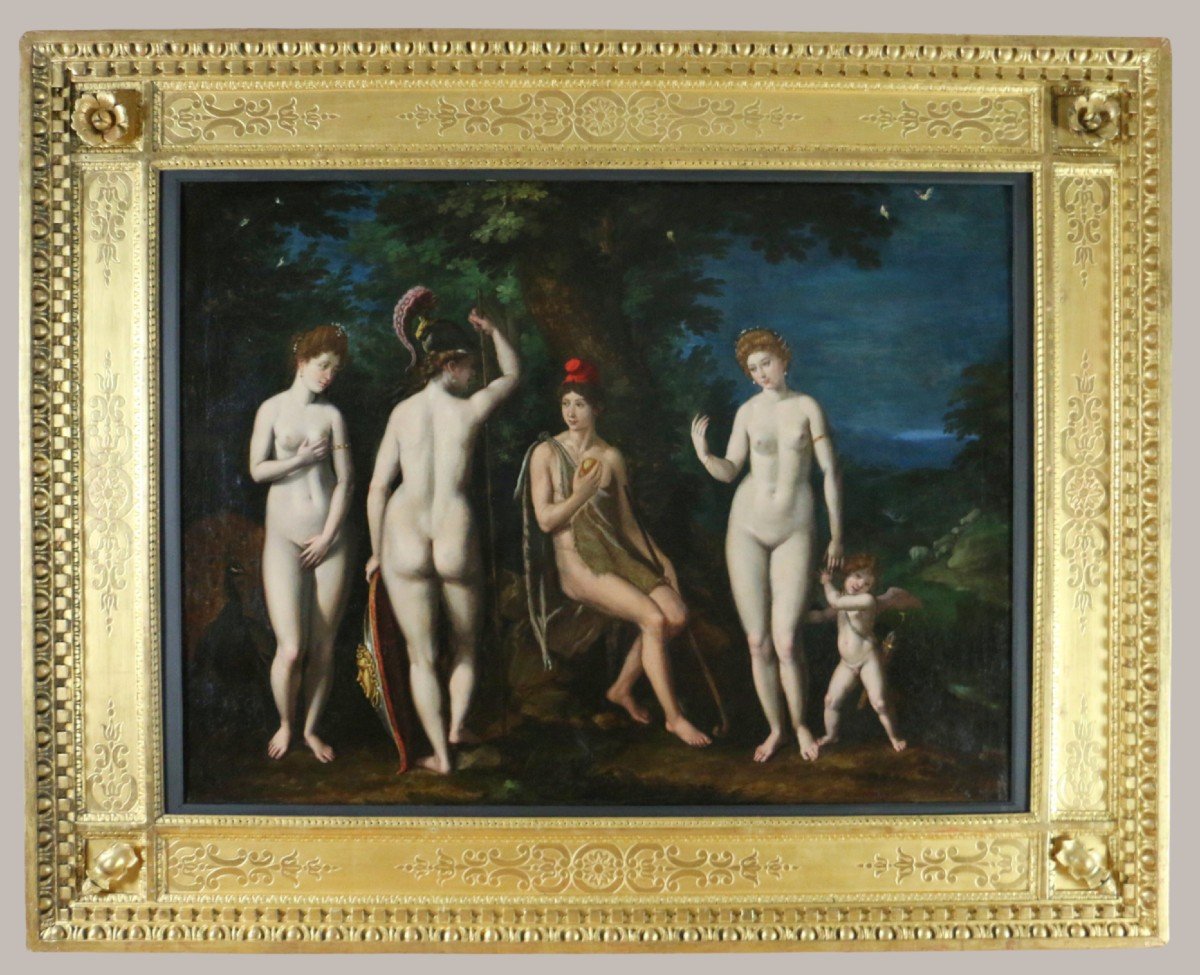


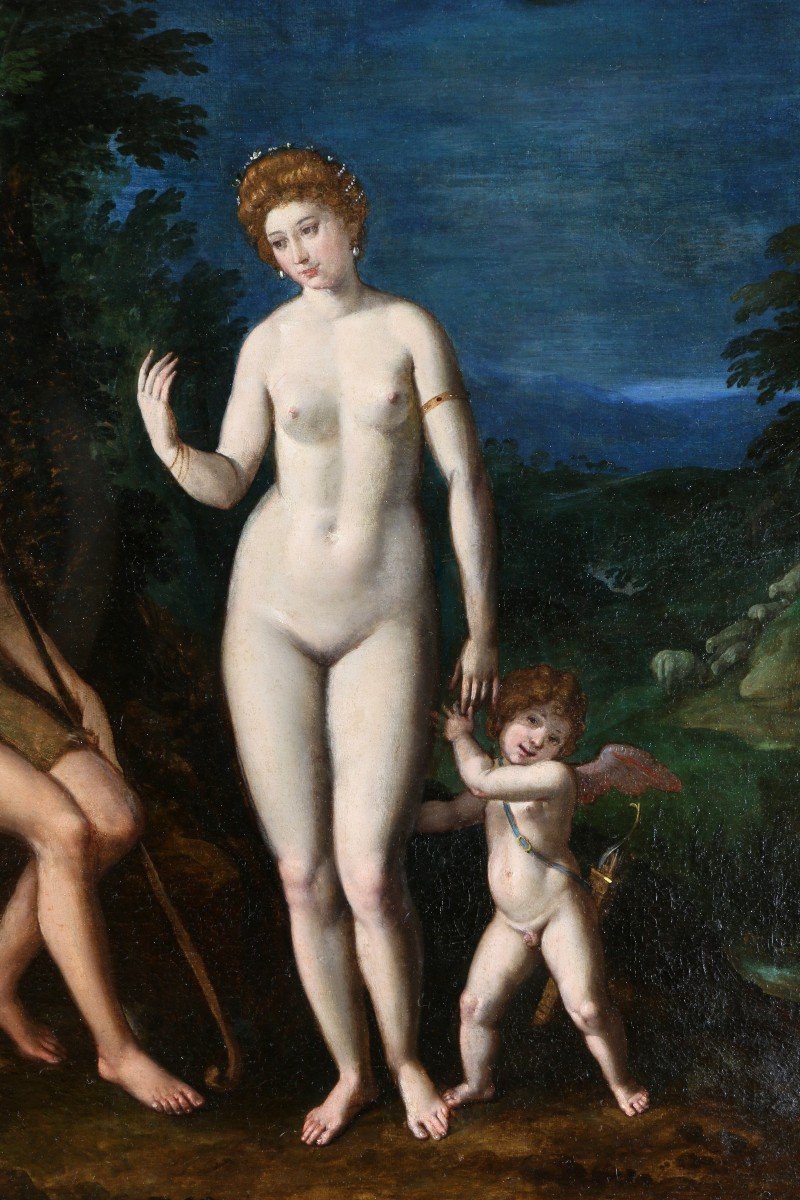

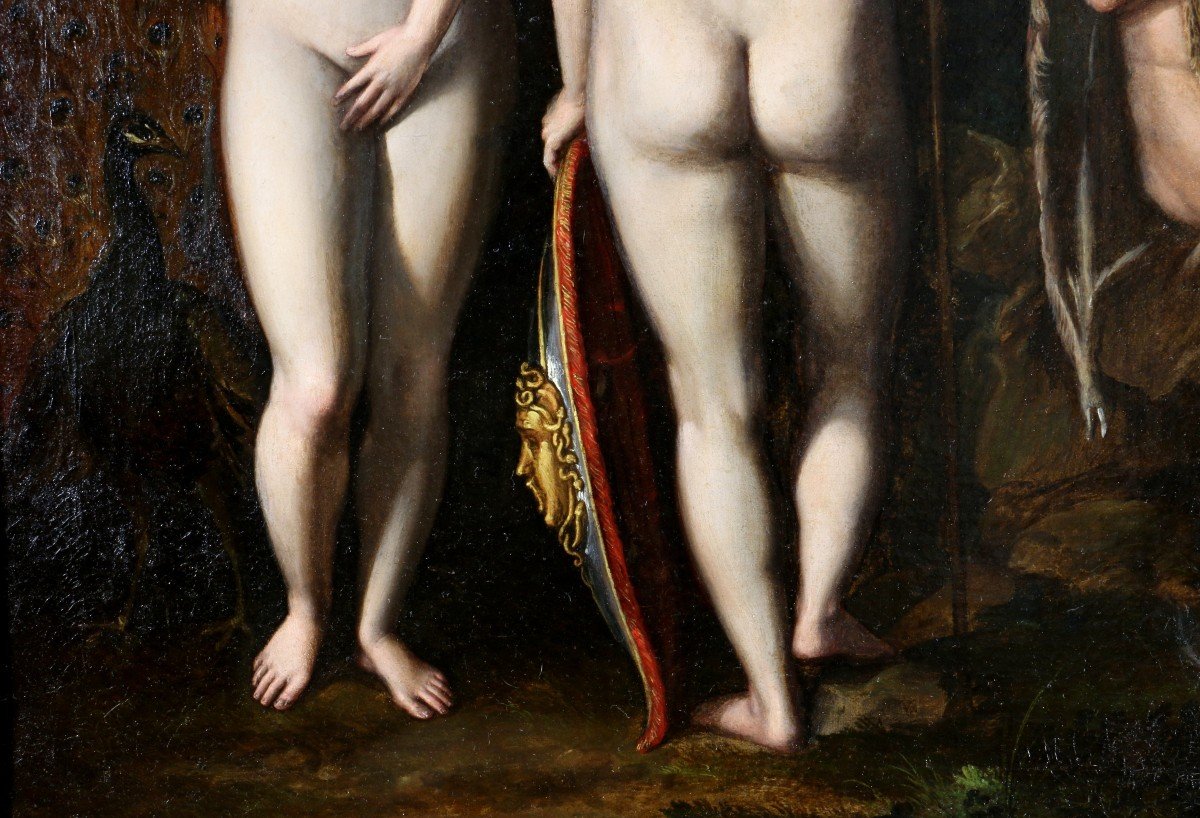


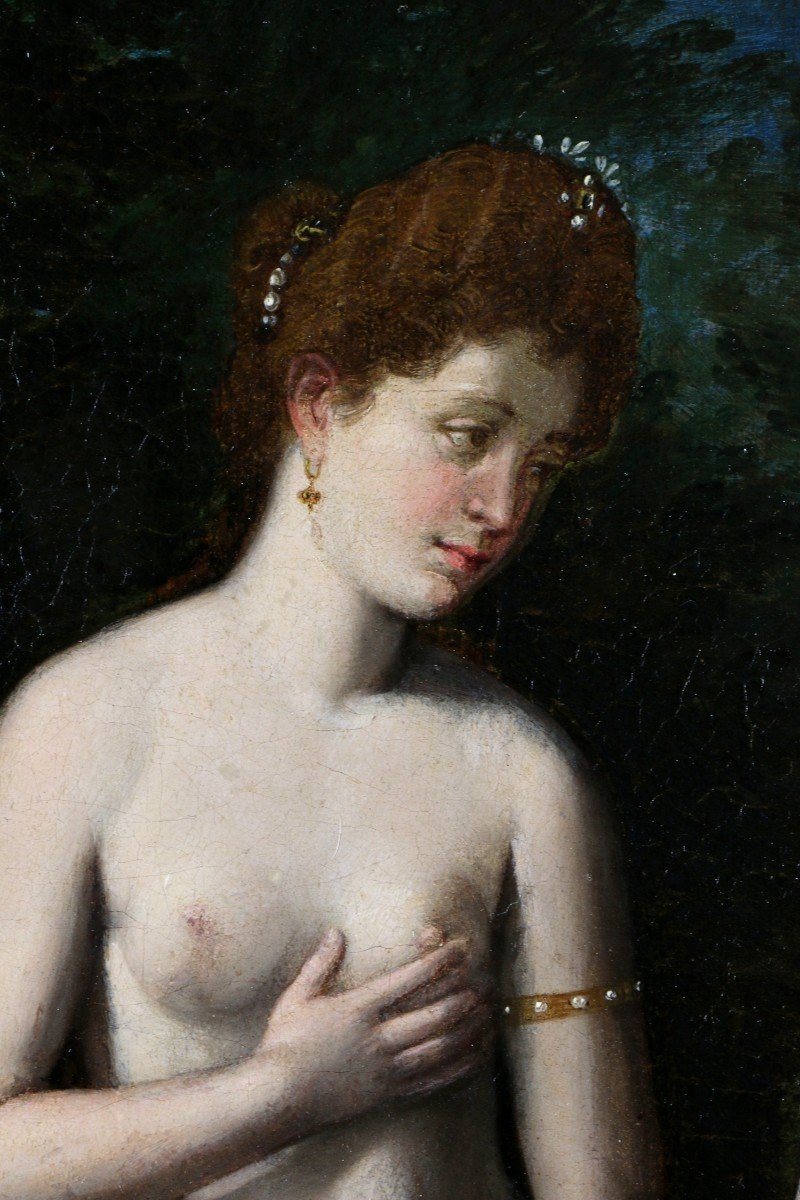

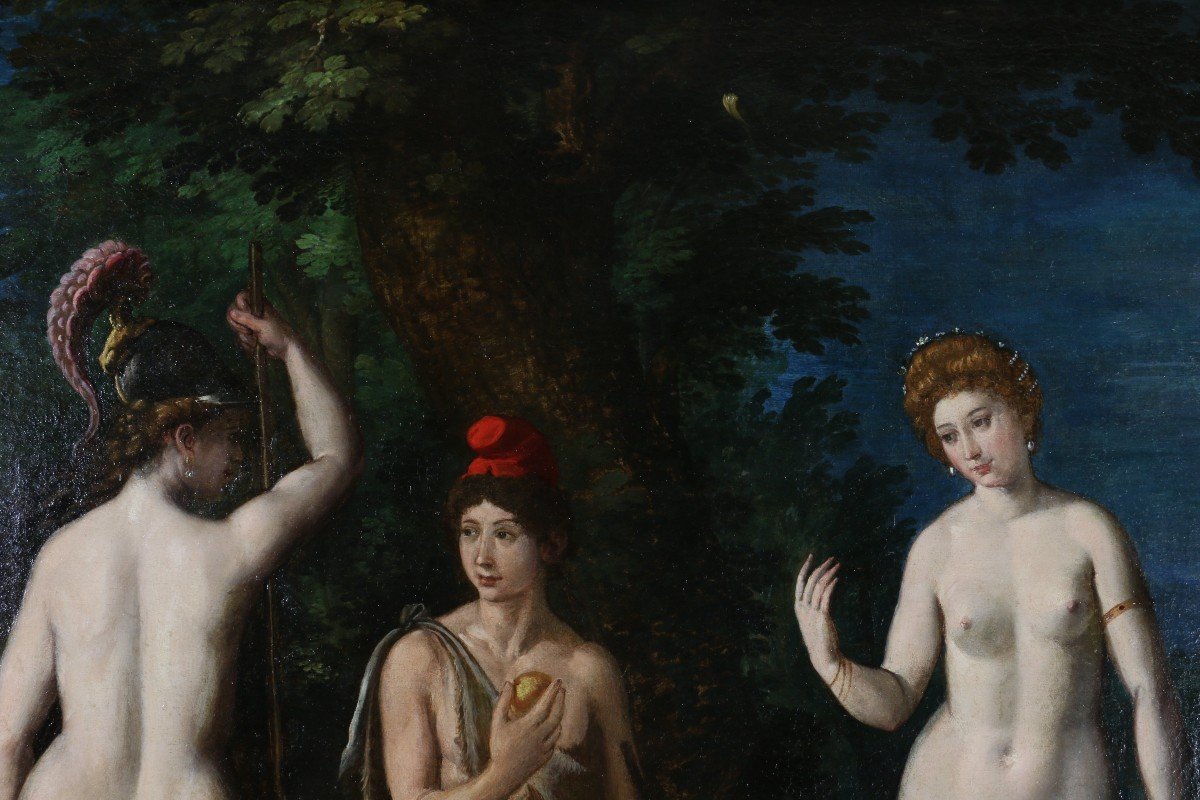



Venetian school of the early 17th century. Follower of Veronese. The Judgment of Pâris
Re-lined canvas of 111 cm by 83 cm
Sumptuous old frame of 149 cm by 119 cm
Our superb painting represents The Judgment of Pâris which refers to a famous mythological episode. Esis, the Goddess of Discord, was not invited to the wedding of Thetis and Peleus, so she took revenge by throwing into the crowd a golden apple on which the words "to the fairest" were inscribed. Aphrodite, Hera and Athena, feeling worthy of this formula, claim the apple. The gods then decide to appoint Paris, considered the most beautiful of mortals, to choose the most beautiful of these three goddesses. To obtain the decision, the goddesses promise him glory, victory and love. He ended up choosing Aphrodite who had promised him the love of the most beautiful of women, Helena, Queen of Sparta and wife of Menelaus. Welcomed by Menelaus, king of Sparta, Paris kidnaps his wife Helen. Menelaus leaves to recover his wife and thus triggers the Trojan War
The influence of Veronese painting.
Veronese (Paulo Calliari) died in 1588, his workshop was taken over by his brother Benedetto Calliari and his children, Gabriele and Carlo Calliari. As a result, the activity of the workshop continued until 1603. At the beginning of the 17th century in Venice, many artists resumed and drew inspiration from the traditions of color and atmosphere typical of illustrious predecessors of the 16th century (Veronese , Tintoretto, Titian). Regarding Veronese, we can speak of a neo Veronesian. The artist who made this superb painting was certainly part of this movement which brings together many painters (Carlo Saraceni, Alessandro Varotari, Frederico Cervelli…).
Re-lined canvas of 111 cm by 83 cm
Sumptuous old frame of 149 cm by 119 cm
Our superb painting represents The Judgment of Pâris which refers to a famous mythological episode. Esis, the Goddess of Discord, was not invited to the wedding of Thetis and Peleus, so she took revenge by throwing into the crowd a golden apple on which the words "to the fairest" were inscribed. Aphrodite, Hera and Athena, feeling worthy of this formula, claim the apple. The gods then decide to appoint Paris, considered the most beautiful of mortals, to choose the most beautiful of these three goddesses. To obtain the decision, the goddesses promise him glory, victory and love. He ended up choosing Aphrodite who had promised him the love of the most beautiful of women, Helena, Queen of Sparta and wife of Menelaus. Welcomed by Menelaus, king of Sparta, Paris kidnaps his wife Helen. Menelaus leaves to recover his wife and thus triggers the Trojan War
The influence of Veronese painting.
Veronese (Paulo Calliari) died in 1588, his workshop was taken over by his brother Benedetto Calliari and his children, Gabriele and Carlo Calliari. As a result, the activity of the workshop continued until 1603. At the beginning of the 17th century in Venice, many artists resumed and drew inspiration from the traditions of color and atmosphere typical of illustrious predecessors of the 16th century (Veronese , Tintoretto, Titian). Regarding Veronese, we can speak of a neo Veronesian. The artist who made this superb painting was certainly part of this movement which brings together many painters (Carlo Saraceni, Alessandro Varotari, Frederico Cervelli…).
Explore similar pieces and discover your ideal find:
Other Paintings