THIS OBJECT WAS SOLD
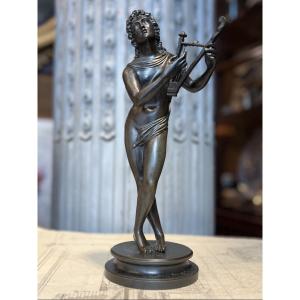
Bronze Proof - Mandolin Player - Albert Carrier-belleuse - Founder Collin & Cie Paris
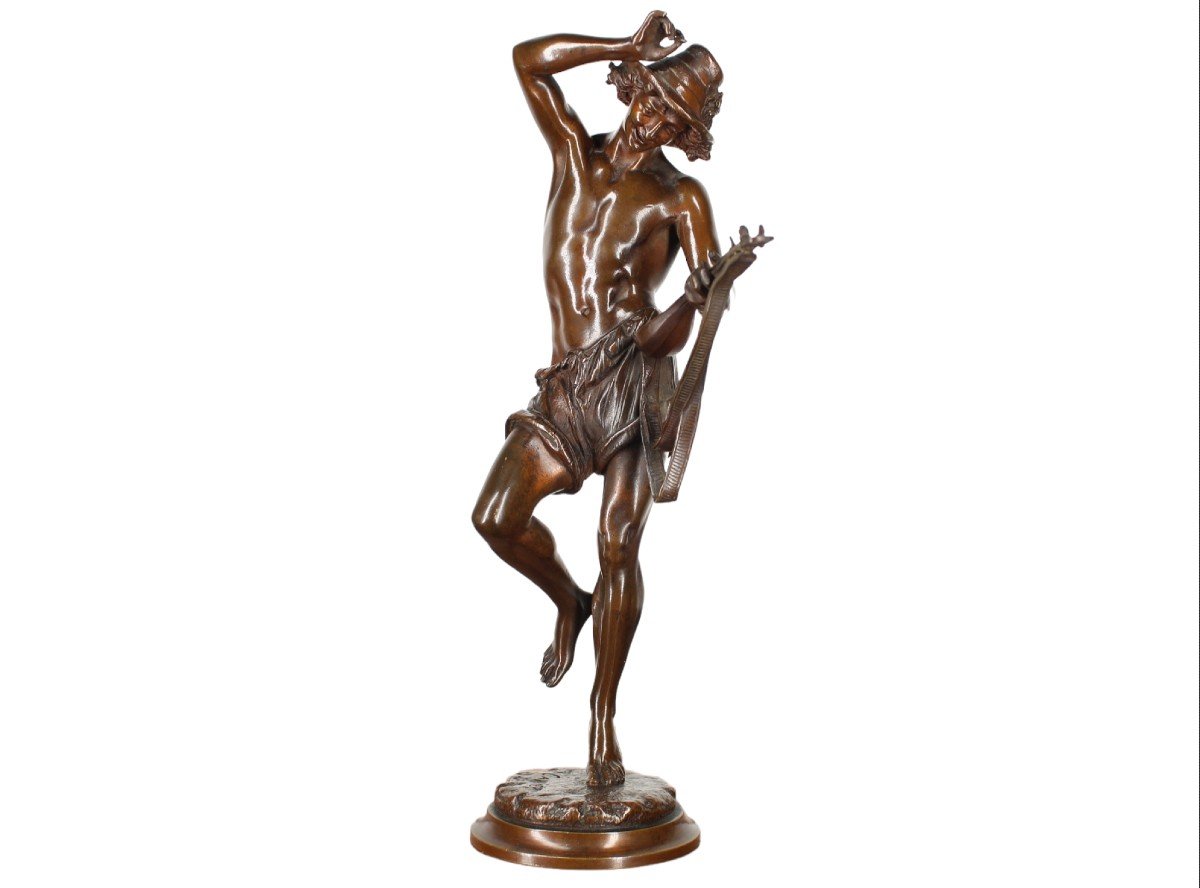
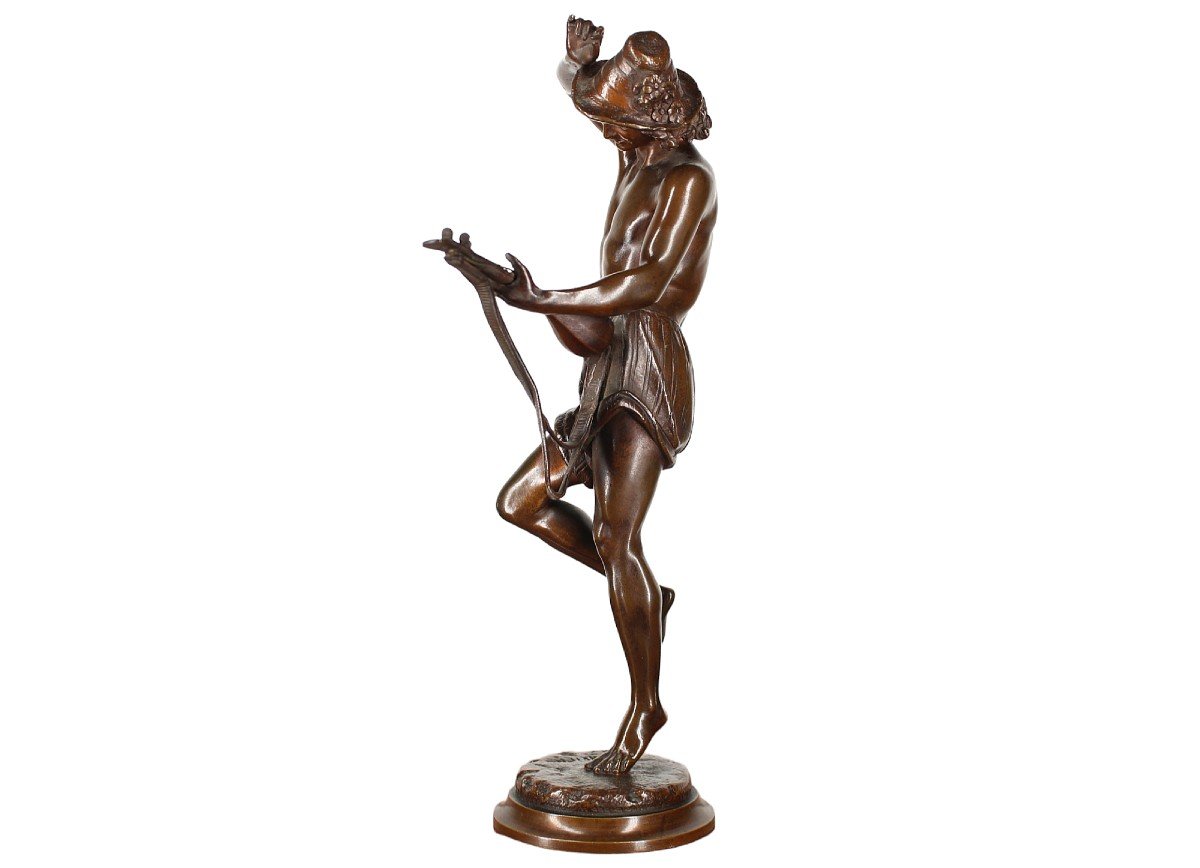
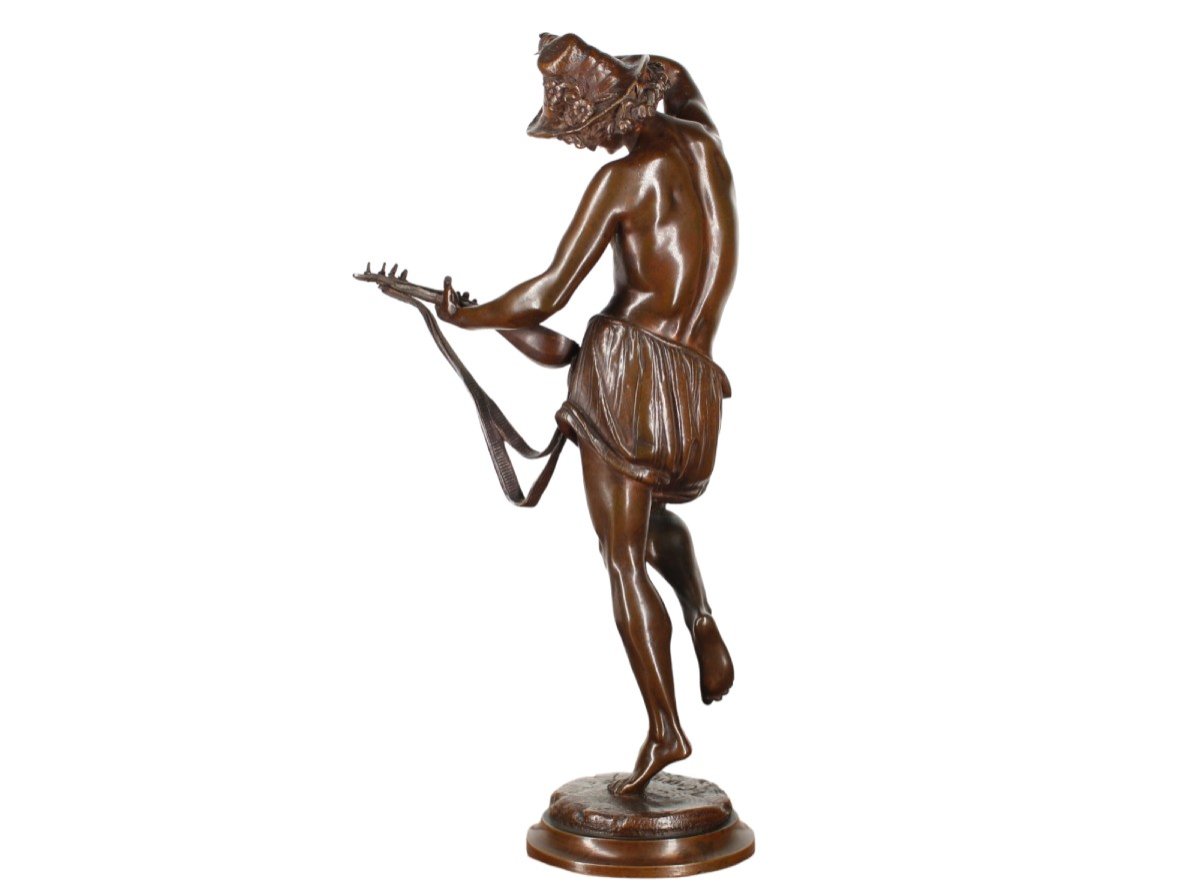

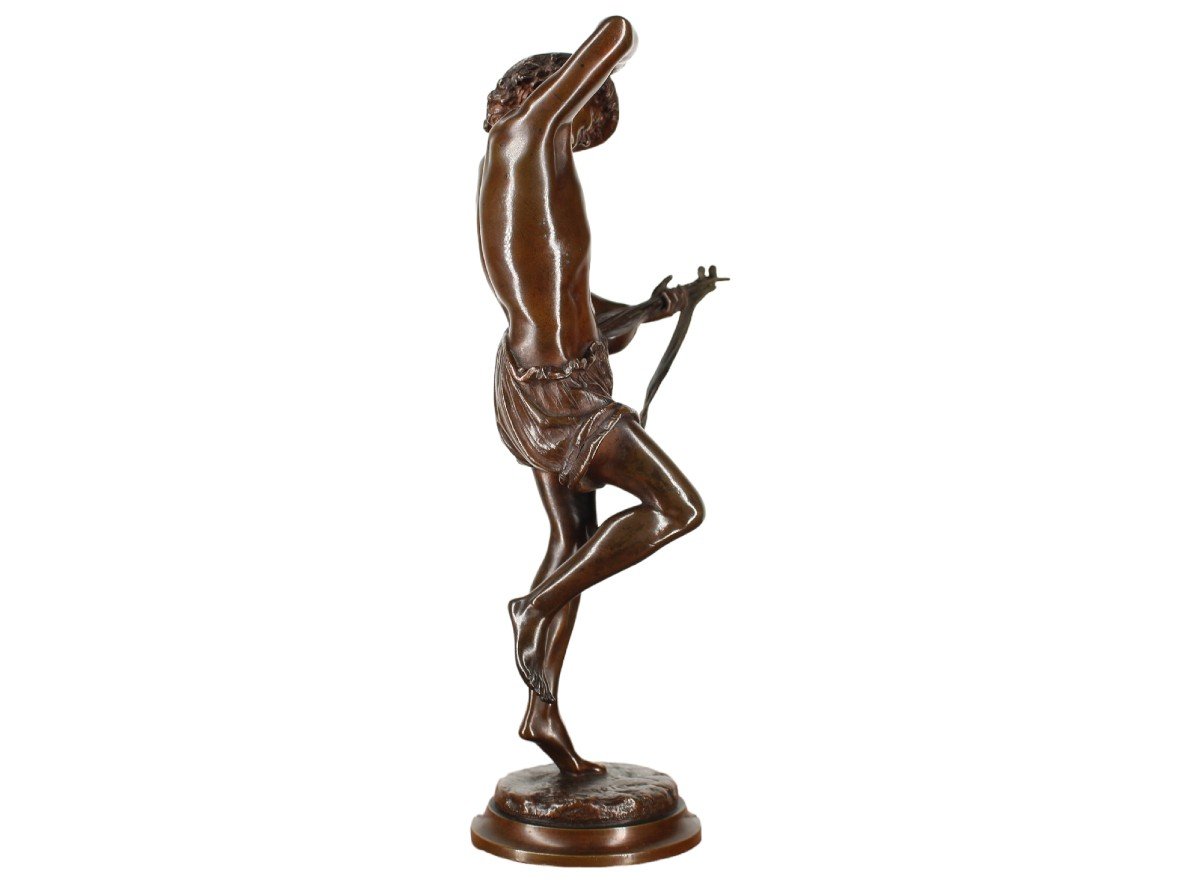



Bronze with nuanced patina representing the Mandolin player. signed A.CARRIER for Albert Ernest CARRIER BELLEUSE. Foundry stamp COLLIN & CIE PARIS Bauchery engraver, then in the goldsmith workshop of Jacques-Henri Fauconnier. In 1840, thanks to David d'Angers (1788-1856), of whom he was a pupil, he entered the Ecole des Beaux-Arts in Paris. But as the official education does not suit him, he enrolls in the Free Royal School of Drawing. Albert Carrier-Belleuse made his debut at the Salon of 1850 before being hired by the Minton China Work factory in England, where he also ran a drawing school. Back in Paris in 1855, with a growing notoriety, he became the most famous decorator of the Second Empire and the Third Republic. He received official orders for the Tuileries, the Louvre, the Hôtel de Ville, the Opéra, etc. Called to Belgium in 1870 to adorn a monument in Brussels, Albert Carrier-Belleuse hired Auguste Rodin to come and work with him. After the Paris Commune, he returned to France and returned to his Montmartre studio. Appointed Director of Works of Art at the Manufacture de Sèvres from 1875 until his death in 1887, he drove a modernization of style there. In 1884 he published a collection of decorative art. Albert Carrier-Belleuse finds his inspiration in the art of the Renaissance and in that of the 17th century. Moving away from the academic tradition of the Ecole des Beaux-Arts and with a neo-baroque style, he obtains unequaled decorative potential from the material. Artist with a fertile imagination, sometimes a little easy, nicknamed "The Clodion of the Second Empire" by the Goncourt brothers, he leaves a large number of busts, small groups, statuettes and decorative objects. He is considered one of the precursors of Art Nouveau.
Explore similar pieces and discover your ideal find:
bronze sculptures