OBJET VENDU
CERCLE DE SIR PETER LELY (1618-1680) - PORTRAIT D'UNE BEAUTÉ EN ROBE DE SOIE BLEUE c.1665.
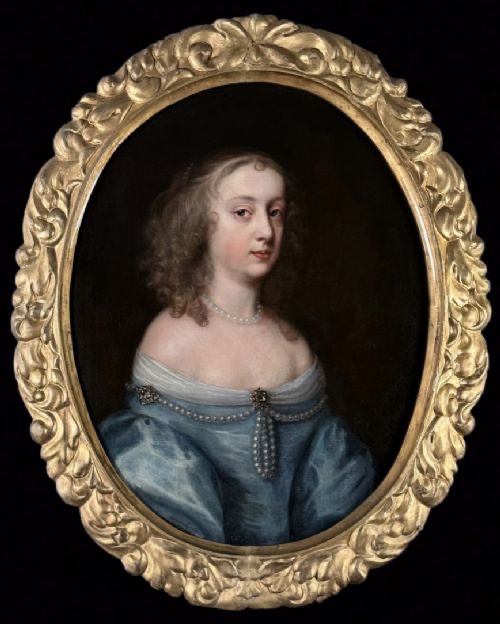
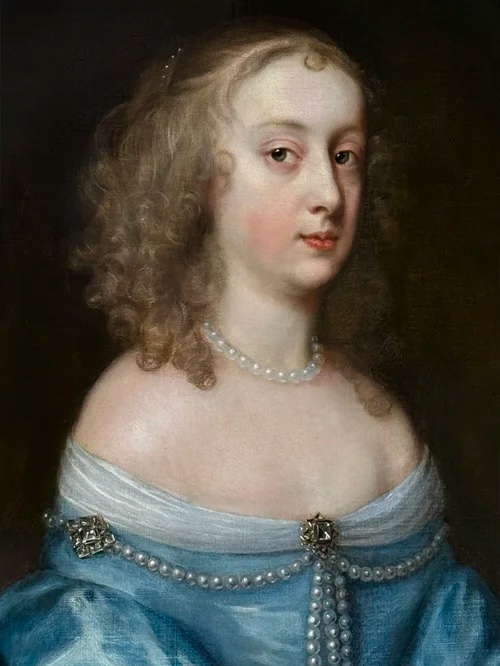
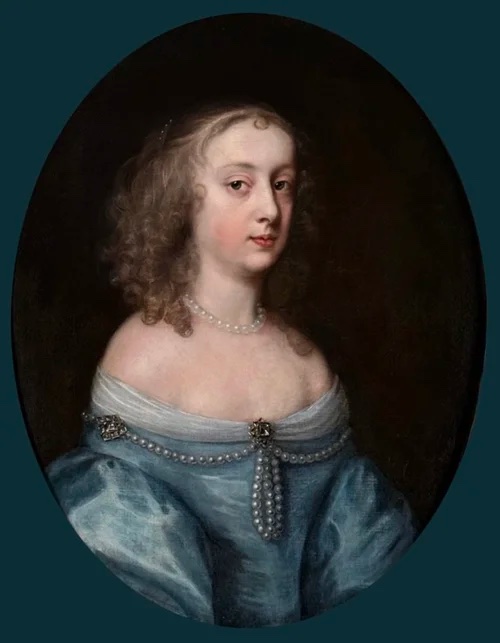
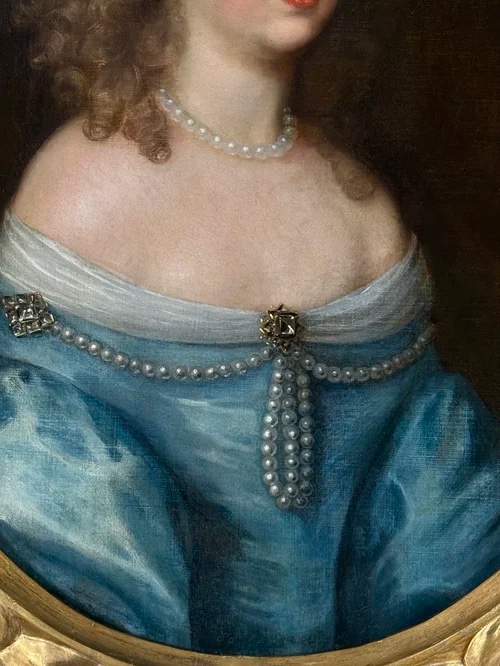
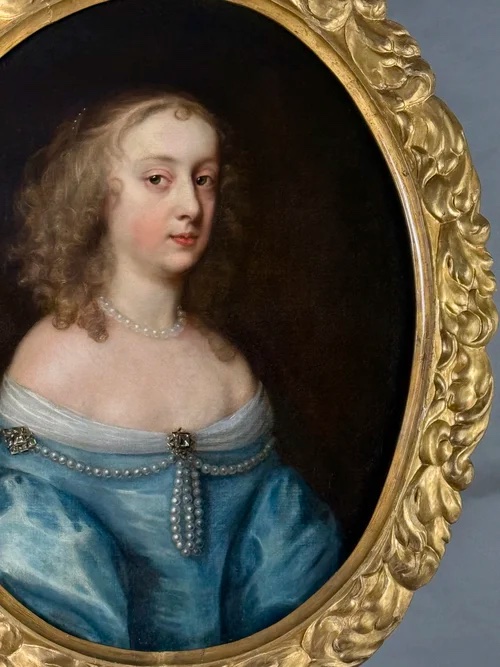
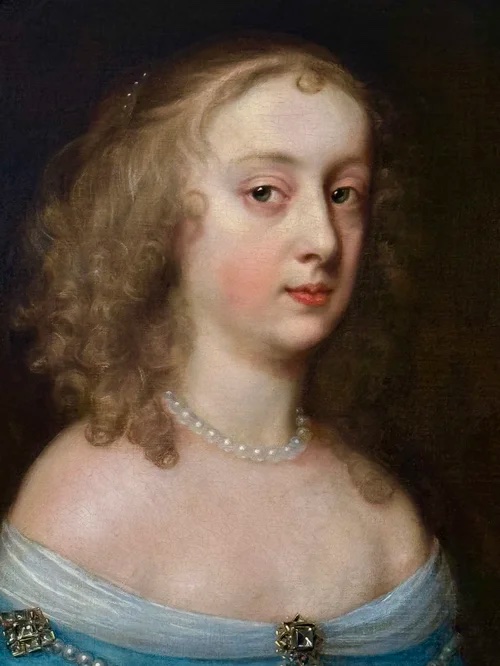
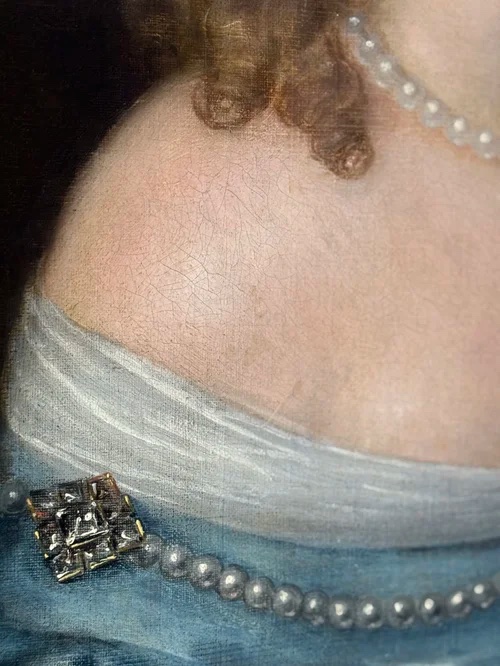
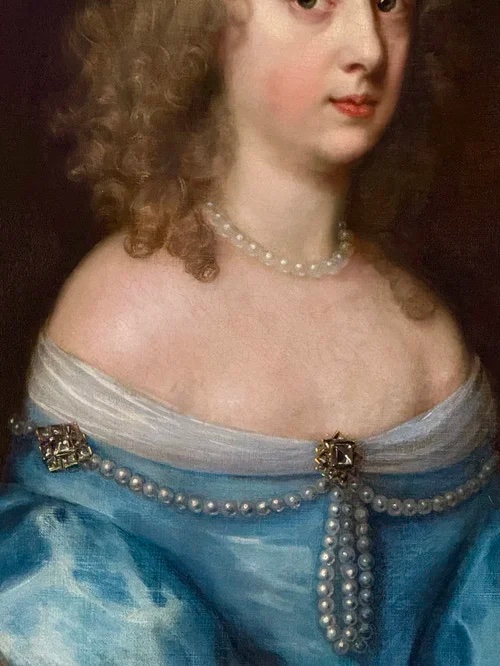
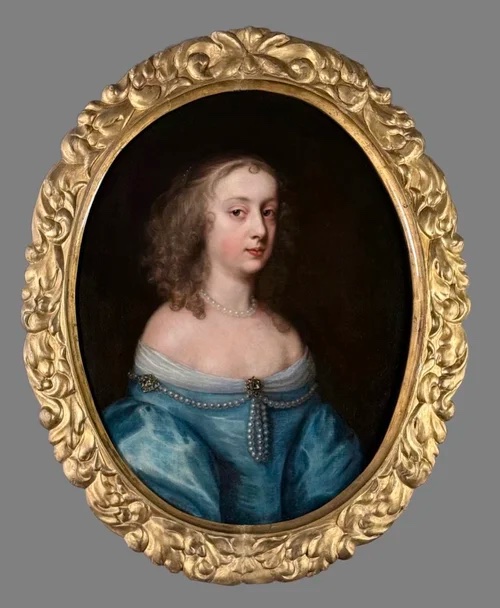
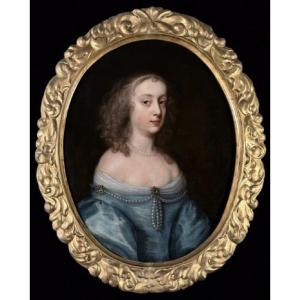


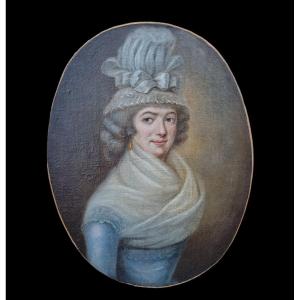
Magnifique portrait à l'huile sur toile du XVIIe siècle, représentant une jeune femme en robe de soie bleue. Peint dans un format ovale par un artiste de l'entourage de Sir Peter Lely (1618-1680), ce tableau exquis et plein de finesse est un exemple remarquable du genre de portrait prisé à la cour anglaise du troisième quart du XVIIe siècle. La jeune et ravissante modèle est vêtue avec extravagance et raffinement, au plus fort de la mode. Sa robe de soie bleuet, lustrée et ornée de perles et de diamants, laisse apparaître son décolleté au niveau des épaules, créant une allure délicieusement déshabillée, typique de l'époque. Son statut social est indéniable : elle porte des rangs de perles (ornement baroque par excellence), mis en valeur par des broches en diamants taille table. Un simple collier de perles complète sa parure, et ses cheveux, relevés avec élégance, dégagent des boucles qui retombent sur ses épaules. Le traitement libre des cheveux du modèle témoigne d'un plaisir pictural à utiliser la matière. Cette œuvre intime et sensible nous invite à la contemplation de ce modèle si bien caractérisé, qui nous regarde avec une expression d'une sérénité et d'un charme envoûtants. Sir Peter Lely (1618-1660) (né à Soest, en Westphalie, le 14 septembre 1618 ; mort à Londres le 30 novembre 1680). Peintre d'origine néerlandaise, il passa la quasi-totalité de sa carrière en Angleterre et fut naturalisé en 1662. Son nom de famille était à l'origine van der Faes, et le nom Lely proviendrait d'un lys sculpté sur la maison de La Haye où son père était né. Lely naquit en Allemagne (où son père, capitaine d'infanterie, était en poste) et fit ses études à Haarlem. Il s'installa en Angleterre au début des années 1640 (les premiers biographes avancent les dates de 1641 ou 1643) et, bien qu'il ait d'abord peint des compositions figuratives dans des paysages (Nymphes endormies, vers 1650, Dulwich Picture Gallery, Londres), il se tourna rapidement vers le domaine plus lucratif du portrait.
La chance lui sourit, car quelques années seulement après son arrivée, les meilleurs portraitistes d'Angleterre disparurent : Van Dyck et William Dobson moururent respectivement en 1641 et 1646, et Cornelius Johnson retourna en Hollande en 1643. En 1654, il fut qualifié de « meilleur artiste d'Angleterre ». Lely réalisa les portraits de Charles Ier et de ses enfants, d'Oliver Cromwell et de son fils Richard, ainsi que d'autres figures importantes de l'Interrègne, mais il est surtout associé à la cour de Charles II lors de la Restauration. Nommé peintre principal du roi en 1661, il mena une vie fastueuse, décrite dans le Journal de Samuel Pepys, qui le qualifie d’« homme extrêmement fier et imbu de sa personne ». Entouré d’une équipe d’assistants, il maintint une production artistique considérable, et ses beautés voluptueuses et somnolentes, vêtues de soies exquises, ainsi que ses courtisans perruqués, ont contribué à forger l’image populaire de l’Angleterre de la Restauration.
Van Dyck exerça la plus forte influence sur son style, mais Lely se montra plus terre-à-terre et moins raffiné. Nombre de ses œuvres sont répétitives (il est parfois difficile de distinguer les modèles), mais il était un coloriste talentueux et expressif, doté d’un don pour la composition. Il domina la peinture anglaise de son temps, et sa tradition du portrait mondain, développée par Kneller et Richardson, perdura jusqu’au XVIIIe siècle, avant d’être remise en question par Hogarth. Lely était un connaisseur averti et constitua l’une des plus belles collections de dessins de maîtres anciens jamais rassemblées ; elle fut vendue après sa mort. Source du texte : The Oxford Dictionary of Art and Artists (Oxford University Press). Cette œuvre remarquable est en excellent état de conservation et prête à être accrochée et admirée. Elle est présentée dans un cadre auriculaire original et rare, sculpté et doré à la main, datant du XVIIe siècle, qui constitue lui-même une œuvre d'art.
Images en haute résolution disponibles sur demande. Livraison internationale. Toile : 72 cm x 56 cm. Cadre : 92 cm x 74 cm.Magnifique portrait à l'huile sur toile du XVIIe siècle, représentant une jeune femme en robe de soie bleue. Peint dans un format ovale par un artiste de l'entourage de Sir Peter Lely (1618-1680), ce tableau exquis et plein de finesse est un exemple remarquable du genre de portrait prisé à la cour anglaise du troisième quart du XVIIe siècle. La jeune et ravissante modèle est vêtue avec extravagance et raffinement, au plus fort de la mode. Sa robe de soie bleuet, lustrée et ornée de perles et de diamants, laisse apparaître son décolleté au niveau des épaules, créant une allure délicieusement déshabillée, typique de l'époque. Son statut social est indéniable : elle porte des rangs de perles (ornement baroque par excellence), mis en valeur par des broches en diamants taille table. Un simple collier de perles complète sa parure, et ses cheveux, relevés avec élégance, dégagent des boucles qui retombent sur ses épaules. Le traitement libre des cheveux du modèle témoigne d'un plaisir pictural à utiliser la matière. Cette œuvre intime et sensible nous invite à la contemplation de ce modèle si bien caractérisé, qui nous regarde avec une expression d'une sérénité et d'un charme envoûtants. Sir Peter Lely (1618-1660) (né à Soest, en Westphalie, le 14 septembre 1618 ; mort à Londres le 30 novembre 1680). Peintre d'origine néerlandaise, il passa la quasi-totalité de sa carrière en Angleterre et fut naturalisé en 1662. Son nom de famille était à l'origine van der Faes, et le nom Lely proviendrait d'un lys sculpté sur la maison de La Haye où son père était né. Lely naquit en Allemagne (où son père, capitaine d'infanterie, était en poste) et fit ses études à Haarlem. Il s'installa en Angleterre au début des années 1640 (les premiers biographes avancent les dates de 1641 ou 1643) et, bien qu'il ait d'abord peint des compositions figuratives dans des paysages (Nymphes endormies, vers 1650, Dulwich Picture Gallery, Londres), il se tourna rapidement vers le domaine plus lucratif du portrait.
La chance lui sourit, car quelques années seulement après son arrivée, les meilleurs portraitistes d'Angleterre disparurent : Van Dyck et William Dobson moururent respectivement en 1641 et 1646, et Cornelius Johnson retourna en Hollande en 1643. En 1654, il fut qualifié de « meilleur artiste d'Angleterre ». Lely réalisa les portraits de Charles Ier et de ses enfants, d'Oliver Cromwell et de son fils Richard, ainsi que d'autres figures importantes de l'Interrègne, mais il est surtout associé à la cour de Charles II lors de la Restauration. Nommé peintre principal du roi en 1661, il mena une vie fastueuse, décrite dans le Journal de Samuel Pepys, qui le qualifie d’« homme extrêmement fier et imbu de sa personne ». Entouré d’une équipe d’assistants, il maintint une production artistique considérable, et ses beautés voluptueuses et somnolentes, vêtues de soies exquises, ainsi que ses courtisans perruqués, ont contribué à forger l’image populaire de l’Angleterre de la Restauration.
Van Dyck exerça la plus forte influence sur son style, mais Lely se montra plus terre-à-terre et moins raffiné. Nombre de ses œuvres sont répétitives (il est parfois difficile de distinguer les modèles), mais il était un coloriste talentueux et expressif, doté d’un don pour la composition. Il domina la peinture anglaise de son temps, et sa tradition du portrait mondain, développée par Kneller et Richardson, perdura jusqu’au XVIIIe siècle, avant d’être remise en question par Hogarth. Lely était un connaisseur averti et constitua l’une des plus belles collections de dessins de maîtres anciens jamais rassemblées ; elle fut vendue après sa mort. Source du texte : The Oxford Dictionary of Art and Artists (Oxford University Press). Cette œuvre remarquable est en excellent état de conservation et prête à être accrochée et admirée. Elle est présentée dans un cadre auriculaire original et rare, sculpté et doré à la main, datant du XVIIe siècle, qui constitue lui-même une œuvre d'art.
Images en haute résolution disponibles sur demande. Livraison internationale. Toile : 72 cm x 56 cm. Cadre : 92 cm x 74 cm.
La chance lui sourit, car quelques années seulement après son arrivée, les meilleurs portraitistes d'Angleterre disparurent : Van Dyck et William Dobson moururent respectivement en 1641 et 1646, et Cornelius Johnson retourna en Hollande en 1643. En 1654, il fut qualifié de « meilleur artiste d'Angleterre ». Lely réalisa les portraits de Charles Ier et de ses enfants, d'Oliver Cromwell et de son fils Richard, ainsi que d'autres figures importantes de l'Interrègne, mais il est surtout associé à la cour de Charles II lors de la Restauration. Nommé peintre principal du roi en 1661, il mena une vie fastueuse, décrite dans le Journal de Samuel Pepys, qui le qualifie d’« homme extrêmement fier et imbu de sa personne ». Entouré d’une équipe d’assistants, il maintint une production artistique considérable, et ses beautés voluptueuses et somnolentes, vêtues de soies exquises, ainsi que ses courtisans perruqués, ont contribué à forger l’image populaire de l’Angleterre de la Restauration.
Van Dyck exerça la plus forte influence sur son style, mais Lely se montra plus terre-à-terre et moins raffiné. Nombre de ses œuvres sont répétitives (il est parfois difficile de distinguer les modèles), mais il était un coloriste talentueux et expressif, doté d’un don pour la composition. Il domina la peinture anglaise de son temps, et sa tradition du portrait mondain, développée par Kneller et Richardson, perdura jusqu’au XVIIIe siècle, avant d’être remise en question par Hogarth. Lely était un connaisseur averti et constitua l’une des plus belles collections de dessins de maîtres anciens jamais rassemblées ; elle fut vendue après sa mort. Source du texte : The Oxford Dictionary of Art and Artists (Oxford University Press). Cette œuvre remarquable est en excellent état de conservation et prête à être accrochée et admirée. Elle est présentée dans un cadre auriculaire original et rare, sculpté et doré à la main, datant du XVIIe siècle, qui constitue lui-même une œuvre d'art.
Images en haute résolution disponibles sur demande. Livraison internationale. Toile : 72 cm x 56 cm. Cadre : 92 cm x 74 cm.Magnifique portrait à l'huile sur toile du XVIIe siècle, représentant une jeune femme en robe de soie bleue. Peint dans un format ovale par un artiste de l'entourage de Sir Peter Lely (1618-1680), ce tableau exquis et plein de finesse est un exemple remarquable du genre de portrait prisé à la cour anglaise du troisième quart du XVIIe siècle. La jeune et ravissante modèle est vêtue avec extravagance et raffinement, au plus fort de la mode. Sa robe de soie bleuet, lustrée et ornée de perles et de diamants, laisse apparaître son décolleté au niveau des épaules, créant une allure délicieusement déshabillée, typique de l'époque. Son statut social est indéniable : elle porte des rangs de perles (ornement baroque par excellence), mis en valeur par des broches en diamants taille table. Un simple collier de perles complète sa parure, et ses cheveux, relevés avec élégance, dégagent des boucles qui retombent sur ses épaules. Le traitement libre des cheveux du modèle témoigne d'un plaisir pictural à utiliser la matière. Cette œuvre intime et sensible nous invite à la contemplation de ce modèle si bien caractérisé, qui nous regarde avec une expression d'une sérénité et d'un charme envoûtants. Sir Peter Lely (1618-1660) (né à Soest, en Westphalie, le 14 septembre 1618 ; mort à Londres le 30 novembre 1680). Peintre d'origine néerlandaise, il passa la quasi-totalité de sa carrière en Angleterre et fut naturalisé en 1662. Son nom de famille était à l'origine van der Faes, et le nom Lely proviendrait d'un lys sculpté sur la maison de La Haye où son père était né. Lely naquit en Allemagne (où son père, capitaine d'infanterie, était en poste) et fit ses études à Haarlem. Il s'installa en Angleterre au début des années 1640 (les premiers biographes avancent les dates de 1641 ou 1643) et, bien qu'il ait d'abord peint des compositions figuratives dans des paysages (Nymphes endormies, vers 1650, Dulwich Picture Gallery, Londres), il se tourna rapidement vers le domaine plus lucratif du portrait.
La chance lui sourit, car quelques années seulement après son arrivée, les meilleurs portraitistes d'Angleterre disparurent : Van Dyck et William Dobson moururent respectivement en 1641 et 1646, et Cornelius Johnson retourna en Hollande en 1643. En 1654, il fut qualifié de « meilleur artiste d'Angleterre ». Lely réalisa les portraits de Charles Ier et de ses enfants, d'Oliver Cromwell et de son fils Richard, ainsi que d'autres figures importantes de l'Interrègne, mais il est surtout associé à la cour de Charles II lors de la Restauration. Nommé peintre principal du roi en 1661, il mena une vie fastueuse, décrite dans le Journal de Samuel Pepys, qui le qualifie d’« homme extrêmement fier et imbu de sa personne ». Entouré d’une équipe d’assistants, il maintint une production artistique considérable, et ses beautés voluptueuses et somnolentes, vêtues de soies exquises, ainsi que ses courtisans perruqués, ont contribué à forger l’image populaire de l’Angleterre de la Restauration.
Van Dyck exerça la plus forte influence sur son style, mais Lely se montra plus terre-à-terre et moins raffiné. Nombre de ses œuvres sont répétitives (il est parfois difficile de distinguer les modèles), mais il était un coloriste talentueux et expressif, doté d’un don pour la composition. Il domina la peinture anglaise de son temps, et sa tradition du portrait mondain, développée par Kneller et Richardson, perdura jusqu’au XVIIIe siècle, avant d’être remise en question par Hogarth. Lely était un connaisseur averti et constitua l’une des plus belles collections de dessins de maîtres anciens jamais rassemblées ; elle fut vendue après sa mort. Source du texte : The Oxford Dictionary of Art and Artists (Oxford University Press). Cette œuvre remarquable est en excellent état de conservation et prête à être accrochée et admirée. Elle est présentée dans un cadre auriculaire original et rare, sculpté et doré à la main, datant du XVIIe siècle, qui constitue lui-même une œuvre d'art.
Images en haute résolution disponibles sur demande. Livraison internationale. Toile : 72 cm x 56 cm. Cadre : 92 cm x 74 cm.
Trouvez votre bonheur parmi des objets similaires :
Tableaux portraits