THIS OBJECT WAS SOLD
Regency Wall Bracket With Rocaille And Architectural Motifs Evoking The Orient.
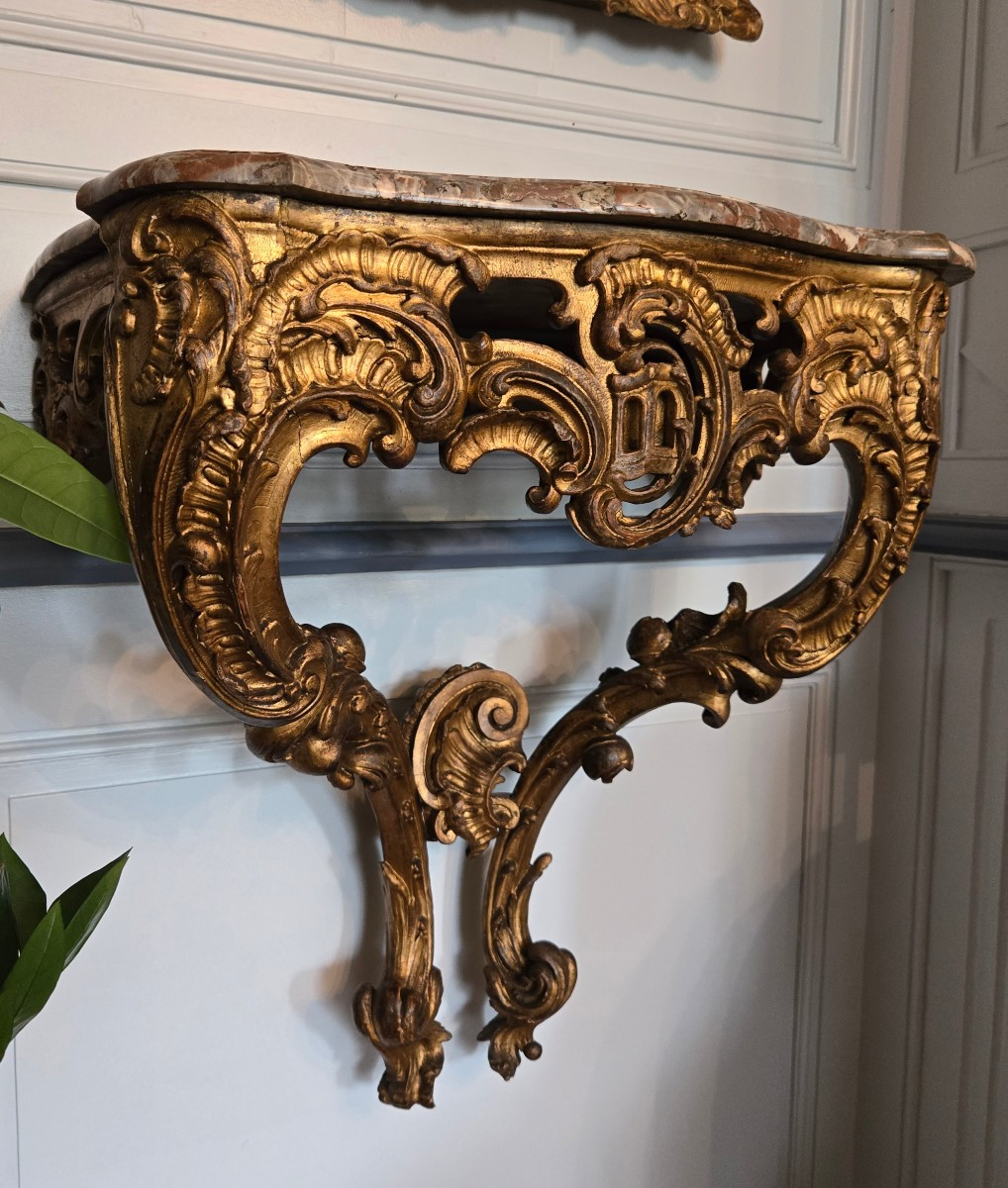
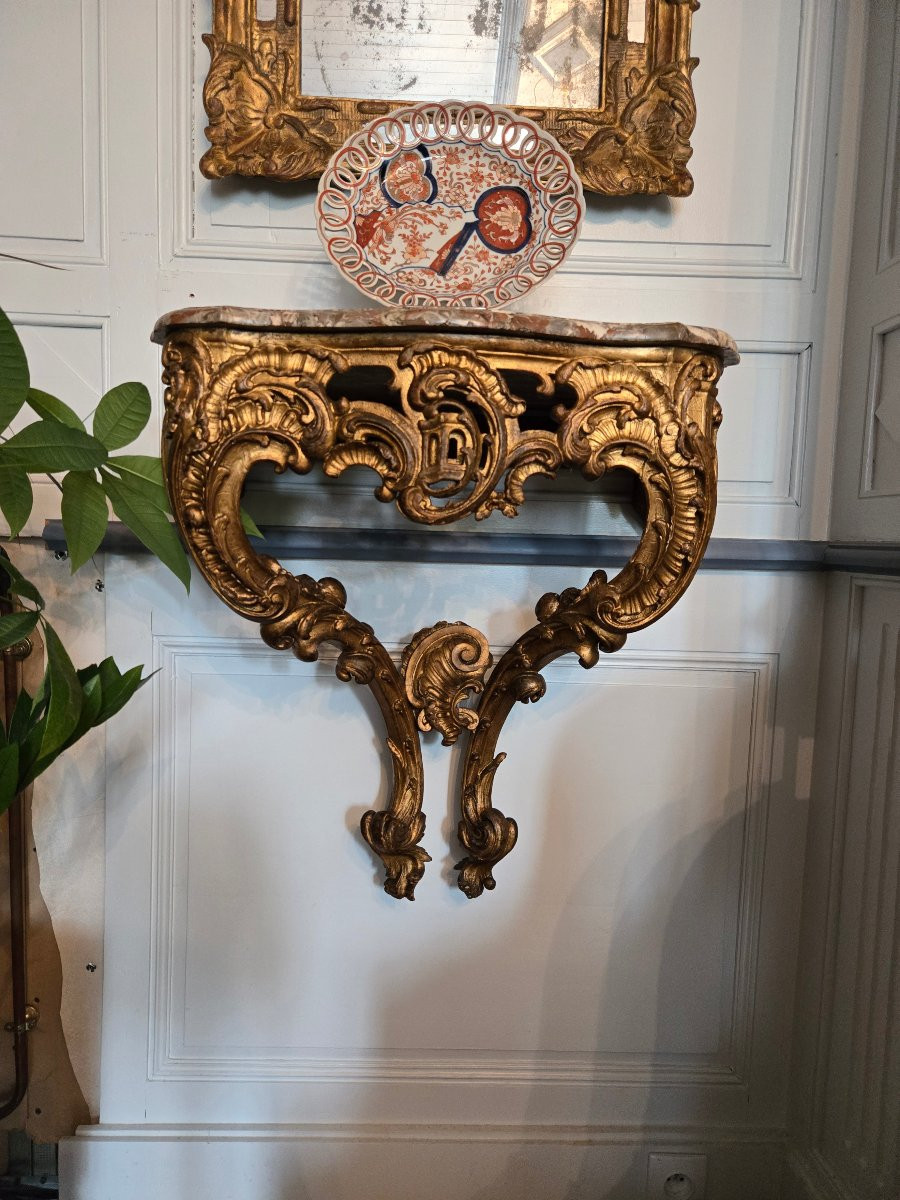


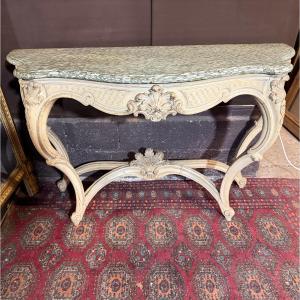
A rare and interesting Regency-period wall bracket, whose elegant yet unusual wall format is evidence of the type of furniture designed to structure interior elevations in the refined decors of the early 18th century.
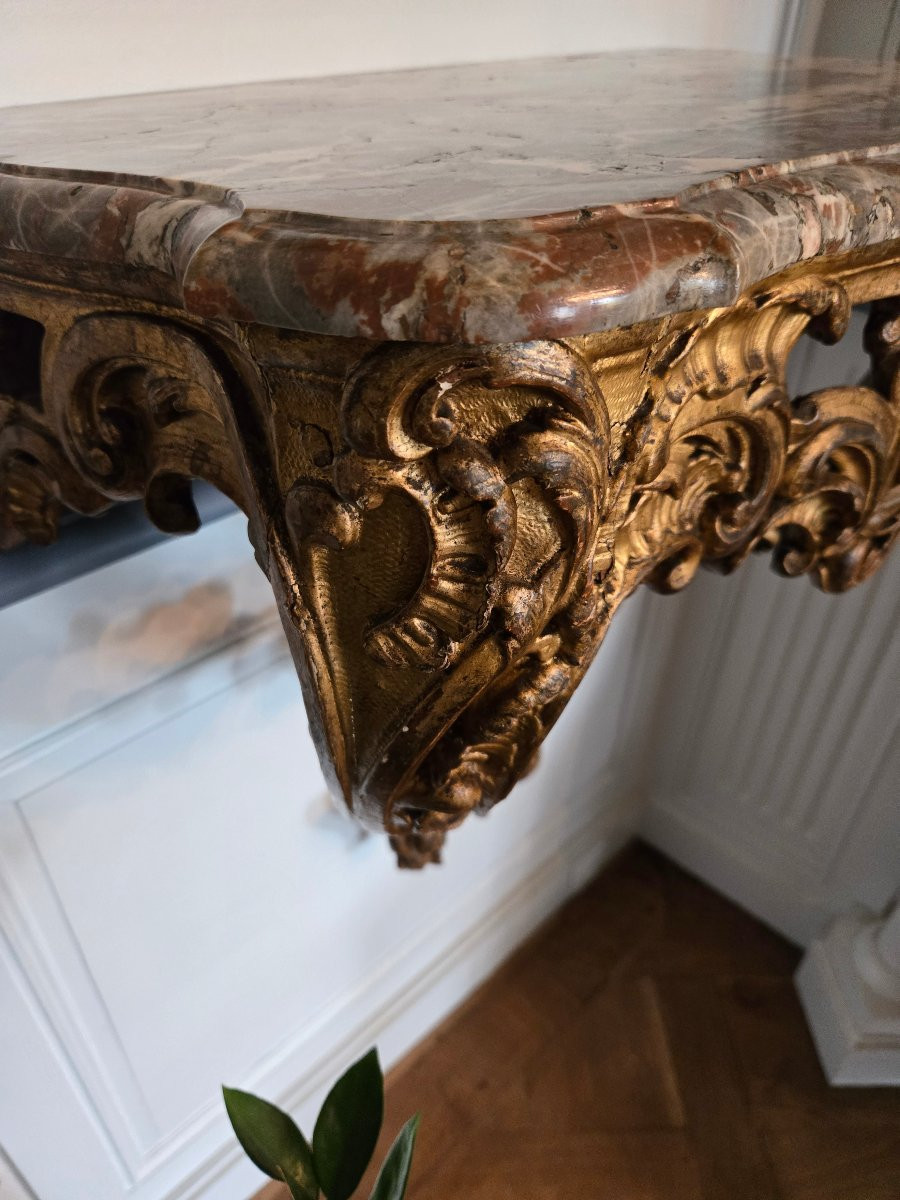
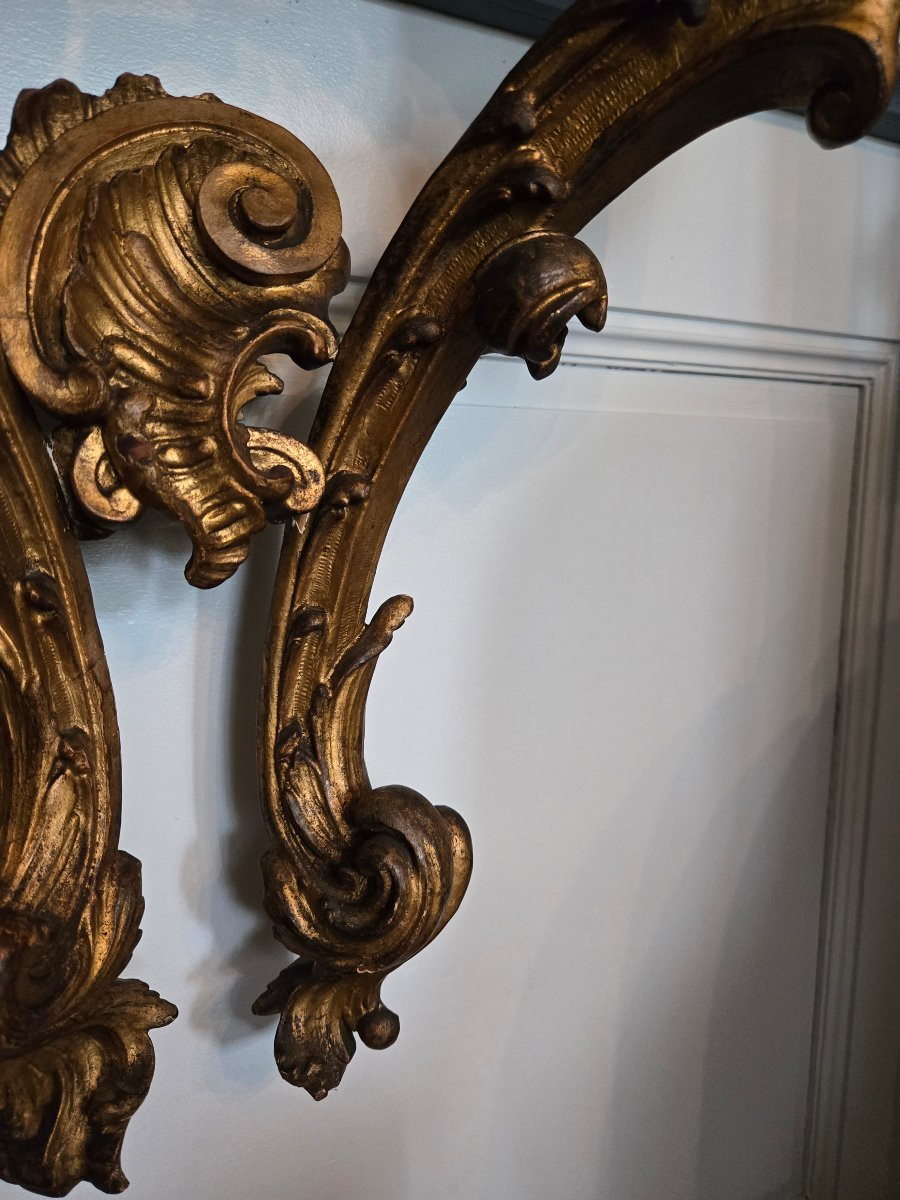
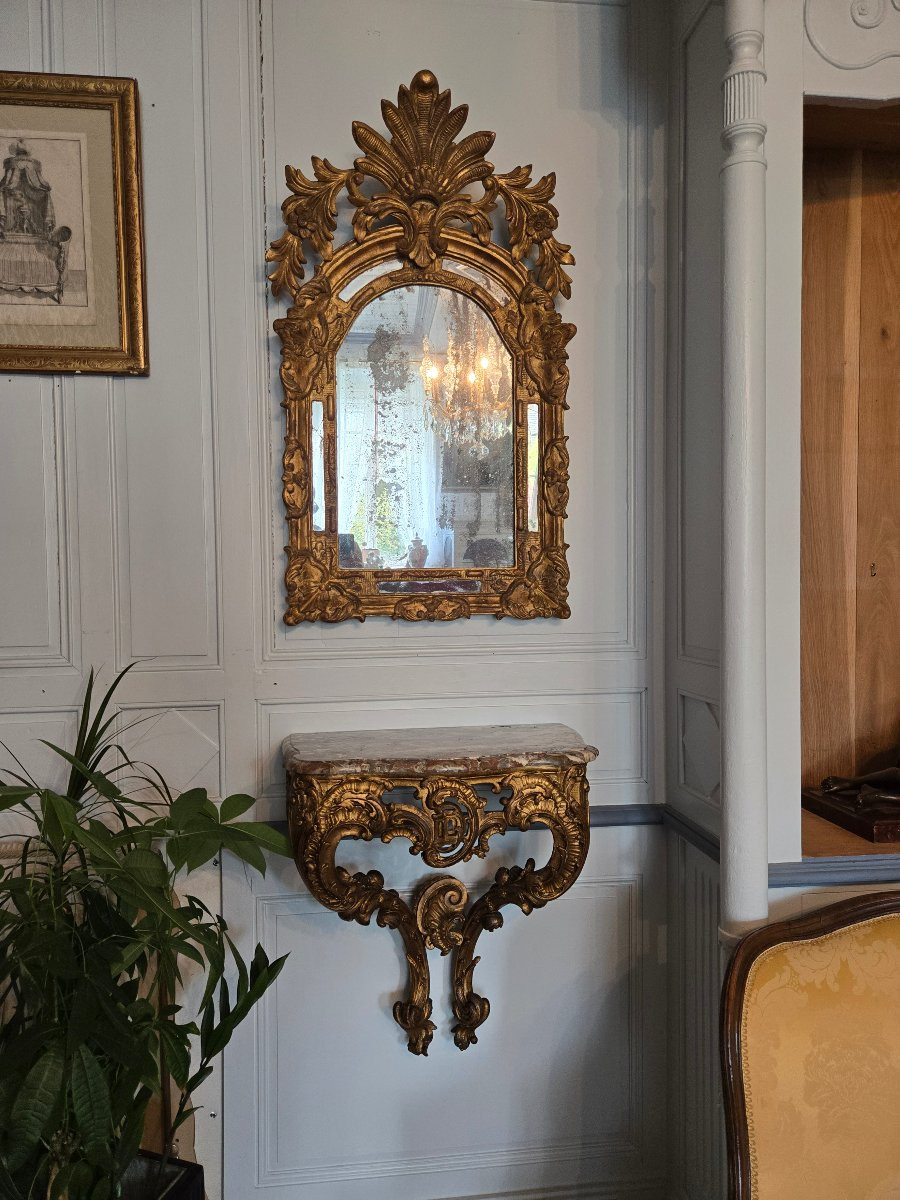
By its very design, this console belongs to a specific typology: that of leaning "table legs", not resting on the floor, but fixed to the wall. This choice, far from being anecdotal, reflects a search for visual lightness and élan, very characteristic of the evolution of taste at the end of the reign of Louis XIV.
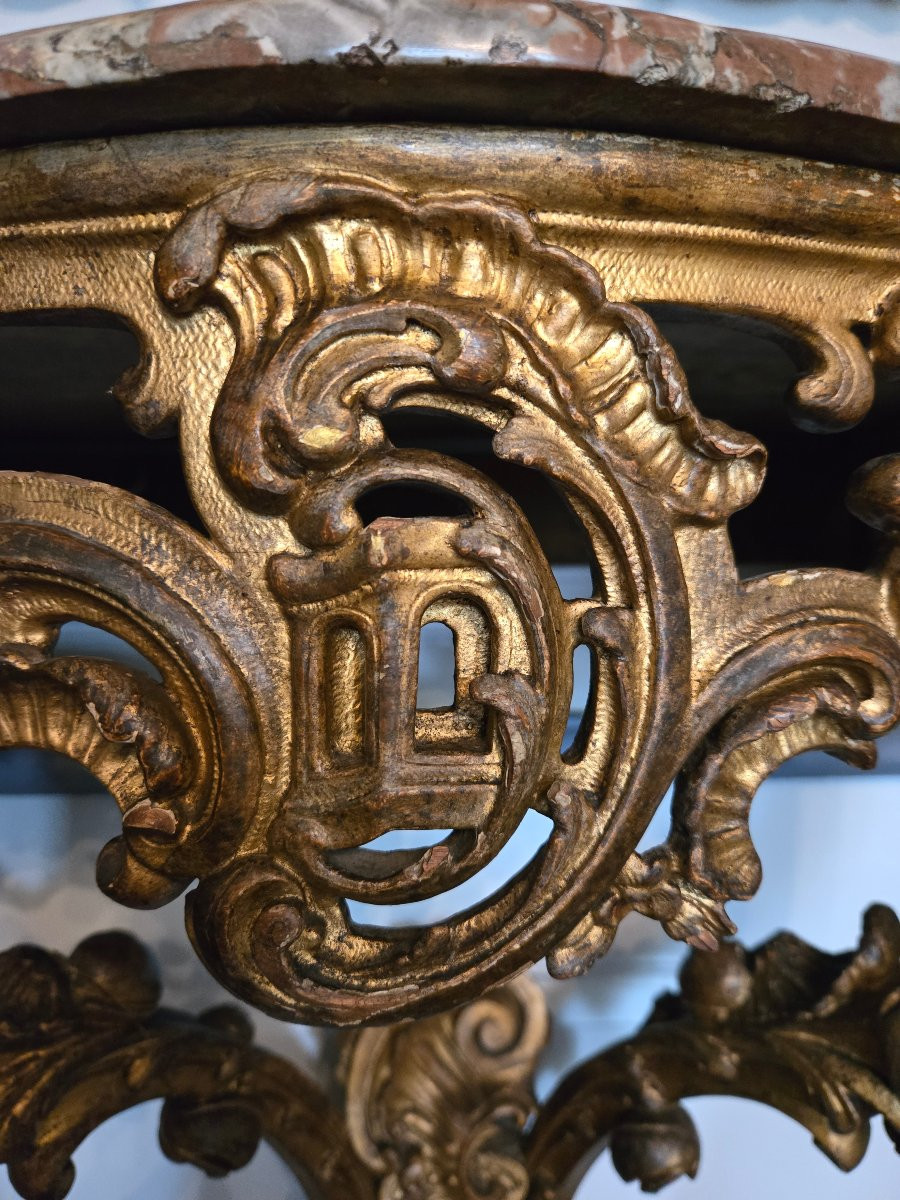
The overall composition is still legible and structured, faithful to the classical heritage, but the decor is already becoming emancipated. The openwork belt, animated by shells, scrolls and foliage, develops a nascent rocaille vocabulary, where the line relaxes, deepens and comes alive. This tension between order and freedom situates the piece in a very precise moment: that of the years 1725-1735, at the hinge between the Regency and the beginnings of the Louis XV style.
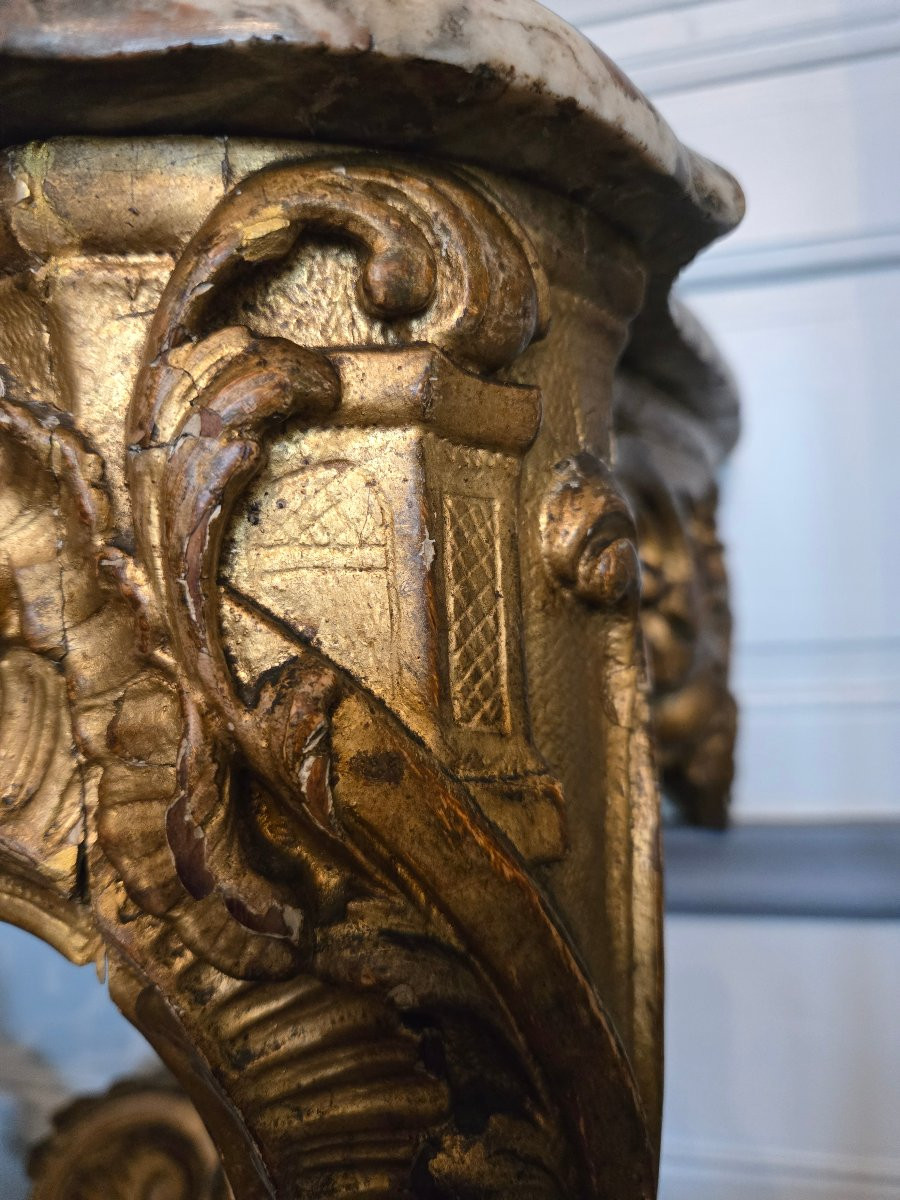
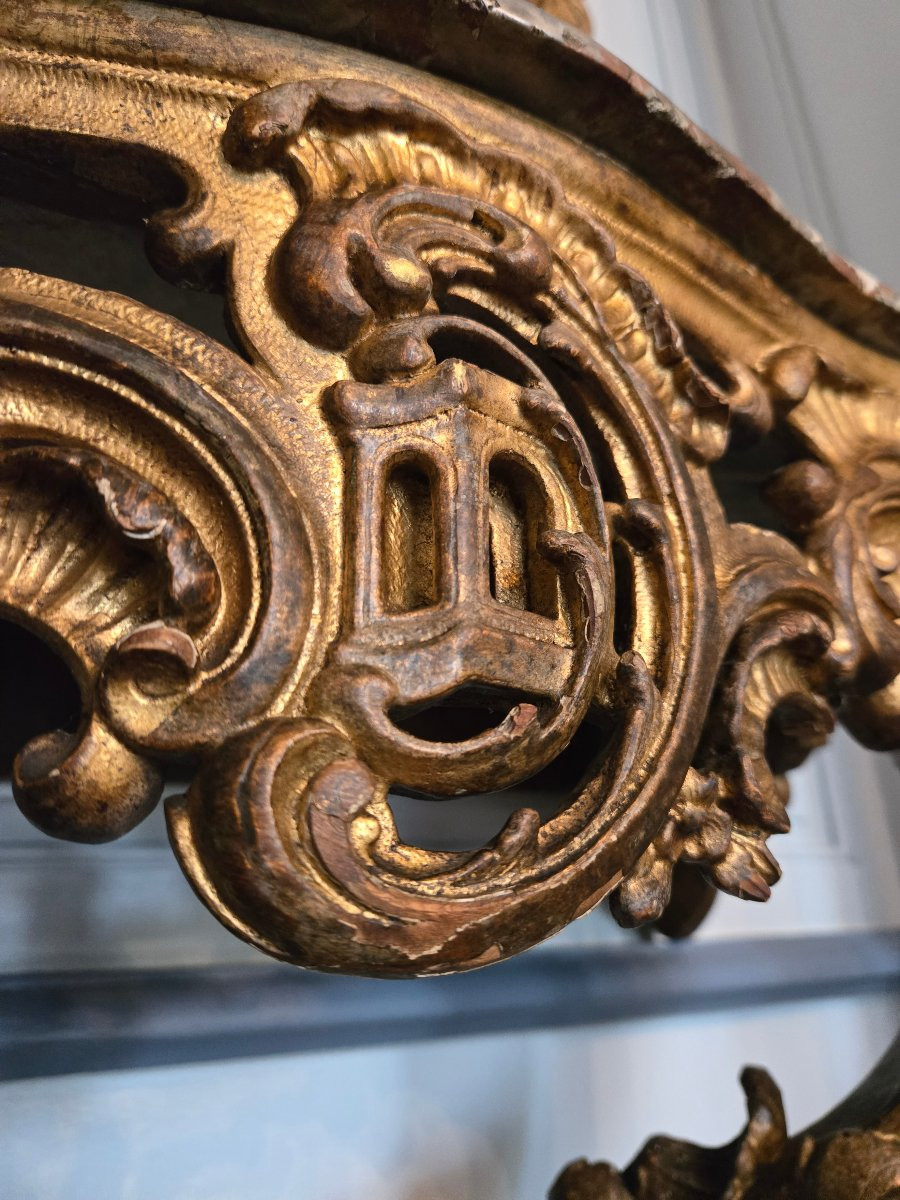
But beyond this beautiful rocaille script, the console is distinguished by an even more singular element. Subtly integrated into the decor are small architectural motifs, whose composition - openings, lintels, internal organization - evokes stylized constructions. The spirit of these elements is reminiscent of certain oriental pavilions, in a free and interpreted way, reflecting the new curiosity for forms from elsewhere that nourished the decorative imagination of the 18th century. Their presence, discreet but perfectly legible, considerably enriches the reading of the piece.
There is also a variation in the treatment of these motifs, introducing a slight asymmetry into the decor. Far from being an irregularity, this freedom contributes fully to the animation of the whole and illustrates this phase of invention when the sculptor progressively frees himself from the strict symmetry inherited from the previous century.
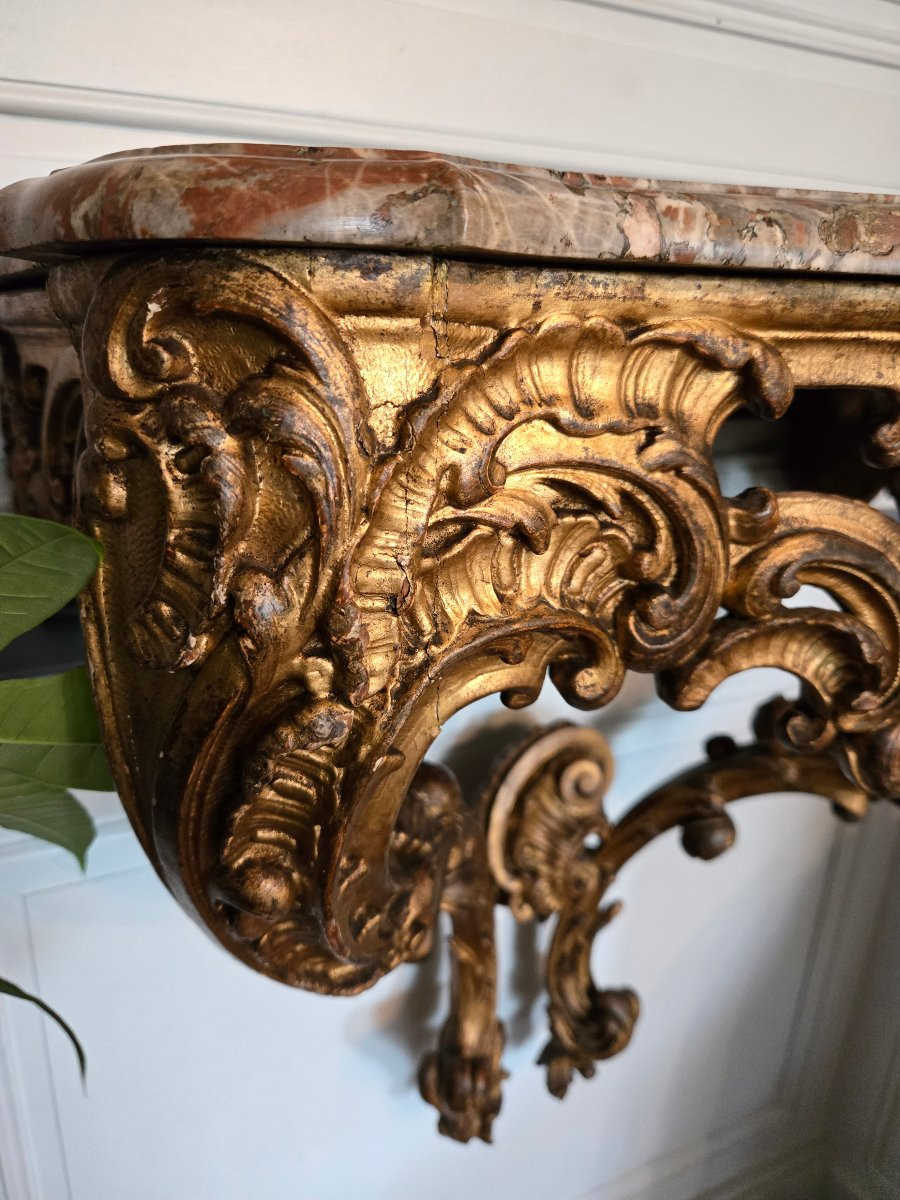
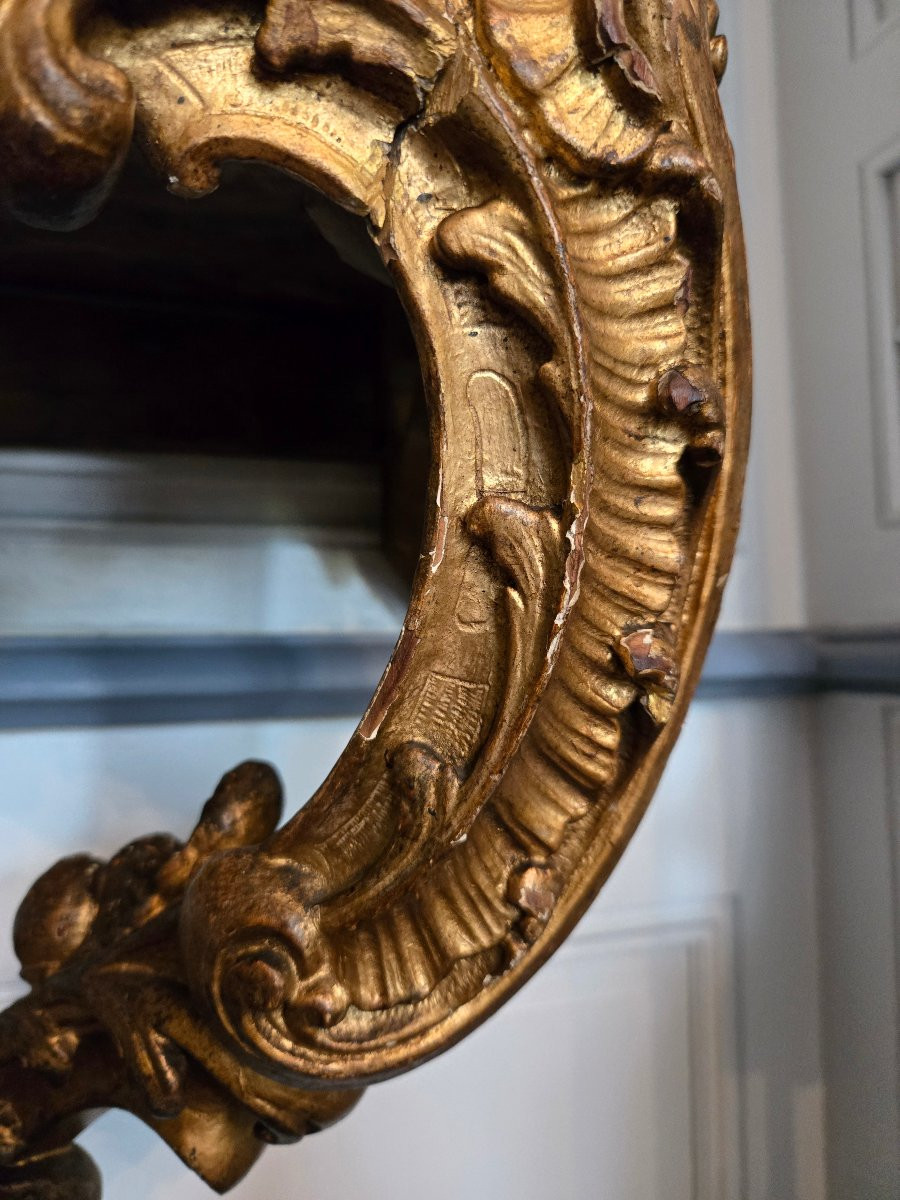
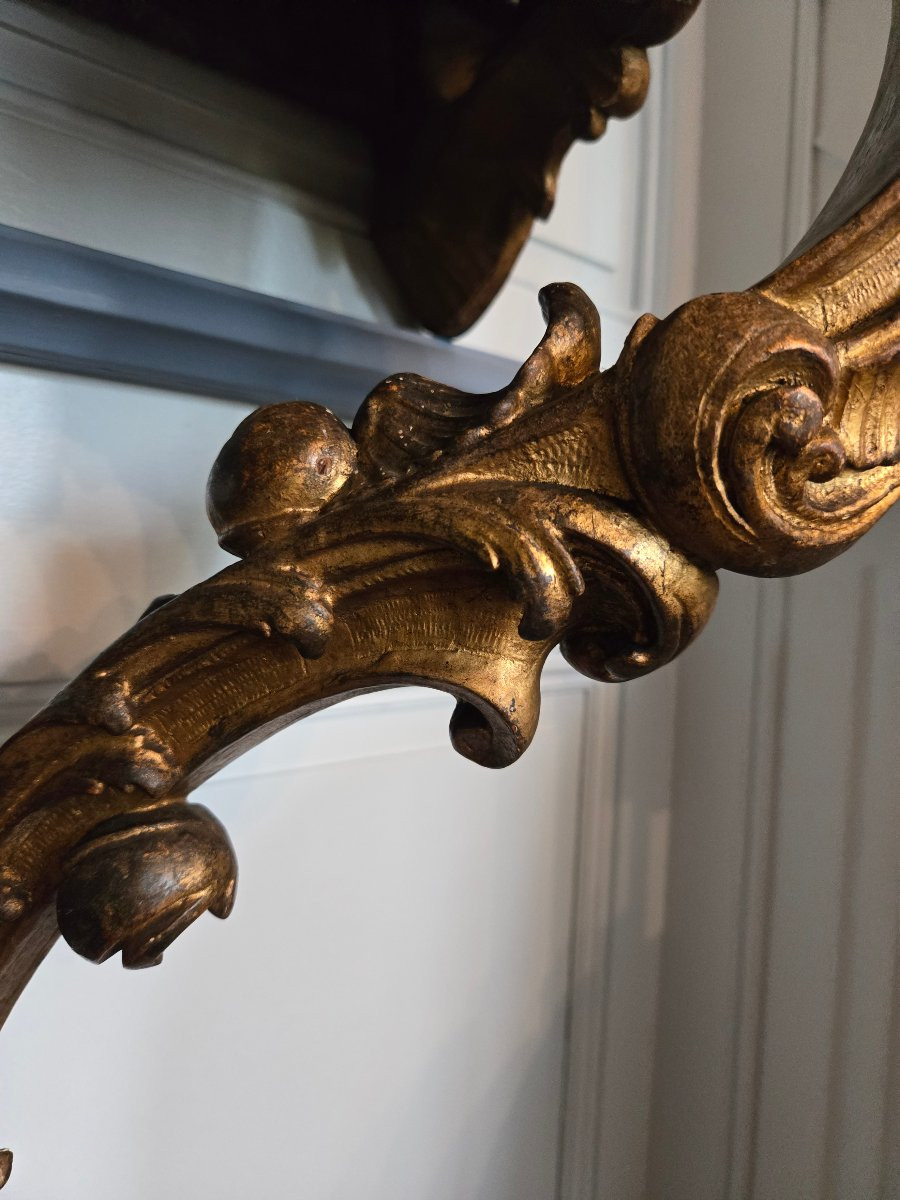
Entirely carved from limewood, the console reveals a work of great finesse. Volumes are clean, hollows deep and contours firm, reflecting the skill and experience of a skilled hand. But it is above all in the treatment of the surfaces that the quality of execution is revealed. Backgrounds are never left neutral: they are systematically reworked, enlivened with fine striations and hatching, according to the practices of 18th-century workshops. This step, known as reparure, is essential to the final rendering of the sculpture and gilding. It catches the light, brings the surfaces to life, and determines the richness of the result.
In the traditional organization of trades, the carpenter provided the structure, the sculptor developed the decoration, and the painter-gilder ensured its enhancement. Here, this chain of skills appears in all its coherence. The original gilding, applied to a perfectly prepared surface, retains a beautiful depth and vibrancy that underline the quality of the original work.
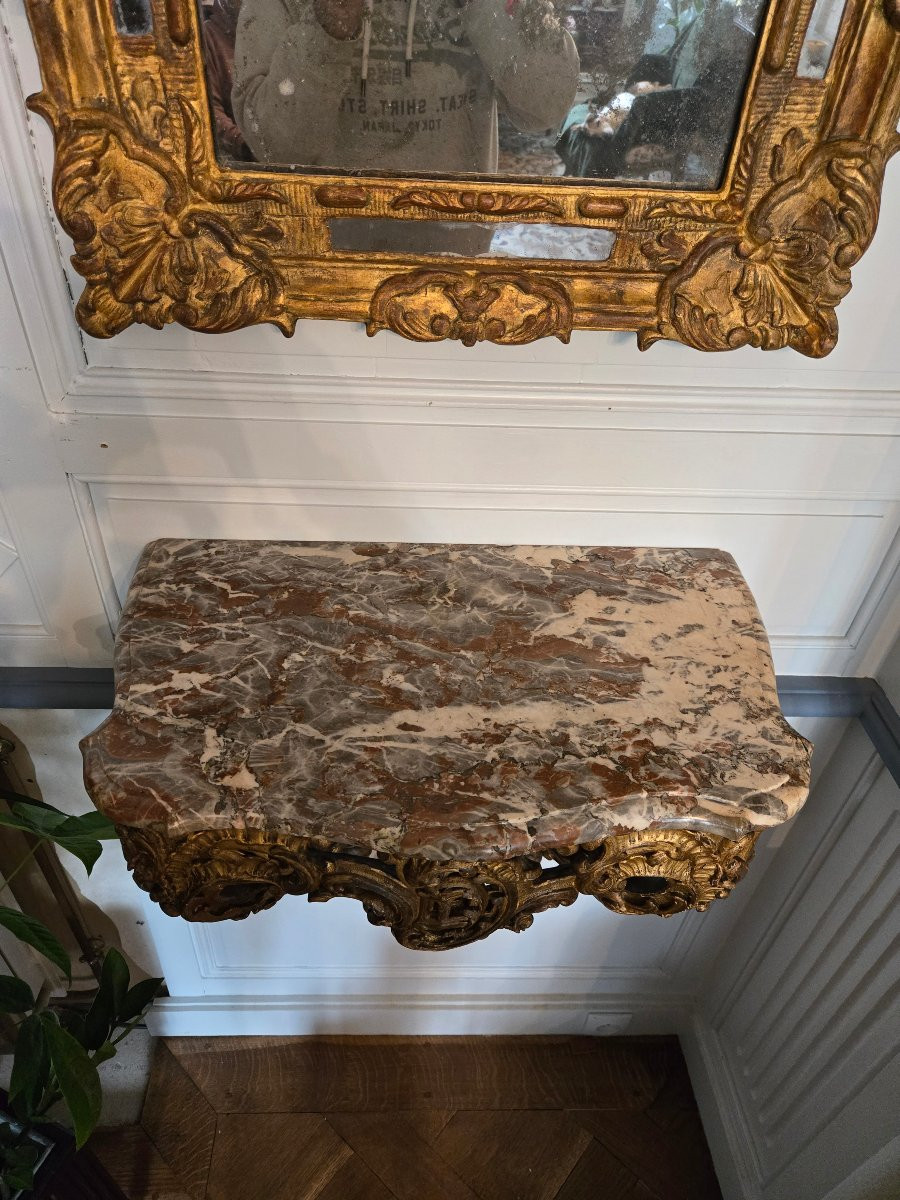
The top retains its original marble, molded with a corbin beak, whose profile harmoniously accompanies the movements of the frame. It is in a very good state of preservation. There is only a very slight restoration to a rear corner, which is discreet and has no effect on the whole.
By virtue of its typology, the quality of its carving and repainting, but above all the singularity of its decorative vocabulary, this wall bracket is a particularly interesting testimony to the inventive Regency period, a time when French decoration, while remaining rooted in a classical tradition, opened up to new freedom and broader influences.
Dimensions : Height : 63 cm Width : 61 cm Depth : 36 cm
By its very design, this console belongs to a specific typology: that of leaning "table legs", not resting on the floor, but fixed to the wall. This choice, far from being anecdotal, reflects a search for visual lightness and élan, very characteristic of the evolution of taste at the end of the reign of Louis XIV.
The overall composition is still legible and structured, faithful to the classical heritage, but the decor is already becoming emancipated. The openwork belt, animated by shells, scrolls and foliage, develops a nascent rocaille vocabulary, where the line relaxes, deepens and comes alive. This tension between order and freedom situates the piece in a very precise moment: that of the years 1725-1735, at the hinge between the Regency and the beginnings of the Louis XV style.
But beyond this beautiful rocaille script, the console is distinguished by an even more singular element. Subtly integrated into the decor are small architectural motifs, whose composition - openings, lintels, internal organization - evokes stylized constructions. The spirit of these elements is reminiscent of certain oriental pavilions, in a free and interpreted way, reflecting the new curiosity for forms from elsewhere that nourished the decorative imagination of the 18th century. Their presence, discreet but perfectly legible, considerably enriches the reading of the piece.
There is also a variation in the treatment of these motifs, introducing a slight asymmetry into the decor. Far from being an irregularity, this freedom contributes fully to the animation of the whole and illustrates this phase of invention when the sculptor progressively frees himself from the strict symmetry inherited from the previous century.
Entirely carved from limewood, the console reveals a work of great finesse. Volumes are clean, hollows deep and contours firm, reflecting the skill and experience of a skilled hand. But it is above all in the treatment of the surfaces that the quality of execution is revealed. Backgrounds are never left neutral: they are systematically reworked, enlivened with fine striations and hatching, according to the practices of 18th-century workshops. This step, known as reparure, is essential to the final rendering of the sculpture and gilding. It catches the light, brings the surfaces to life, and determines the richness of the result.
In the traditional organization of trades, the carpenter provided the structure, the sculptor developed the decoration, and the painter-gilder ensured its enhancement. Here, this chain of skills appears in all its coherence. The original gilding, applied to a perfectly prepared surface, retains a beautiful depth and vibrancy that underline the quality of the original work.
The top retains its original marble, molded with a corbin beak, whose profile harmoniously accompanies the movements of the frame. It is in a very good state of preservation. There is only a very slight restoration to a rear corner, which is discreet and has no effect on the whole.
By virtue of its typology, the quality of its carving and repainting, but above all the singularity of its decorative vocabulary, this wall bracket is a particularly interesting testimony to the inventive Regency period, a time when French decoration, while remaining rooted in a classical tradition, opened up to new freedom and broader influences.
Dimensions : Height : 63 cm Width : 61 cm Depth : 36 cm
Explore similar pieces and discover your ideal find:
Console Tables