


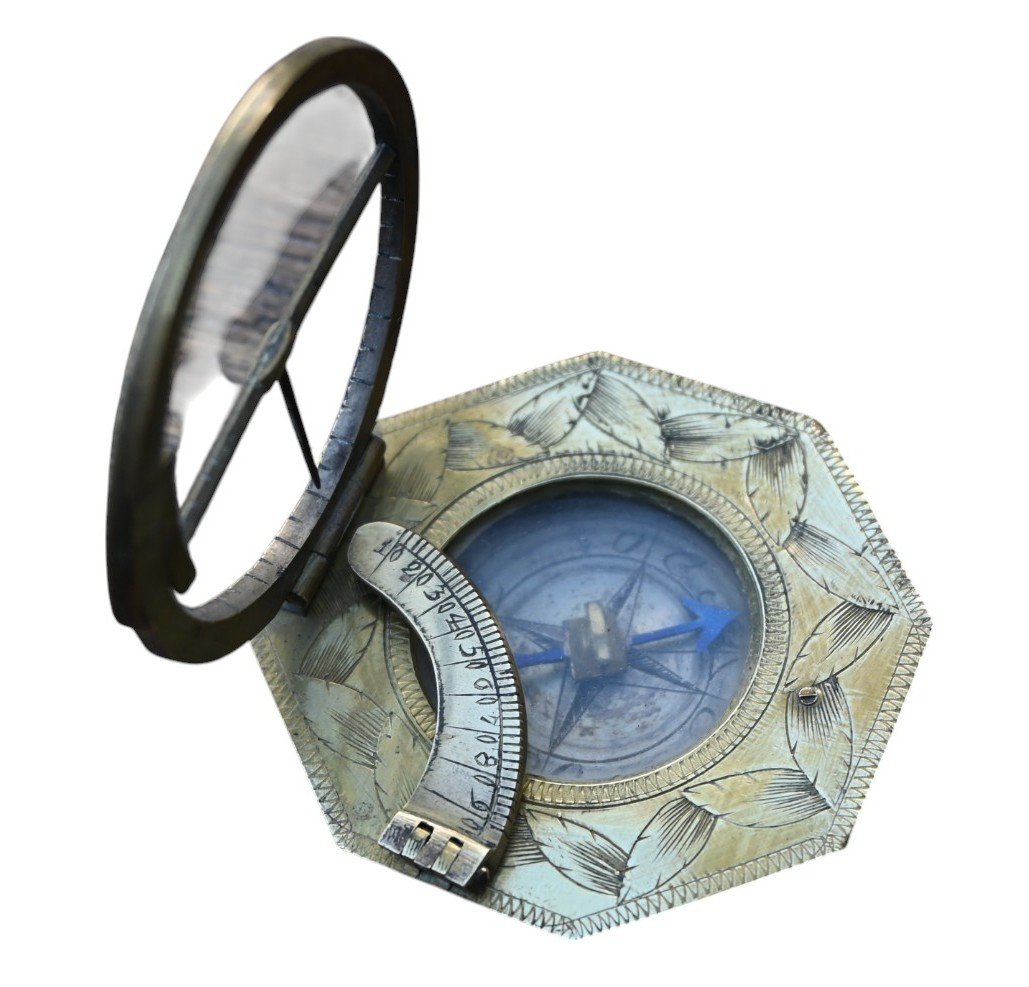


Maker: Johann Nepomuk Schrettegger
Origin: Augsburg, Germany
Date: Circa 1780–1800
Material: Gilt brass with engraved details
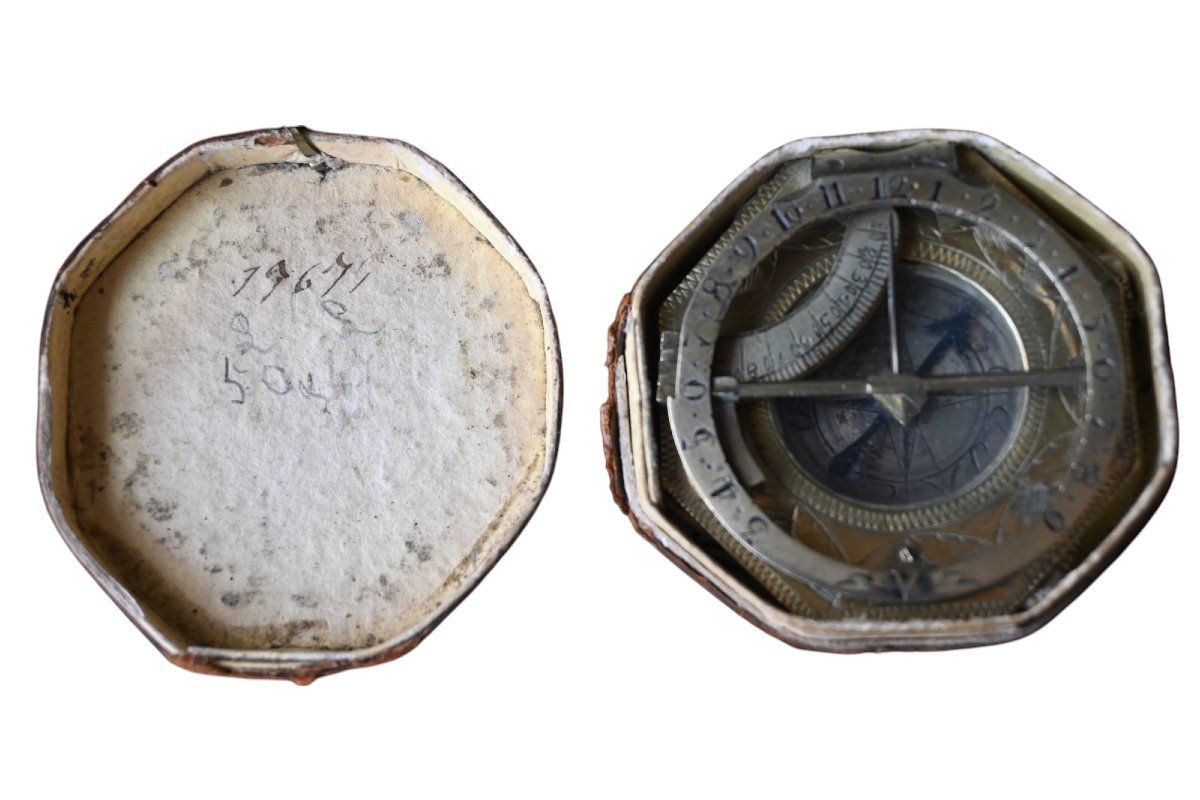
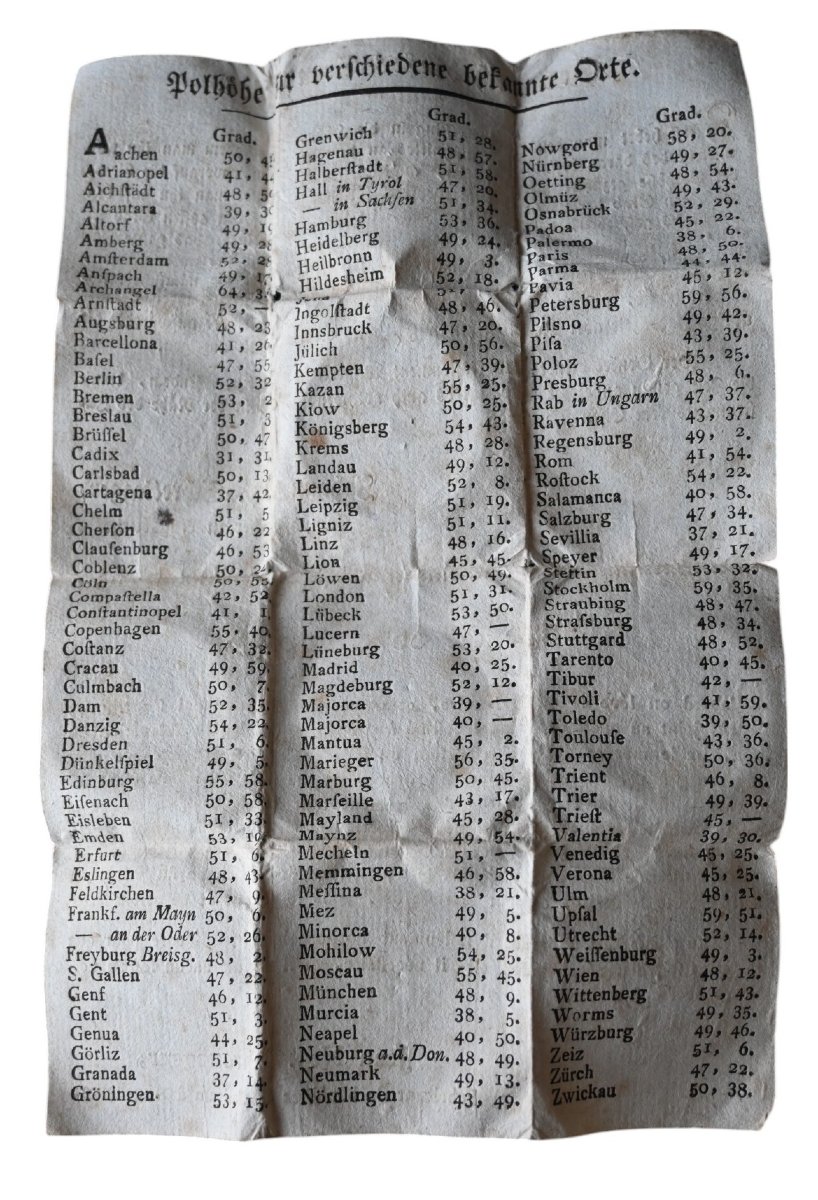
Provenance: Complete with original fitted case and instruction leaflet in German
Description:
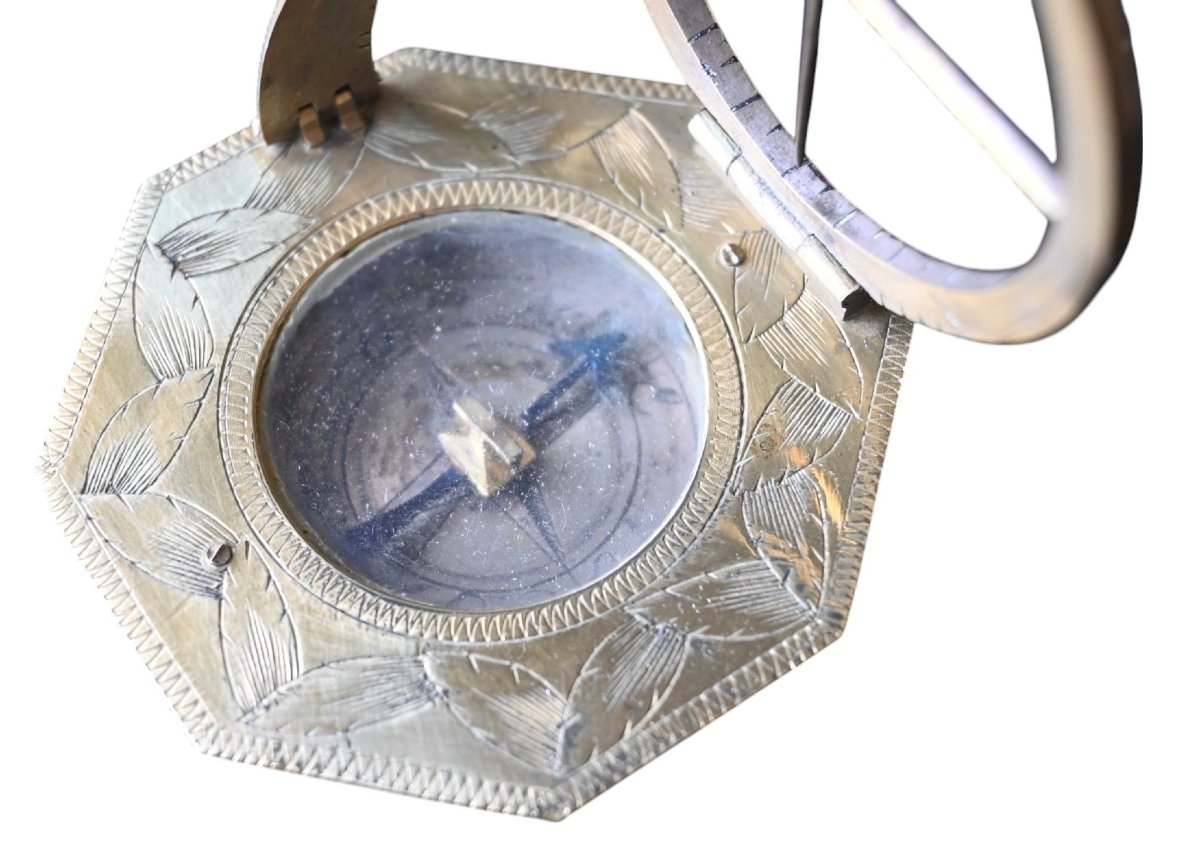
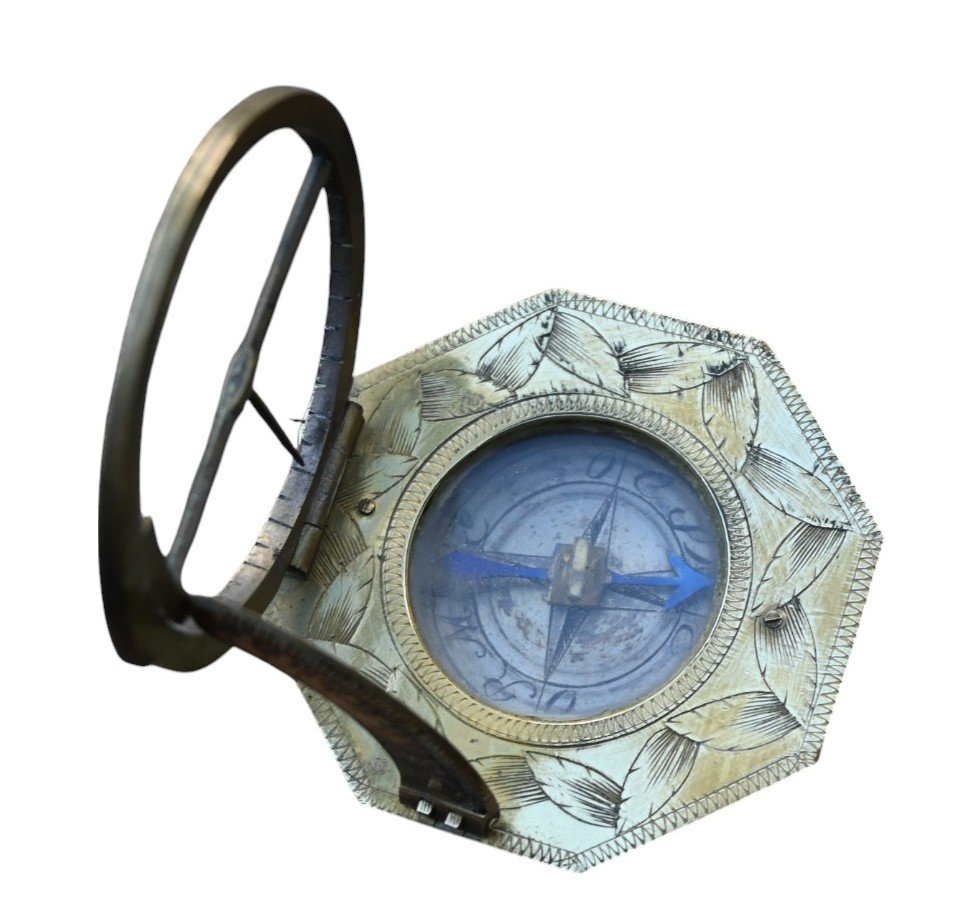
Offered is a superb and rare example of an 18th-century equinoctial portable sundial and compass crafted by renowned scientific instrument maker Johann Nepomuk Schrettegger. Elegantly designed and meticulously engraved, this instrument features a rotating hour ring, an adjustable latitude arc (suitable for multiple geographic zones), and a fully functional magnetic compass with engraved cardinal directions.
The instrument is signed on the underside:
"Johann Schretttegger in Augsburg"—a hallmark of quality from one of the last great masters of Augsburg’s scientific instrument-making tradition.
Accompanied by its original octagonal case, lined with velvet and paper, and a rare printed German instruction leaflet, titled “Gebrauch dieses Compasses”, this set stands out as both a highly decorative and historically significant object. The condition of both the instrument and documentation suggests careful preservation and likely limited use.
Highlights:
Original folding equinoctial sundial and compass with ornate floral engraving
Signed by Schrettegger, a documented maker listed in major museum collections
Fully functional gnomon, hour ring, and compass
Rare survival of original instruction sheet and fitted case
Excellent patina and overall condition for its age
Dimensions: 6 x 6 cm
Comparable examples of Schrettegger’s work are held by institutions such as the Science Museum (London), Museum of the History of Science (Oxford), and the National Museum of Denmark.
This is an exceptional opportunity to acquire a museum-quality scientific instrument by a notable maker—perfect for collectors of scientific antiques, horological curiosities, or Enlightenment-era tools of travel and navigation.










 Le Magazine de PROANTIC
 TRÉSORS Magazine
 Rivista Artiquariato